

DPR Members Demand Polri to Uncover Key Actors in Scam Syndicate in the Philippines Involving 141 Indonesians
-
News
-
58 minutes ago
This article was translated by AI. Read the original article on Kompas.com. See Original
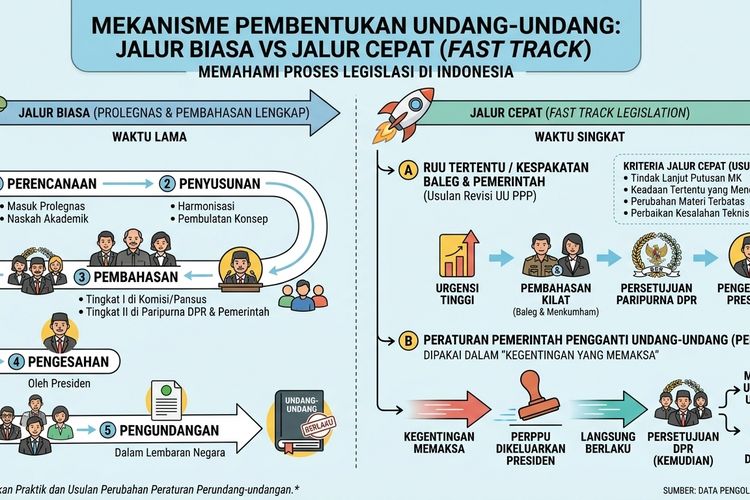
JAKARTA, KOMPAS.com - The formation of laws (UU) is now proposed to have a fast track mechanism. This mechanism will be regulated in the Draft Law (RUU) on the Formation of Laws (RUU PUU).
Parliament argues that this fast track is necessary given that laws are an important legal instrument.
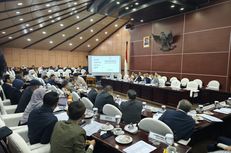
“Here, the formation of laws through a fast procedure is part of the legislative process. We divide it into two: following the standard procedure or the fast procedure,” said the Head of the Expertise Agency of the Indonesian House of Representatives (DPR RI), Bayu Dwi Anggono, during a meeting of the Legislative Body (Baleg) of the DPR RI at the DPR building in Jakarta on Tuesday (3/11/2026).
Lucius Karus, a researcher at the Indonesian Parliamentary Community Concern Forum (Formappi), stated that the existing mechanism actually accommodates fast-track discussions for certain conditions, one of which pertains to international agreements.
According to Lucius, the public has not raised issues with draft laws that are known from the start to be part of the types of draft laws mentioned.
“Such as types of draft laws for ratifications, follow-ups on Constitutional Court decisions, and others,” he explained.
He understands that the mechanism has not been rigidly and clearly defined.
However, the limited nature of changes or the ratification of international agreements can be understood as requiring expedited discussion. This is because the substance of the draft law already exists.
“The DPR is only following standard procedures before ratification,” Lucius told Kompas.com on Thursday (5/11/2026).
At least six conditions have been proposed for using the fast track. First, to ratify certain international agreements that urgently need to be implemented, including ratifications.
Second, to follow up on Constitutional Court decisions that include deadlines for changing or replacing laws. Third, to make limited changes to existing laws.
“If the changes are minor, then a quick approach is possible,” Bayu added.
Fourth, to correct technical writing errors; fifth, to amend the attachments of laws; and sixth, certain conditions that ensure urgency in forming laws through fast procedures.
Bayu explained that using a fast track in these conditions requires joint approval from the DPR's legislative apparatus and the minister or agency head overseeing government affairs in law formation.
“So, point f is separate from a to e; it certainly requires legislative body approval regarding this fast-track legislation,” Bayu stated.