ICW: The Asset Forfeiture Law Should Address Officials’ Unreasonable Wealth Increase
-
News
-
14 minutes ago
This article was translated by AI. Read the original article on Kompas.com. See Original

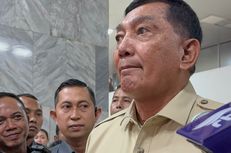
JAKARTA, KOMPAS.com - Sudaryono, the Head of the National Nutrition Agency (BGN), aims to implement the buffet service method for the Free Nutritious Meal (MBG) program in 5,000 to 10,000 Nutrition Fulfillment Service Units (SPPG) by the end of 2026.
This buffet method is intended to ensure that food is served warm and meets students' nutritional needs.
"My target is by the end of the year to reduce food poisoning, spoiled food, health issues, and to cater to students' preferences. We hope that by the end of the year, we can implement this buffet method in 5,000 to 10,000 kitchens," Sudaryono stated during a presentation on the achievements of his first 100 days in office, in South Jakarta, on Thursday (29/10/2026), as quoted from a BGN YouTube broadcast.
He explained that trials of the buffet method have been conducted in 66 kitchens, with plans to expand to about 230 additional kitchens.
In the initial implementation results, Sudaryono noted positive feedback and no cases of food poisoning have been reported.
With the buffet method, students are not required to gather in one place to pick up the MBG menu.
The food is served in each classroom according to the number of students, allowing them to eat directly while it is still warm.
"If there are 30 students in a class, we provide 30 portions of rice, vegetables, and protein, placed in the classroom, served, and then they eat and clean up afterward. This way, the food remains warm and does not require reheating as it is delivered hot, keeping the temperature at a minimum of 60 degrees," Sudaryono explained.
This buffet method also allows students to take extra food if they are still hungry, as long as it adheres to portion and nutritional guidelines.
Thus, Sudaryono stated that the food provided can be consumed optimally, minimizing leftover food waste.
"So, individuals receive portions based on their nutritional requirements but still have a spare allowance. If they are still hungry, they can take more. So far, so good, and we want this to be mandatory, to be implemented widely across all kitchens and schools," Sudaryono remarked.
Sudaryono mentioned that the implementation of this method also refers to food provision practices in several countries, including Japan and various European nations.
"This is a best practice that we have learned from many countries, including Japan and others in Europe. The methods are the same, so this is not just my invention," he stated.