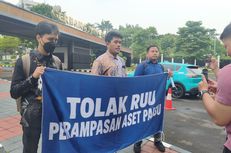
ICW Reports Puan Maharani and Habiburokhman to MKD Over Approval of Asset Confiscation Law
-
News
-
12 minutes ago
This article was translated by AI. Read the original article on Kompas.com. See Original
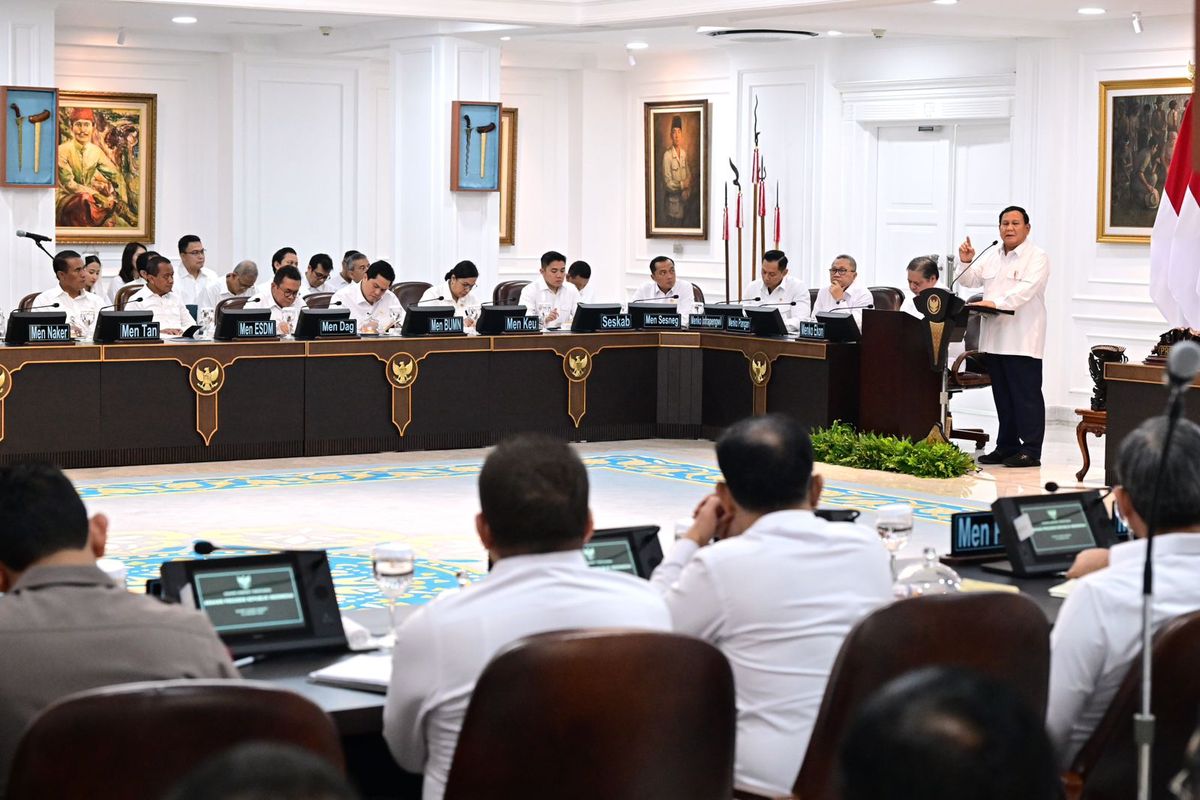
However, how can oversight be maximized if the party leader, who is the political superior of DPR members, is also part of the government that needs to be overseen?
While formally, a party chairperson who becomes a minister does not automatically become the institutional superior of the DPR.
The DPR remains an independent state institution in exercising its authority. However, in practical politics, the structural relationship of parties cannot simply be separated from the political behavior of DPR members. This is where the potential for conflicts of interest emerges.
The President holds government power. Ministers are accountable to the President.
Simultaneously, the minister in question can be the party chair who has members in the DPR. These DPR members, politically, are situated within a party structure led by someone who is simultaneously part of the government.
This configuration creates serious issues for the principle of checks and balances. Not because the DPR is legally subordinate to the government, but because the lines of political loyalty can become more complicated than the division of powers envisioned by the constitution.
The triad of power developed by Montesquieu was fundamentally birthed from the need to prevent the concentration of power. Executive, legislative, and judicial powers are placed in positions that balance each other.
In a presidential system, this separation should yield effective oversight, not mere institutional separation on paper.
Indonesia does not adhere to an absolute separation of powers. Our system is one of power distribution with mechanisms for mutual oversight.
However, precisely because of this, the design of the relationship between political parties, the DPR, and the government must be safeguarded to prevent an excessive concentration of political influence.
The issue of the Vice President's educational requirements teaches an important lesson. When the DPR faces matters that potentially intersect with the interests of the government and supporting parties, the public has the right to question whether the oversight function is truly operating independently.
Therefore, the issue at hand is not simply whether the DPR should impeach the Vice President. That is a legal and constitutional question that must be answered through a mechanism of proof, not political opinion.
A more fundamental question is: does our political design sufficiently guarantee that the DPR can perform its oversight function freely when the leader of the party that oversees DPR members is part of the President's cabinet?
If the answer is no, then it is time for regulatory reconstruction.
Prohibiting DPR members from concurrently serving as ministers is already a reasonable principle so that the oversight function does not directly conflict with government functions.