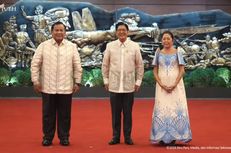

Prabowo Says "Kamsahamnida" While Concluding Speech at the 27th ASEAN-South Korea Summit
-
News
-
17 minutes ago
This article was translated by AI. Read the original article on Kompas.com. See Original

RECENTLY, the public has been presented with the phenomenon of social media (Social Media) being used as a vehicle to enhance the image of politicians, boost their popularity, and reap political leadership prospects on a national level.
Take a look at the facts: Social media increasingly resembles a stage. Politicians, governors, regents, and mayors showcase themselves distributing aid, engaging with citizens, exercising, or displaying their generosity.
Undoubtedly, platforms like TikTok, Instagram, Facebook, and others have transformed these activities into content designed to grab attention.
This phenomenon reminds us of a figure named Joko Widodo (Jokowi). Since leading Solo in 2005, his image as a simple and approachable leader has shaped his political journey to become the Governor of DKI Jakarta and then President for two terms.
Recently, several local leaders have been trying to replicate and repeat this model.
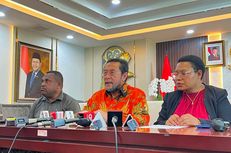
Dedi Mulyadi, the Governor of West Java known as KDM, for instance, stands out through videos of direct interaction with citizens.
Figures like Anies Baswedan, Ganjar Pranowo, Ridwan Kamil, and Khofifah Indar Parawansa have also gained attention through digital communication, despite their differing career paths and political support.
The strong impression received by the public is that politicians who can replicate Jokowi's style are destined to be Presidents.
However, in politics, methods may be similar, but results can be vastly different. The adage, "Every era has its figures, and every figure has its era," is highly relevant to describe this phenomenon.
In reality, popularity or position in surveys does not automatically mean that someone will advance or win in national and local political elections.
To understand this phenomenon, we need to differentiate two terms in the media communication realm: Algorithms are a set of computational rules that select, sort, and recommend content based on signals, like user interests, interactions, and viewing duration.
"Algorithm politicians" are those who build personas mainly by adapting to the visibility logic of platforms, focusing on what is trending, emotional, easily shareable, and potentially viral.
In contrast, the second term, "politician algorithms,” refers to how politicians study and leverage these mechanisms to direct attention, shape narratives, and convert interactions into support.
The distinctions may be subtle, but the implications are significant. In a democracy, political communication should explain programs, clarify reasons, and allow citizens to evaluate performance.
However, platform logic favors brief, dramatic, personal content that evokes emotion.