
Prabowo Says "Kamsahamnida" While Concluding Speech at the 27th ASEAN-South Korea Summit
-
News
-
17 minutes ago
This article was translated by AI. Read the original article on Kompas.com. See Original
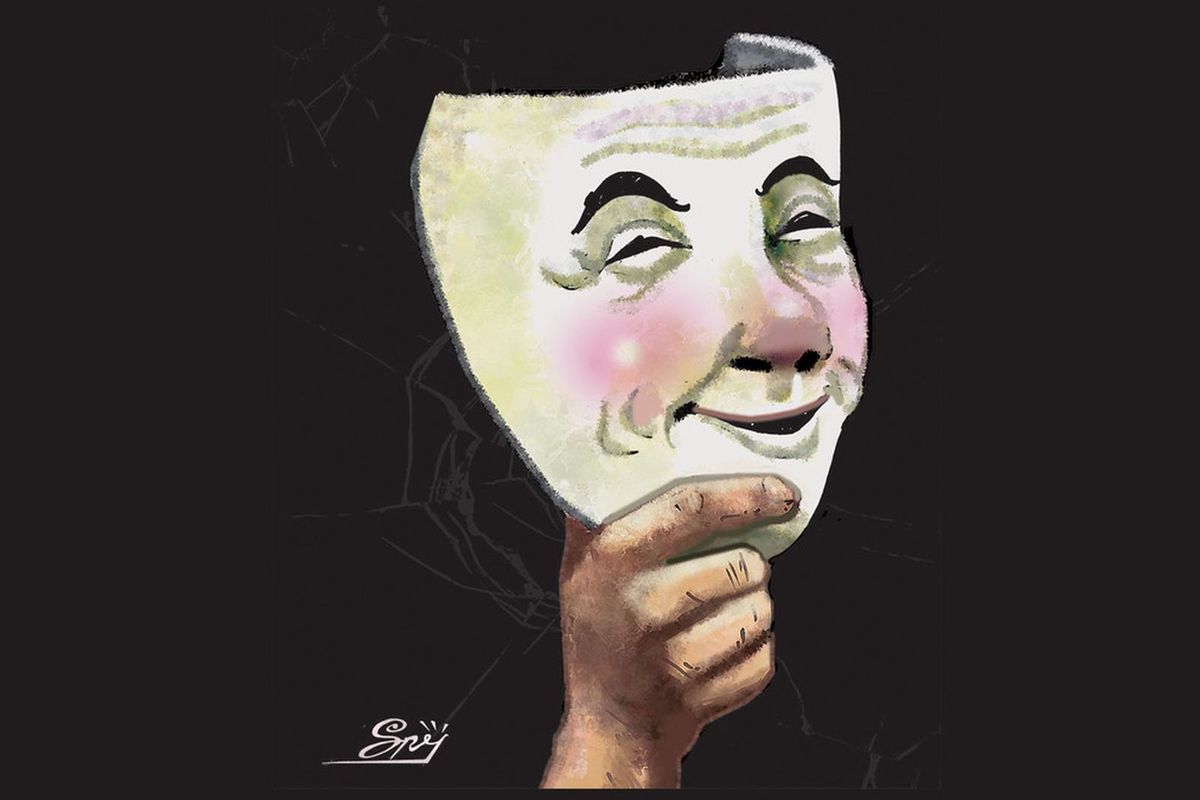
RECENTLY, the public has been presented with the phenomenon of social media (Social Media) being used as a vehicle to enhance the image of politicians, boost their popularity, and reap political leadership prospects on a national level.
Take a look at the facts: Social media increasingly resembles a stage. Politicians, governors, regents, and mayors showcase themselves distributing aid, engaging with citizens, exercising, or displaying their generosity.
Undoubtedly, platforms like TikTok, Instagram, Facebook, and others have transformed these activities into content designed to grab attention.
This phenomenon reminds us of a figure named Joko Widodo (Jokowi). Since leading Solo in 2005, his image as a simple and approachable leader has shaped his political journey to become the Governor of DKI Jakarta and then President for two terms.
Recently, several local leaders have been trying to replicate and repeat this model.
Dedi Mulyadi, the Governor of West Java known as KDM, for instance, stands out through videos of direct interaction with citizens.
Figures like Anies Baswedan, Ganjar Pranowo, Ridwan Kamil, and Khofifah Indar Parawansa have also gained attention through digital communication, despite their differing career paths and political support.
The strong impression received by the public is that politicians who can replicate Jokowi's style are destined to be Presidents.
However, in politics, methods may be similar, but results can be vastly different. The adage, "Every era has its figures, and every figure has its era," is highly relevant to describe this phenomenon.
In reality, popularity or position in surveys does not automatically mean that someone will advance or win in national and local political elections.
To understand this phenomenon, we need to differentiate two terms in the media communication realm: Algorithms are a set of computational rules that select, sort, and recommend content based on signals, like user interests, interactions, and viewing duration.
"Algorithm politicians" are those who build personas mainly by adapting to the visibility logic of platforms, focusing on what is trending, emotional, easily shareable, and potentially viral.
In contrast, the second term, "politician algorithms,” refers to how politicians study and leverage these mechanisms to direct attention, shape narratives, and convert interactions into support.
The distinctions may be subtle, but the implications are significant. In a democracy, political communication should explain programs, clarify reasons, and allow citizens to evaluate performance.
However, platform logic favors brief, dramatic, personal content that evokes emotion.
Complex policy work that improves public services, manages budgets, and enforces regulations often loses its appeal compared to touching aid videos.
Here, Jean Baudrillard's ideas of simulacra and hyperreality are relevant. Images no longer merely represent reality but can replace reality in public perception.
Politicians appear to always be present, caring, and working because the cameras are always there. However, videos are not policy audits, view counts are not measures of equity, and positive comments are not democratic mandates.
Even social media gimmicks can create hyperreality when visual allure shifts the substance of politics.
Is this detrimental to the political leadership cadre in Indonesia today? Not necessarily.
Social media opens doors for leaders who were previously hindered by campaign costs, access to mainstream media, or closed political party structures. It can expand participation and connect citizens’ grievances with officials.
However, if political parties only recruit politicians and cadre based on the number of followers, rather than their track record, integrity, policy formulation skills, and courage to make tough decisions, then cadre formation merely becomes an audition for popularity.
If this continues, the result will not be seasoned political leaders, but candidates skilled in managing perceptions.
Laws and governance need to help maintain balance. Freedom of expression must be protected, as reflected in Article 28 of the 1945 Constitution, but the use of public resources for partisan imagery, non-transparent political advertising, information manipulation, and misuse of citizen data must be monitored.
The Information Commission and Broadcasting Commission need to create monitoring agendas to empower the public and encourage critical engagement.
Politicians currently serving as governors, regents, and mayors must clarify policies through measurable standards that can be publicly audited.
Similarly, funding sources used to create social media content should be traced back to regional budgets (APBD) or personal funds.
An audit by the Supreme Audit Agency (BPK) may be necessary to ensure accountability. Otherwise, it will produce a new model of corruption in the digital age.
Transparency on platform content recommendations and political ads must be encouraged. Oversight of the funds used to create this political content should also ensure whether these are executed by regional civil service staff or exclusively by private teams hired using politicians' personal funds.
If civil service resources are used, it could constitute a legal violation by the regional government. Meanwhile, if funded by the national budget (APBN), it would undermine accountability.
All of this needs to be designed to ensure that the digital space remains open, fair, and accountable by politicians who wish to go viral.
Thus, politicians should use algorithms as bridges, not mirrors that reflect boundless mass tastes.
Content should guide citizens toward data, dialogue, performance reports, and avenues for correction. Digital popularity must be tested through real work beyond the screen.
The public should also question not only "how many watched?" but also "what issues were resolved, who benefited, and what is the evidence?"
Ultimately, algorithms can elevate someone quickly, but they can also drown them when attention shifts or imagery is contradicted.
Democracy requires more than politicians who understand algorithms; it requires politicians who are accountable.
For while virality can enhance a politician's image and name, in reality, only the capacity, integrity, and tangible results of a politician should be considered for political leadership.