


Problems Arise from Flagship Programs and the President's Circle of Power
-
News
-
4 minutes ago
This article was translated by AI. Read the original article on Kompas.com. See Original

Moreover, criminal accountability and restitution for state financial losses will continue to apply.
What is being refined is the method of proving the elements of the criminal offenses, not the existence of state financial loss.
Additionally, the scope of corruption eradication will be expanded through the incorporation of UNCAC offenses not yet covered by national law, including bribery of foreign public officials.
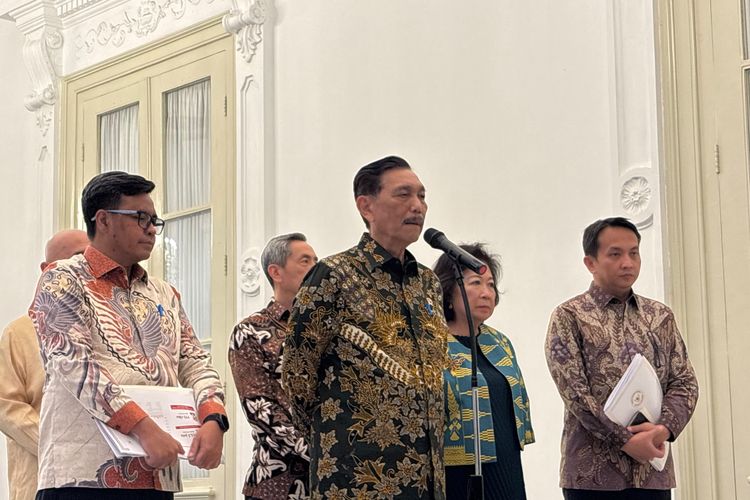
Luhut explained that legal certainty is an essential prerequisite in the government's efforts to accelerate investment and maintain growth momentum.
DEN cites the 2025 Freedom and Prosperity Indexes, which shows that the application of the rule of law has the strongest correlation with prosperity and long-term economic growth.
On the other hand, Luhut noted that the enforcement of anticorruption measures currently remains uncertain and not fully effective.
In recent years, several corruption cases have sparked public debate and attracted international scrutiny.
Indonesia ratified UNCAC through Law No. 7 of 2006, yet the adoption of the convention's standards into national law has not been comprehensive.
One example is the lack of regulation concerning bribery of foreign public officials.
Additionally, the refinement of the Tipikor Law is also a follow-up to the Constitutional Court (MK) Decisions No. 142/PUU-XXII/2024 and No. 28/PUU-XXIV/2026.
In its rulings, MK assessed that the application of Articles 2 and 3 of the Tipikor Law is currently generating inconsistencies for law enforcement officials and requested lawmakers prioritize a comprehensive review and consider remaking these two articles.
"Legal certainty is one of the main prerequisites for economic growth, and cross-country data over the past three decades consistently demonstrates this. The refinement of the Tipikor Law is not intended to weaken anticorruption efforts, but rather to ensure its enforcement is certain, just, and aligned with international standards," Luhut asserted.