

Problems Arise from Flagship Programs and the President's Circle of Power
-
News
-
4 minutes ago
This article was translated by AI. Read the original article on Kompas.com. See Original
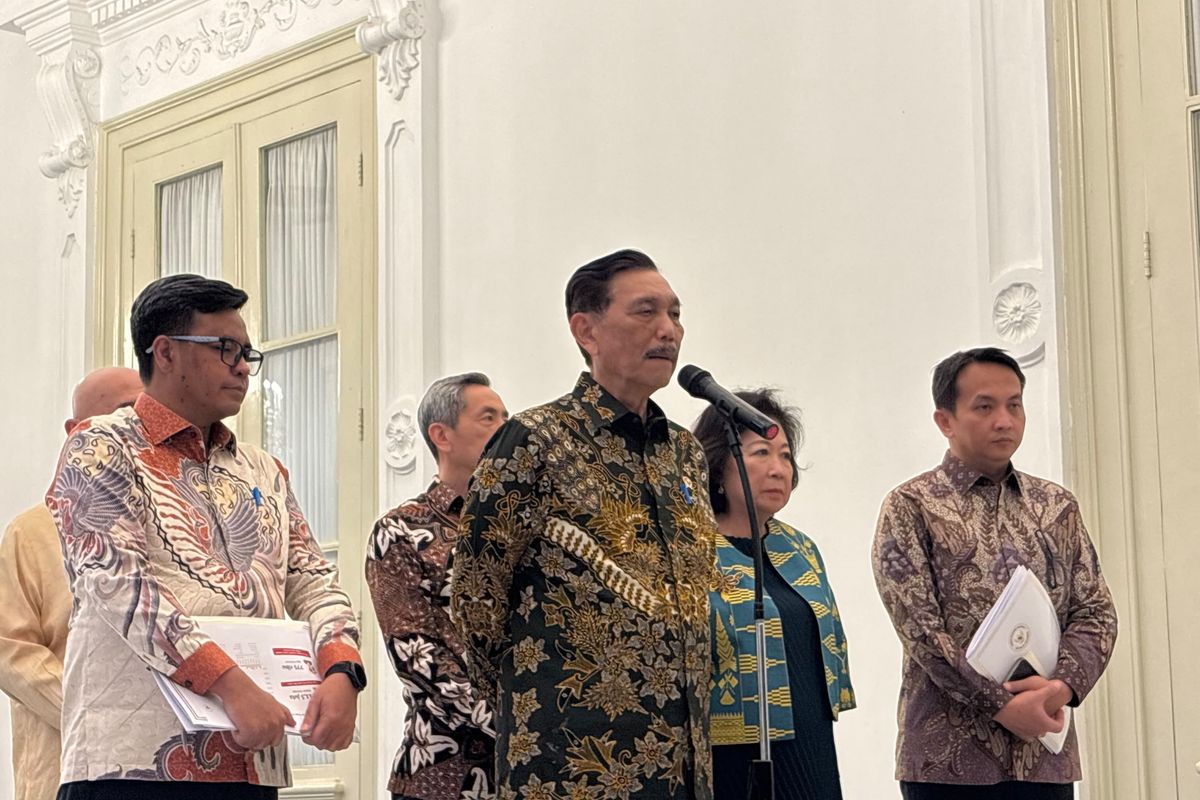
JAKARTA, KOMPAS.com - The National Economic Council (DEN) has recommended revising Articles 2 and 3 of the Corruption Eradication Law (Tipikor), as well as Articles 603 and 604 of Law No. 1 of 2023 regarding the Criminal Code (KUHP).
This improvement of the Tipikor law is one of four recommendations put forth by DEN Chairman Luhut Binsar Pandjaitan to President Prabowo Subianto.
According to an official statement from DEN quoted from its official website on Thursday (22/10/2026), the revisions pertain specifically to, "the wording of Articles 2 and 3 of the Tipikor Law and Articles 603 and 604 of the KUHP."
It is noted that in Article 2, paragraph (1) of the Tipikor Law, an act of corruption is defined as unlawful behavior intended to enrich oneself or a corporation to the detriment of state finances.
"Every person who unlawfully enriches themselves or others or a corporation, which can harm state finances or the economy of the country," reads the excerpt from Article 2, paragraph (1) of the Tipikor Law.
Furthermore, Article 3 of the Tipikor Law addresses acts of corruption related to abuse of authority.
"Every person who, with the intent to benefit themselves or others or a corporation, abuses their authority, opportunity, or resources available to them by virtue of their position or role, which can harm state finances or the economy of the country, shall be punished by life imprisonment or a minimum of 1 (one) year and a maximum of 20 (twenty) years in prison and/or a fine of at least Rp. 50,000,000.00 (fifty million rupiah) and at most Rp. 1,000,000,000.00 (one billion rupiah)," states Article 3 of the Tipikor Law.
The second recommendation from DEN is the addition of a policy judgment rule or business judgment rule.
This addition aims to ensure that business decisions made in good faith and in accordance with procedures receive protection as per international practice.
The third recommendation involves adopting offenses covered by the United Nations Convention against Corruption (UNCAC) that are not yet included in national law, such as bribery of foreign public officials.
The final recommendation is the drafting of an omnibus law on state finance to provide certainty regarding the status of state assets.
In the official statement, Luhut emphasized that state financial losses are not being removed from the definition of corruption.
This clarification comes following comments about the potential removal of state financial losses from the definition of corruption.
"State financial losses remain an element in the Tipikor Law, and misappropriated state funds must still be returned. What we are proposing is that the burden of proof be clear and objective, so that perpetrators of corruption do not escape, yet someone who makes decisions or actions in good faith is not penalized without basis. At the same time, we propose adding new offenses to broaden the scope of corruption eradication," Luhut stated.
DEN maintains that Articles 2 and 3 of the Tipikor Law, as well as Articles 603 and 604 of the KUHP, should remain unchanged.