
When Megawati Reminisces About Her Early Journey in Politics, Choosing Central Java as Her Constituency
-
News
-
6 hours ago
This article was translated by AI. Read the original article on Kompas.com. See Original
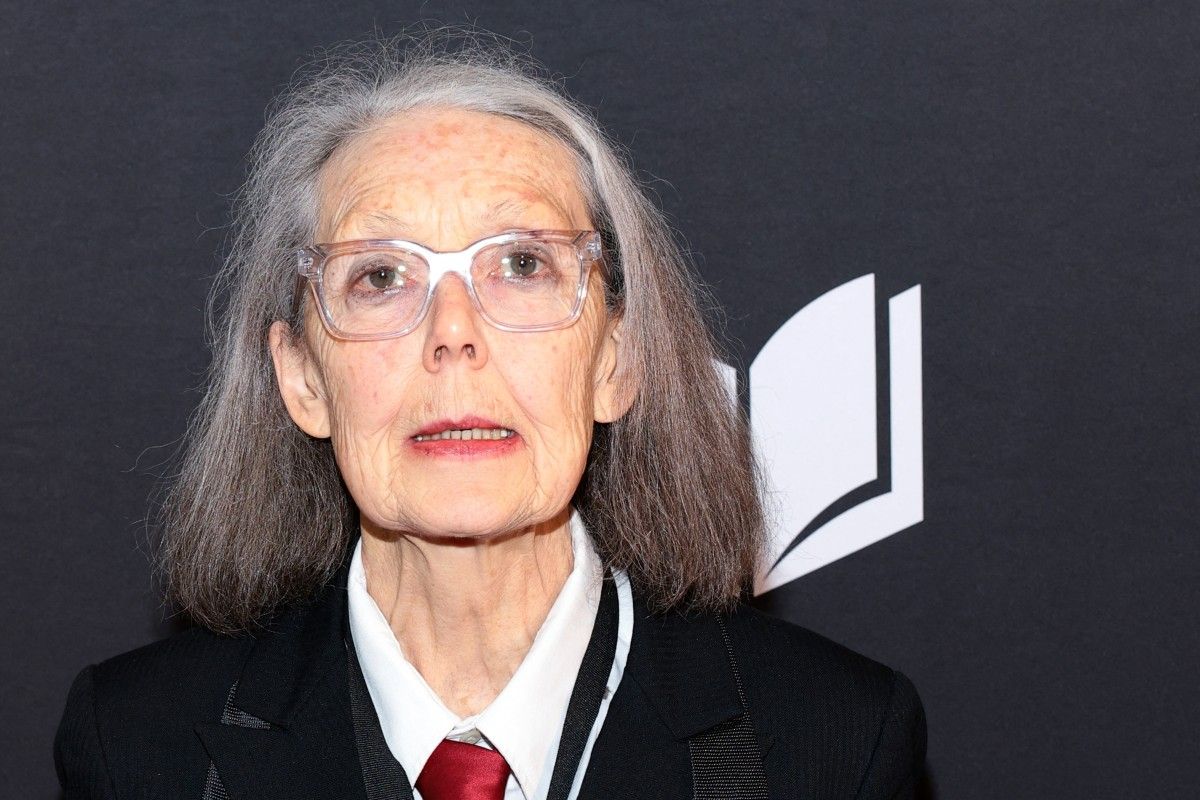
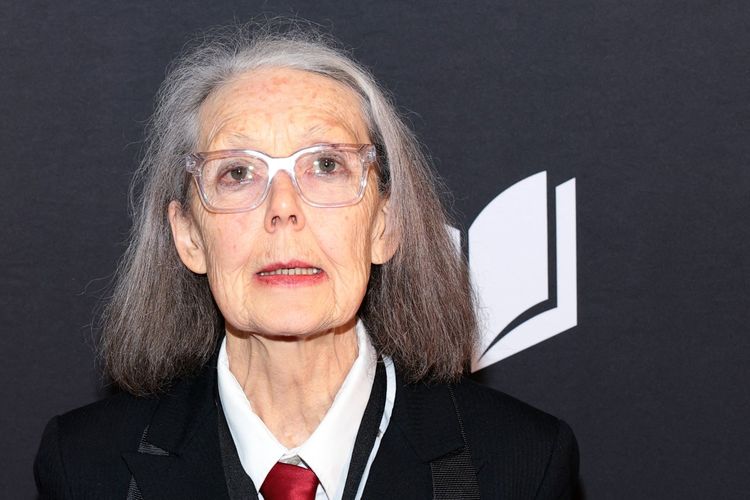
This title is not attached because her works dominate bestseller lists. She was chosen for the opposite reason. Her books do not appear in the bestseller lists.
She has become a subject of admiration among writers because Carson practices writing as a fully sovereign human affair.
She consciously and deliberately treats the pages of her books purely as language laboratories.
She remains unaffected by any influences outside of the act of expression, including commercial metrics and criteria.
She does not care about genres. She refuses to be confined or caged by genre.
Carson is often cited as a figure who shatters genre boundaries.
She radically blurs the lines between lyric poetry, academic essays, fragments of fiction, and reconstructions of ancient Greek mythology into a single fluid text.
Carson's refusal to be pigeonholed is underscored by Sem-Sandberg as previously noted.
When asked where Carson's works fit within the categorizations of contemporary fiction and poetry, she bluntly responds: "Genre is something for booksellers. It’s something you do to attract an audience and make them buy books. And where do you place Anne Carson's book? On her own shelf."
Sem-Sandberg's statement is a high praise for Carson's authenticity.
Yet, at the same time, it is a wake-up call for the reality of writers in the 21st-century digital era.
The world of writing in the digital age is a world dictated by algorithms.
The Technology Determinism Theory proposed by Marshall McLuhan in the 1960s is reaffirmed today.
McLuhan's famous adage, "the medium is the message," takes its most dramatic form these days, as social media has radically altered the writing landscape.
On one hand, total democratization has made writing a task that anyone can undertake.
With various platforms available, one no longer needs approval from institutional 'gatekeepers' of the past, such as culture editors at newspapers or single critics like H.B. Jassin in the history of Indonesian literature.
On the other hand, life does not automatically become easier, as humans are then dictated, even enslaved, by algorithms.
Digital technology fosters and nurtures what communication political economy refers to as the commodification of message content.
Written works are no longer primarily a means of transmitting ideas or an independent space for aesthetic contemplation.
It has become a commercial commodity in pursuit of metrics that erode human sovereignty, particularly for writers.
Digital authors, consciously or unconsciously, are forced to barter their distinctive stylistic independence for the rules of algorithms, in exchange for abstract numbers—likes, views, retweets, shares, and keyword optimization for screen visibility.
For a work to be "noticed" and circulated by digital communication channels, writers are powerless to reject a mindset that requires them to fit into specific commercial genre boxes.
Some must languish in the box of biographical history writers, while others are confined as young adult romance fiction authors. Many identify themselves as spiritual writers.
In a world like today, the space to create works akin to those produced by Carson is extremely limited. Artificial intelligence will struggle to categorize them.
The consequence is that such genre-less writings may easily be buried in digital silence, with readability metrics approaching zero.
The bookshelf constructed by Carson increasingly becomes marginalized as digital writing is inundated with capitalist jargon promising illusory ease.
Writing workshops now flourish with a mindset to serve the market.
Pragmatic jargon that promises false simplicity: "Writing is Easy," "Write a Book in 100 Hours," to aggressive slogan tutorial classes like "How to Create a Book with Generative AI Overnight for Passive Income," are produced and offered without shame.
Under the shadow of this fast-food industry, the writing process has shifted from what was once a deep interpersonal communication ritual to the mass production of commercial commodities chasing headlines.
Writing is forced to be born prematurely with a uniform recipe to cater to the shallow appetites of mass consumption.
The emergence of Anne Carson, now at the age of 76, as the winner of the 2026 Nobel Prize in Literature stands in stark contrast.
She is the antithesis of writing dictated by algorithms and deadline chasing.
Even when she was struck by profound sadness from the death of her brother, Carson did not write a conventional elegy.