
When Megawati Reminisces About Her Early Journey in Politics, Choosing Central Java as Her Constituency
-
News
-
6 hours ago
This article was translated by AI. Read the original article on Kompas.com. See Original
THERE WAS a golden age when writing was entirely an autonomous act.
It was a sacred space where individuals could actualize themselves. Writing is the celebration of the truest freedom of thought.
However, today's digital landscape has fundamentally shifted that axis.
Writing is no longer a medium of free self-expression. It has transitioned into a new form of servitude to algorithms.
In pursuit of visibility and instant validation, modern writers are often compelled to conform to metrics and search engine trends.
Writers also cannot escape the obligation to fit into market readership categories, writing specialties, or genres.
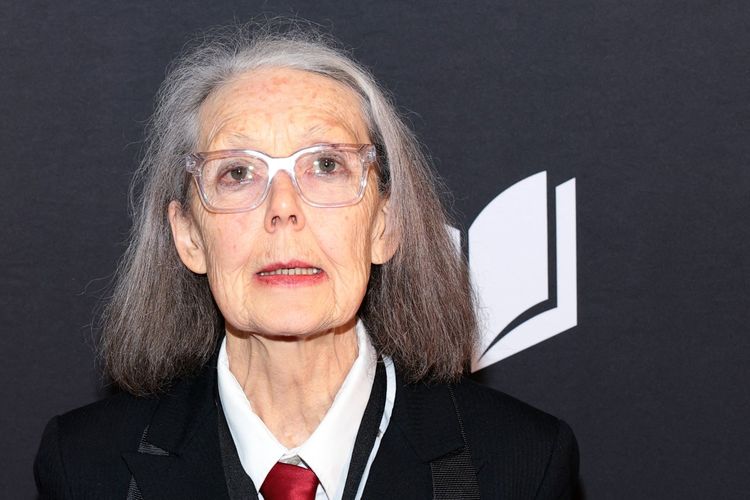
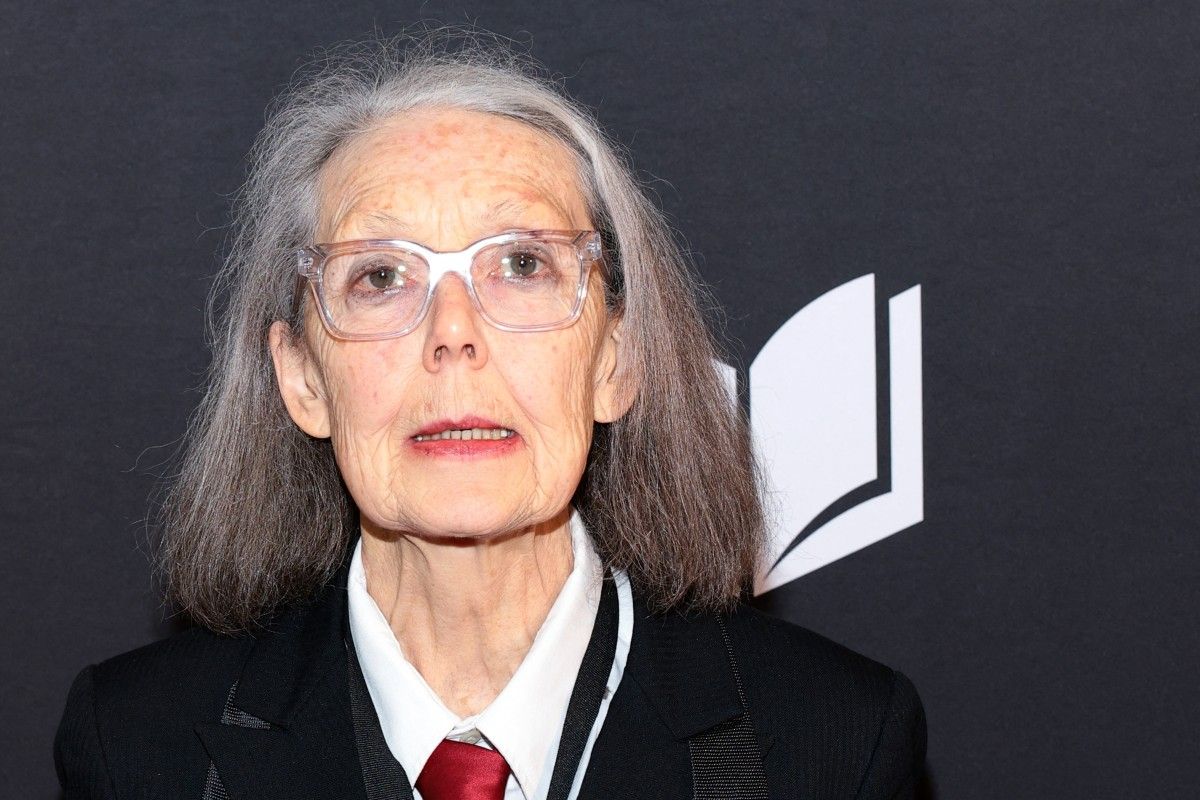
The selection of Anne Carson as the winner of the 2026 Nobel Prize in Literature, announced recently, appears as both an anomaly and a form of resistance.
Her works symbolize a backlash against the tendencies of the literary world enslaved by algorithms.
The writing industry demands adherence to formats for machine readability, yet Carson leaps over the fences of conventional literary genres.
Carson refuses to submit to a world that increasingly confines literary works into narrow identities.
As stated by Steve Sem-Sandberg, a member of the Swedish Academy and the Nobel Committee for Literature, Carson is a writer who creates and "has her own shelf."
The shelf referred to is the one in bookstores where the works of authors are displayed and commodified.
According to Sem-Sandberg's symbolism, Carson's works cannot be contained on conventional bookshelves. Therefore, she has built her own shelf.
Sem-Sandberg's statement can also be interpreted to mean that for Carson, true writing does not require external validation, let alone submission to market mechanisms.
Carson's works are the efforts of a writer who consciously ignores how her works will be categorized by the world.
The writer creates with unwavering loyalty to aesthetics.
Anne Carson, born in 1950, is a Canadian professor of classical languages. Her official short biography from the Nobel Committee states, "Throughout her career, she has combined poetry writing with translation and teaching at various universities."
All of her literary works, according to the Nobel Committee, center around the intersection of a philologist's obsession with words and a poet's desire to discover new meanings.
She herself states that the etymology of words is the starting point for all her works.
Often, she writes to fend off a boredom she calls her arch-nemesis.
Thus, she writes with a sense of humor to produce works that do not adhere to any specific formula.
'The Beauty of the Husband: A Fictional Essay in 29 Tangos,' for example, consists of twenty-nine episodes.
Each episode opens with a quote from the poetry of Romantic poet John Keats.
Keats's wise words about beauty as truth are juxtaposed with the draining drama of relationships.
Throughout her writing career, Carson has explored various possibilities in writing.
'Float' (2016), for instance, is an unusual book consisting of twenty-two chapbooks on different subjects that can be read in any order.
Another example, 'Wrong Norma' (2024), is a blend of diverse texts with strong performative aspects. This work transcends various fields of art and academic texts.
According to the Nobel Committee, "Her collaborations with visual artists, choreographers, and opera and theater directors demonstrate Carson's freedom to address literary expectations and existing systems of rules."
This is what underpins the significance of Carson's works since the 1990s in the international art and literary scene.
Media have labeled her works as highly Anglo-centric. Readers need a deep understanding of her poetry and ancient Greek mythology to grasp her writings.
However, the Nobel Committee does not rely on popularity.
They chose Carson because, according to the Nobel Committee, she writes "daring and inventive works that, through a witty dialogue with classical tradition, have created new forms for contemporary literature."
Carson is dubbed the "poet's poet."
This title is not attached because her works dominate bestseller lists. She was chosen for the opposite reason. Her books do not appear in the bestseller lists.
She has become a subject of admiration among writers because Carson practices writing as a fully sovereign human affair.
She consciously and deliberately treats the pages of her books purely as language laboratories.
She remains unaffected by any influences outside of the act of expression, including commercial metrics and criteria.
She does not care about genres. She refuses to be confined or caged by genre.
Carson is often cited as a figure who shatters genre boundaries.
She radically blurs the lines between lyric poetry, academic essays, fragments of fiction, and reconstructions of ancient Greek mythology into a single fluid text.
Carson's refusal to be pigeonholed is underscored by Sem-Sandberg as previously noted.
When asked where Carson's works fit within the categorizations of contemporary fiction and poetry, she bluntly responds: "Genre is something for booksellers. It’s something you do to attract an audience and make them buy books. And where do you place Anne Carson's book? On her own shelf."
Sem-Sandberg's statement is a high praise for Carson's authenticity.
Yet, at the same time, it is a wake-up call for the reality of writers in the 21st-century digital era.
The world of writing in the digital age is a world dictated by algorithms.
The Technology Determinism Theory proposed by Marshall McLuhan in the 1960s is reaffirmed today.
McLuhan's famous adage, "the medium is the message," takes its most dramatic form these days, as social media has radically altered the writing landscape.
On one hand, total democratization has made writing a task that anyone can undertake.
With various platforms available, one no longer needs approval from institutional 'gatekeepers' of the past, such as culture editors at newspapers or single critics like H.B. Jassin in the history of Indonesian literature.
On the other hand, life does not automatically become easier, as humans are then dictated, even enslaved, by algorithms.
Digital technology fosters and nurtures what communication political economy refers to as the commodification of message content.
Written works are no longer primarily a means of transmitting ideas or an independent space for aesthetic contemplation.
It has become a commercial commodity in pursuit of metrics that erode human sovereignty, particularly for writers.
Digital authors, consciously or unconsciously, are forced to barter their distinctive stylistic independence for the rules of algorithms, in exchange for abstract numbers—likes, views, retweets, shares, and keyword optimization for screen visibility.
For a work to be "noticed" and circulated by digital communication channels, writers are powerless to reject a mindset that requires them to fit into specific commercial genre boxes.
Some must languish in the box of biographical history writers, while others are confined as young adult romance fiction authors. Many identify themselves as spiritual writers.
In a world like today, the space to create works akin to those produced by Carson is extremely limited. Artificial intelligence will struggle to categorize them.
The consequence is that such genre-less writings may easily be buried in digital silence, with readability metrics approaching zero.
The bookshelf constructed by Carson increasingly becomes marginalized as digital writing is inundated with capitalist jargon promising illusory ease.
Writing workshops now flourish with a mindset to serve the market.
Pragmatic jargon that promises false simplicity: "Writing is Easy," "Write a Book in 100 Hours," to aggressive slogan tutorial classes like "How to Create a Book with Generative AI Overnight for Passive Income," are produced and offered without shame.
Under the shadow of this fast-food industry, the writing process has shifted from what was once a deep interpersonal communication ritual to the mass production of commercial commodities chasing headlines.
Writing is forced to be born prematurely with a uniform recipe to cater to the shallow appetites of mass consumption.
The emergence of Anne Carson, now at the age of 76, as the winner of the 2026 Nobel Prize in Literature stands in stark contrast.
She is the antithesis of writing dictated by algorithms and deadline chasing.
Even when she was struck by profound sadness from the death of her brother, Carson did not write a conventional elegy.
She produced 'Nox,' a work of mourning literature shaped as a collage of poetic clippings, old letters, and a Latin translation dictionary, presented in a physical box resembling a long accordion fold.
This physical format, impossible to be commodified entirely into the scroll of a mobile phone screen or reproduced by generative AI, seems to convey that Carson has never cared whether her works are industry-friendly.
For her, a great work requires time to settle, reflect, and discover its destiny with readers.
Considering the contradictory landscape between the realities faced by writers in the digital era and Carson's reluctance to follow the norms, what message does the Nobel Committee wish to convey by selecting her as their literary icon this year?
Is the Nobel Committee presenting Carson as a living example for writers in the digital era to use as a cornerstone?
Or is she instead destined to be a 'saint' in the seventh heaven, admired but whose steps can no longer be emulated due to the vastly different reality?
It must be said that the idealistic independence of an Anne Carson in disrupting literary norms and disregarding the market is a luxury that not everyone can afford.
Carson enjoys a personal comfort that somewhat affords her the freedom to write as she wishes.
Her life is supported by a robust structural privilege.
Throughout her life, Carson has worked for over three decades as a professor and lecturer in classical languages at elite universities like McGill, Princeton, Michigan, and NYU.
This financial assurance has provided her with an extraordinary economic cushion. She does not have to sell her books to keep her household running.
Carson can write complex experimental poetry and translate fragmented Sapphic poetry freely.
She is not betting her life on paying monthly bills or home mortgages through accumulated book sales royalties.
Carson's economic condition stands in stark contrast to the 180-degree reality faced by independent writers in the social media era.
For writers who solely rely on writing for a living, racing with digital algorithms and exhausting personal branding on TikTok is a concrete way to survive and sustain this profession.
If they are forced to write clichéd formulaic stories, it is not indicative that they are artists thirsty for popularity or lacking in ideals. It is a mechanism for survival.
Without high readability metrics on digital platforms or massive follower counts, they will never attract the attention of mainstream publishers.
They will not secure book contracts and will not be invited to literary festivals.
Therefore, judging those who cannot be as sovereign as Carson as writers lacking in idealism, while idolizing Carson’s freedom to experiment can trap us in economic class bias.
These two camps are fighters in the literary world, both keeping the writing profession alive.
It would be counterproductive for the sustainability of the literary world in the future if their conflict widens.
Thus, the Nobel Committee's decision to honor Carson should not be interpreted as a directive for all writers to imitate her.
Rather, her selection as a laureate can be interpreted as a conservation action for a rare writer's figure.
The Nobel Committee seeks to make us aware that the digital ecosystem of this century has changed so much that it is impossible for today's world to produce a "new Anne Carson."
By awarding Carson, the Nobel is not presenting a blueprint for the next generation to follow in writing techniques—because emulating this without strong financial guarantees would be economic suicide.
This award, at its most melancholic point, serves as a sanctuary for the rare spirit and perseverance.
Carson is celebrated as an inspirational icon, a reminder for future generations that our civilization once had such a creatively brilliant writer before everything was standardized by machines.
Anne Carson's victory represents a consolation for our collective guilt regarding the loss of human depth of thought in the digital age.
In an era when the book industry is driven by global virality trends and artificial intelligence can assemble hundreds of pages of text in seconds, a philologist dedicating decades to translating ancient fragments of poetry is a romantic irony.
The Nobel Committee, in other words, is erecting the last fortress to protect a nearly extinct rare species.
And that fortress stands so far away, out of reach.
It resides in the silence distant from the extreme realities faced by independent writers who must battle digital algorithms daily for survival.