
When Megawati Reminisces About Her Early Journey in Politics, Choosing Central Java as Her Constituency
-
News
-
6 hours ago
This article was translated by AI. Read the original article on Kompas.com. See Original
THERE WAS a golden age when writing was entirely an autonomous act.
It was a sacred space where individuals could actualize themselves. Writing is the celebration of the truest freedom of thought.
However, today's digital landscape has fundamentally shifted that axis.
Writing is no longer a medium of free self-expression. It has transitioned into a new form of servitude to algorithms.
In pursuit of visibility and instant validation, modern writers are often compelled to conform to metrics and search engine trends.
Writers also cannot escape the obligation to fit into market readership categories, writing specialties, or genres.
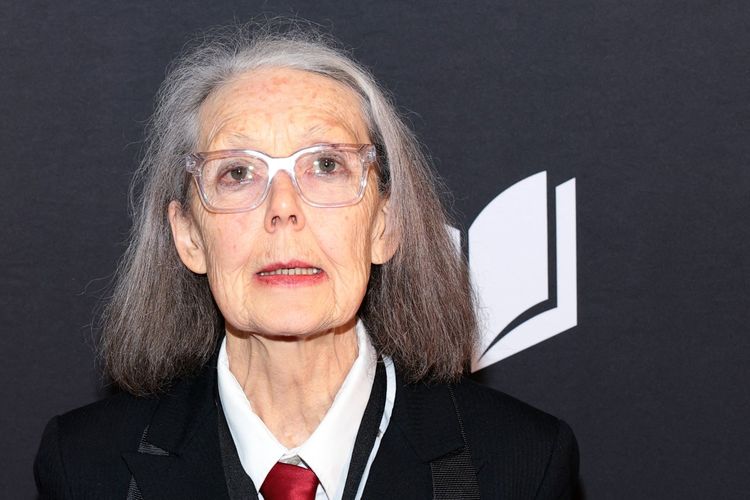
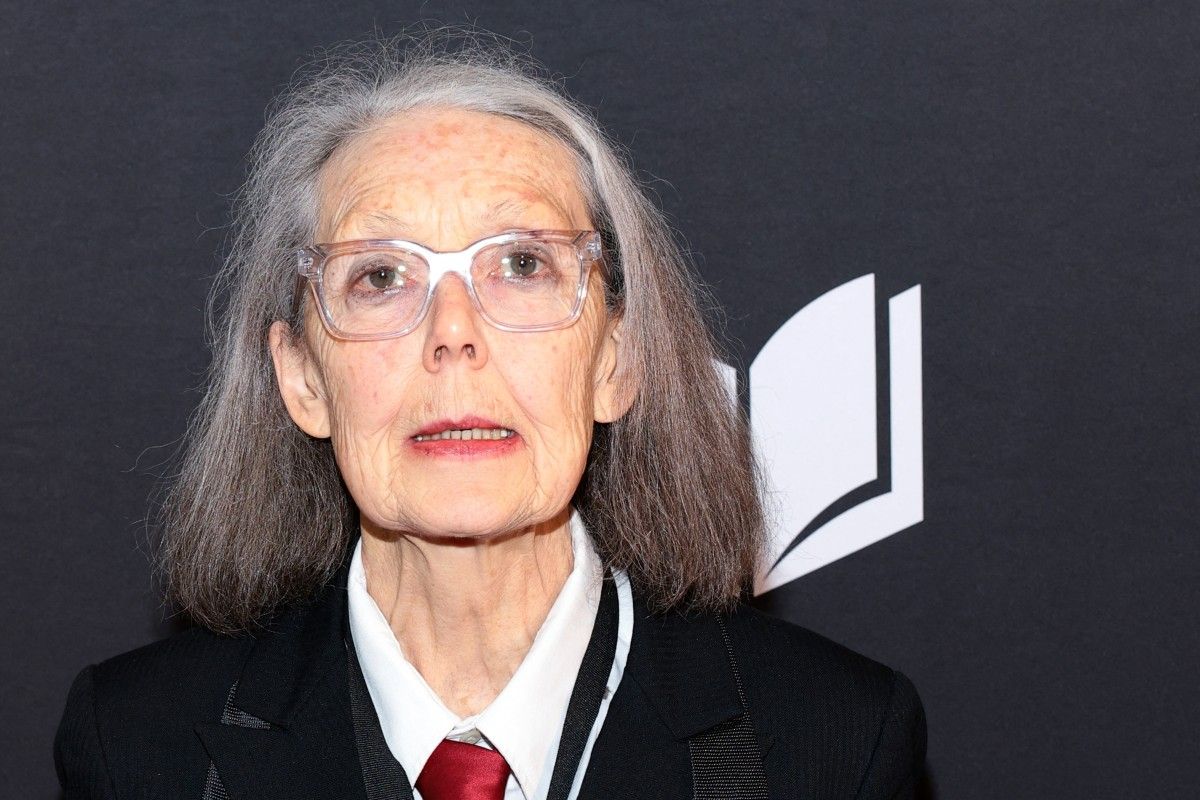
The selection of Anne Carson as the winner of the 2026 Nobel Prize in Literature, announced recently, appears as both an anomaly and a form of resistance.
Her works symbolize a backlash against the tendencies of the literary world enslaved by algorithms.
The writing industry demands adherence to formats for machine readability, yet Carson leaps over the fences of conventional literary genres.
Carson refuses to submit to a world that increasingly confines literary works into narrow identities.
As stated by Steve Sem-Sandberg, a member of the Swedish Academy and the Nobel Committee for Literature, Carson is a writer who creates and "has her own shelf."
The shelf referred to is the one in bookstores where the works of authors are displayed and commodified.
According to Sem-Sandberg's symbolism, Carson's works cannot be contained on conventional bookshelves. Therefore, she has built her own shelf.
Sem-Sandberg's statement can also be interpreted to mean that for Carson, true writing does not require external validation, let alone submission to market mechanisms.
Carson's works are the efforts of a writer who consciously ignores how her works will be categorized by the world.
The writer creates with unwavering loyalty to aesthetics.
Anne Carson, born in 1950, is a Canadian professor of classical languages. Her official short biography from the Nobel Committee states, "Throughout her career, she has combined poetry writing with translation and teaching at various universities."
All of her literary works, according to the Nobel Committee, center around the intersection of a philologist's obsession with words and a poet's desire to discover new meanings.
She herself states that the etymology of words is the starting point for all her works.
Often, she writes to fend off a boredom she calls her arch-nemesis.
Thus, she writes with a sense of humor to produce works that do not adhere to any specific formula.
'The Beauty of the Husband: A Fictional Essay in 29 Tangos,' for example, consists of twenty-nine episodes.
Each episode opens with a quote from the poetry of Romantic poet John Keats.
Keats's wise words about beauty as truth are juxtaposed with the draining drama of relationships.
Throughout her writing career, Carson has explored various possibilities in writing.
'Float' (2016), for instance, is an unusual book consisting of twenty-two chapbooks on different subjects that can be read in any order.
Another example, 'Wrong Norma' (2024), is a blend of diverse texts with strong performative aspects. This work transcends various fields of art and academic texts.
According to the Nobel Committee, "Her collaborations with visual artists, choreographers, and opera and theater directors demonstrate Carson's freedom to address literary expectations and existing systems of rules."
This is what underpins the significance of Carson's works since the 1990s in the international art and literary scene.
Media have labeled her works as highly Anglo-centric. Readers need a deep understanding of her poetry and ancient Greek mythology to grasp her writings.
However, the Nobel Committee does not rely on popularity.
They chose Carson because, according to the Nobel Committee, she writes "daring and inventive works that, through a witty dialogue with classical tradition, have created new forms for contemporary literature."
Carson is dubbed the "poet's poet."