


The Opening of Talent Transfer Market
-
News
-
11 minutes ago
This article was translated by AI. Read the original article on Kompas.com. See Original
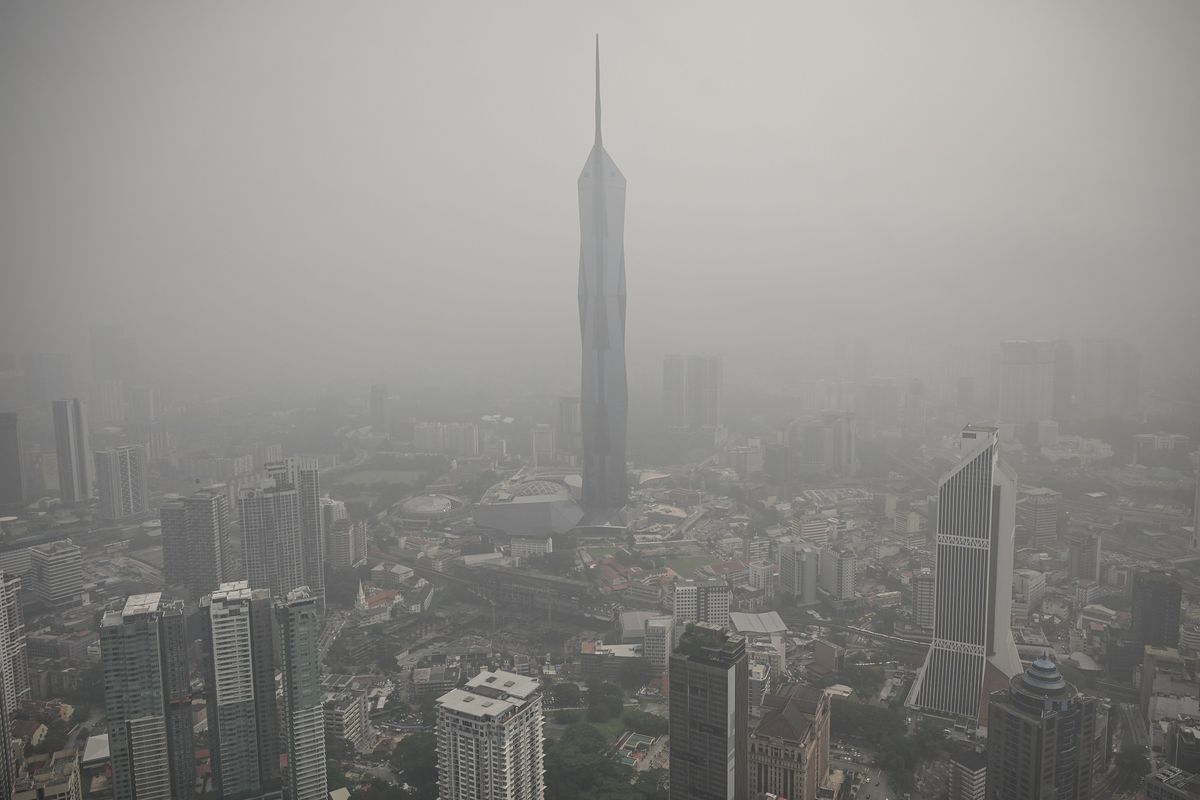
FOREST FIRES in various regions of Sumatra and Kalimantan serve as a stark reminder of the persistent issue of cross-border haze that has long overshadowed Indonesia's relationship with its neighboring countries.
The smoke carried by the wind knows no identity cards or national borders.
The impact is not only felt by the Indonesian people but also by those in Malaysia and Singapore.
For neighboring countries, haze is not merely an environmental issue; it also relates to public health, economic activities, and shared responsibilities in neighborly relations.
Amid this issue, a controversy arose regarding a statement linked to the Head of the Indonesian Government Communications Agency about sending oxygen from Indonesian forests to neighboring countries.
This statement came under scrutiny for being perceived as insensitive to the complaints of those affected by the haze.
Regardless of intent, this incident illustrates that government officials’ communications regarding other nations cannot be viewed solely as domestic political discourse.
A statement aimed at a domestic audience can take on a different meaning when received by the public and government of another country.
The question arises: do officials realize that their statements about other nations may be interpreted as Indonesia's official stance?
In classical diplomacy, communication between nations generally occurs through official channels, primarily the foreign ministry and diplomatic representatives.
However, globalization, advances in communication technology, and the complexity of international relations have broadened the actors involved in diplomacy.
The Minister of Trade speaks on international trade, the Minister of Defense discusses security cooperation, while the Minister of the Environment addresses cross-border environmental issues.
Even regional governments are becoming increasingly active in international relations (paradiplomacy), as are non-state actors.
This situation is a natural consequence of modern diplomatic developments. International relations no longer only encompass politics and security, but also involve economics, health, education, the environment, and technology.
Therefore, the involvement of many actors is not an issue. Problems arise when the communications of various institutions are not aligned within the same foreign policy framework.
This is where distinguishing between the democratization of diplomacy and the fragmentation of diplomatic communication becomes necessary.
Democratization expands participation, whereas fragmentation can lead to inconsistent, even contradictory, messages.
As a result, a country that is expected to convey a clear position ends up presenting various statements that confuse external parties.
In communication theory, Claude Shannon and Warren Weaver introduced the concepts of signal and noise (The Mathematical Theory of Communication, 1949).
The signal is the information intended to be conveyed, while noise refers to disturbances that obscure the clarity of the message.
This concept can serve as an analogy for diplomatic communication.
The signal encompasses foreign policy and the official positions of the government articulated by authorized officials.
Conversely, noise may manifest as uncoordinated statements, misinformation, differing narratives among agencies, or distortions through social media.
The greater the number of officials delivering different messages regarding the same international issue, the higher the likelihood that the clarity of foreign policy will be compromised.

























