

The Opening of Talent Transfer Market
-
News
-
11 minutes ago
This article was translated by AI. Read the original article on Kompas.com. See Original
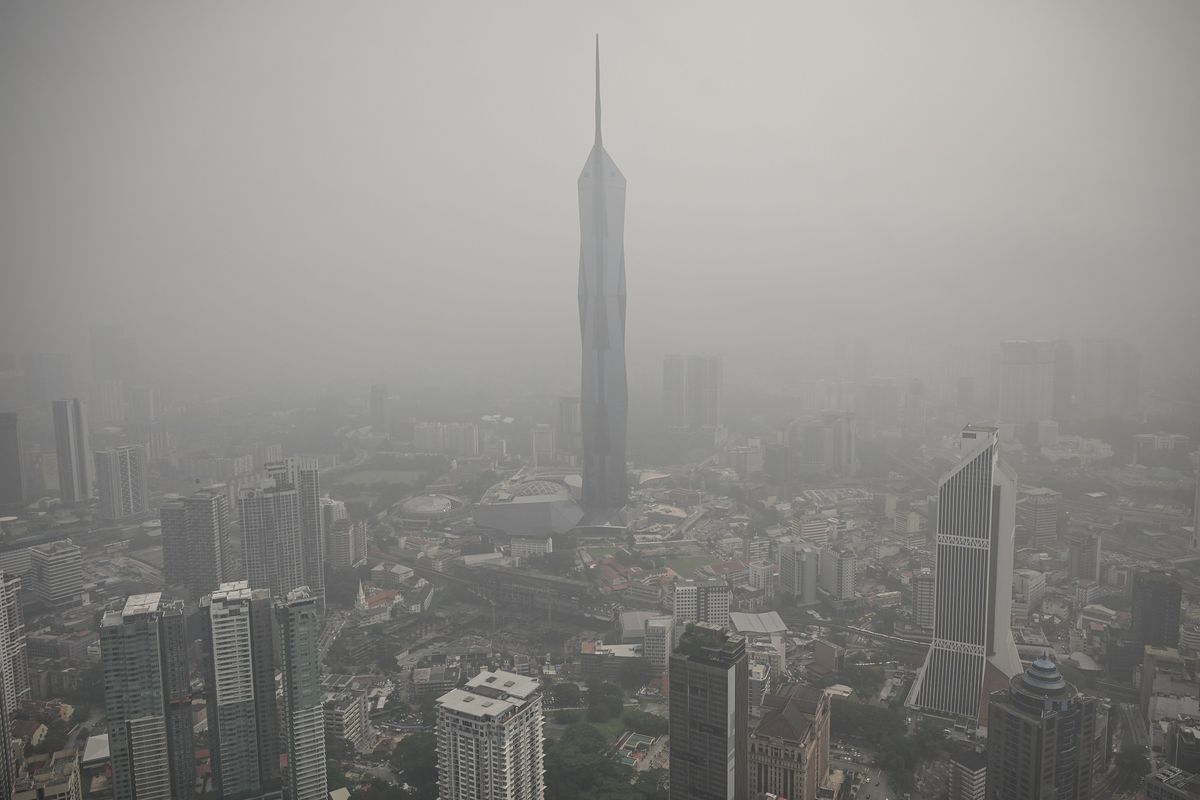
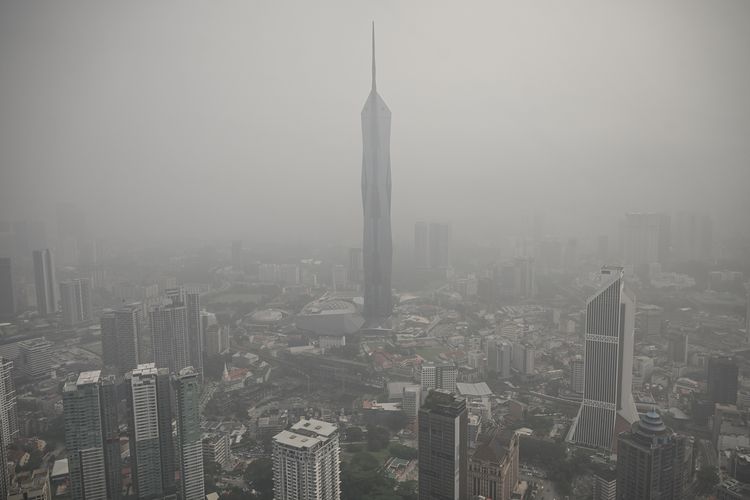
FOREST FIRES in various regions of Sumatra and Kalimantan serve as a stark reminder of the persistent issue of cross-border haze that has long overshadowed Indonesia's relationship with its neighboring countries.
The smoke carried by the wind knows no identity cards or national borders.
The impact is not only felt by the Indonesian people but also by those in Malaysia and Singapore.
For neighboring countries, haze is not merely an environmental issue; it also relates to public health, economic activities, and shared responsibilities in neighborly relations.
Amid this issue, a controversy arose regarding a statement linked to the Head of the Indonesian Government Communications Agency about sending oxygen from Indonesian forests to neighboring countries.
This statement came under scrutiny for being perceived as insensitive to the complaints of those affected by the haze.
Regardless of intent, this incident illustrates that government officials’ communications regarding other nations cannot be viewed solely as domestic political discourse.
A statement aimed at a domestic audience can take on a different meaning when received by the public and government of another country.
The question arises: do officials realize that their statements about other nations may be interpreted as Indonesia's official stance?
In classical diplomacy, communication between nations generally occurs through official channels, primarily the foreign ministry and diplomatic representatives.
However, globalization, advances in communication technology, and the complexity of international relations have broadened the actors involved in diplomacy.
The Minister of Trade speaks on international trade, the Minister of Defense discusses security cooperation, while the Minister of the Environment addresses cross-border environmental issues.
Even regional governments are becoming increasingly active in international relations (paradiplomacy), as are non-state actors.
This situation is a natural consequence of modern diplomatic developments. International relations no longer only encompass politics and security, but also involve economics, health, education, the environment, and technology.
Therefore, the involvement of many actors is not an issue. Problems arise when the communications of various institutions are not aligned within the same foreign policy framework.
This is where distinguishing between the democratization of diplomacy and the fragmentation of diplomatic communication becomes necessary.
Democratization expands participation, whereas fragmentation can lead to inconsistent, even contradictory, messages.
As a result, a country that is expected to convey a clear position ends up presenting various statements that confuse external parties.
In communication theory, Claude Shannon and Warren Weaver introduced the concepts of signal and noise (The Mathematical Theory of Communication, 1949).
The signal is the information intended to be conveyed, while noise refers to disturbances that obscure the clarity of the message.
This concept can serve as an analogy for diplomatic communication.
The signal encompasses foreign policy and the official positions of the government articulated by authorized officials.
Conversely, noise may manifest as uncoordinated statements, misinformation, differing narratives among agencies, or distortions through social media.
The greater the number of officials delivering different messages regarding the same international issue, the higher the likelihood that the clarity of foreign policy will be compromised.
The rise of digital technology amplifies these challenges.
Official statements can spread to various countries within seconds, often before the government can provide clarification through diplomatic channels.
In diplomacy, perceptions are often as significant as the substance of the message.
Joseph Nye, through his concept of soft power (Soft Power: The Means to Success in World Politics, 2004), highlights the importance of attraction, values, and the legitimacy of policies in influencing others.
Credibility becomes a crucial factor for such influence to operate effectively.
Thus, statements from officials that are perceived as belittling or insensitive regarding another country's issues may potentially spark diplomatic friction, even if unintended.
This issue can also be understood through Robert Putnam's concept of two-level games (Diplomacy and Domestic Politics: The Logic of Two-Level Games, 1988), which describes the interplay between domestic politics and international relations.
A statement intended to assert firmness to the domestic audience may not necessarily be interpreted similarly abroad.
What is perceived as defending national interests domestically can be viewed differently by other nations.
In the context of Indonesia's relations with Malaysia and Singapore, such sensitivity is paramount.
The relationship among the three countries encompasses trade, investment, labor, security, environmental issues, and ASEAN cooperation.
Therefore, addressing cross-border haze requires not only technical measures but also diplomatic communication that demonstrates empathy, responsibility, and a commitment to collaboration.
The question then arises, who speaks on behalf of Indonesia?
Law Number 37 of 1999 on Foreign Affairs establishes the foundation for conducting foreign relations and implementing Indonesia's foreign policy.
The President holds the authority in managing foreign relations, while the Minister of Foreign Affairs plays a crucial role in assisting the President in executing these powers.
However, this does not mean that other ministries or agencies are prohibited from addressing international issues.
In modern diplomacy, the involvement of various agencies becomes a necessity.
What is needed is coordination to ensure that communications align with Indonesia's foreign policy.
The experiences of former President Susilo Bambang Yudhoyono's (SBY) administration can serve as a reference.
During his tenure, SBY distinguished the function of the presidential spokesperson for domestic and foreign affairs.
Andi Mallarangeng, later succeeded by Julian Aldrin Pasha, handled domestic communication, while Dino Patti Djalal, a career diplomat, managed foreign relations communication.
This distribution indicates that foreign relations communication has its distinct characteristics and sensitivities.
Statements regarding other countries should not only consider domestic interests but also the implications for diplomatic relations.
This model need not be applied in the same form again. Nonetheless, the principles of authority clarity, division of responsibilities, and inter-agency coordination remain relevant.
The issue is not to make the Ministry of Foreign Affairs the sole agency allowed to discuss international matters but to ensure that the diversity of actors does not undermine Indonesia's consistent stance.
For this, amidst the increasing number of officials commenting on international issues, the Ministry of Foreign Affairs is called upon to be more proactive in presenting Indonesia's official position to the public.
The Ministry must not only conduct diplomacy through formal intergovernmental channels. In this information age, it must also be present quickly, clearly, and consistently to explain Indonesia's stance on international developments.
Delay in providing official explanations can create information vacuums.
This space can be filled with statements from officials of ministries or other agencies who may not fully grasp the diplomatic sensitivities of an issue.
Thus, the Ministry must strengthen its role as the primary reference for foreign policy communication.
Official statements do not always have to come from the Minister of Foreign Affairs. Spokespersons from the Ministry, relevant officials, or Indonesia's diplomatic representatives can fulfill this role within their respective authorities.
Regular press conferences, explanations of international issues, and the use of digital media should be optimized.
The Ministry should also be more responsive when statements from officials that may lead to diplomatic misunderstandings arise.
However, a proactive stance does not mean the Ministry must respond to every controversy.
Prioritization is necessary for issues concerning national interests and relationships with other countries.
In the case of haze, for instance, diplomatic communication should not stop at explaining firefighting efforts.
The government also needs to convey its commitment to addressing issues, regional cooperation, and preventative measures to ensure similar problems don't recur.
Thus, the Ministry of Foreign Affairs should not merely be an agency providing clarifications after a controversy arises, but also a proactive institution shaping Indonesia's diplomatic narrative.
The communication polemic about haze provides important lessons on the need to strengthen the governance of diplomatic communication.
At least three steps are necessary. First, enhancing the role of the Ministry of Foreign Affairs in rapidly, clearly, and consistently communicating the government's official position.
Second, improving coordination of international communication across ministries and agencies.
Third, fostering diplomatic awareness among public officials so that every statement regarding other countries considers international relationship consequences.
Ultimately, this issue is not just about who has the right to speak on behalf of Indonesia, but how to maintain the country's dignity in international relations.
Modern diplomacy is no longer a monopoly of diplomats.
However, the involvement of numerous actors must not lead Indonesia to lose a unified voice in articulating its national interests.
In diplomacy, a country's strength is not determined by how many officials speak, but by how clear, consistent, and authoritative its message is to the world.

























