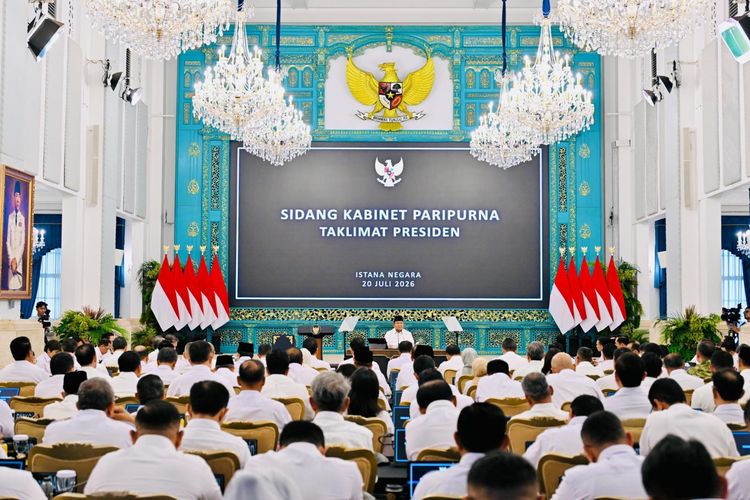


Health Minister Prays for President Prabowo to Live to 100 Years
-
News
-
Just now
This article was translated by AI. Read the original article on Kompas.com. See Original
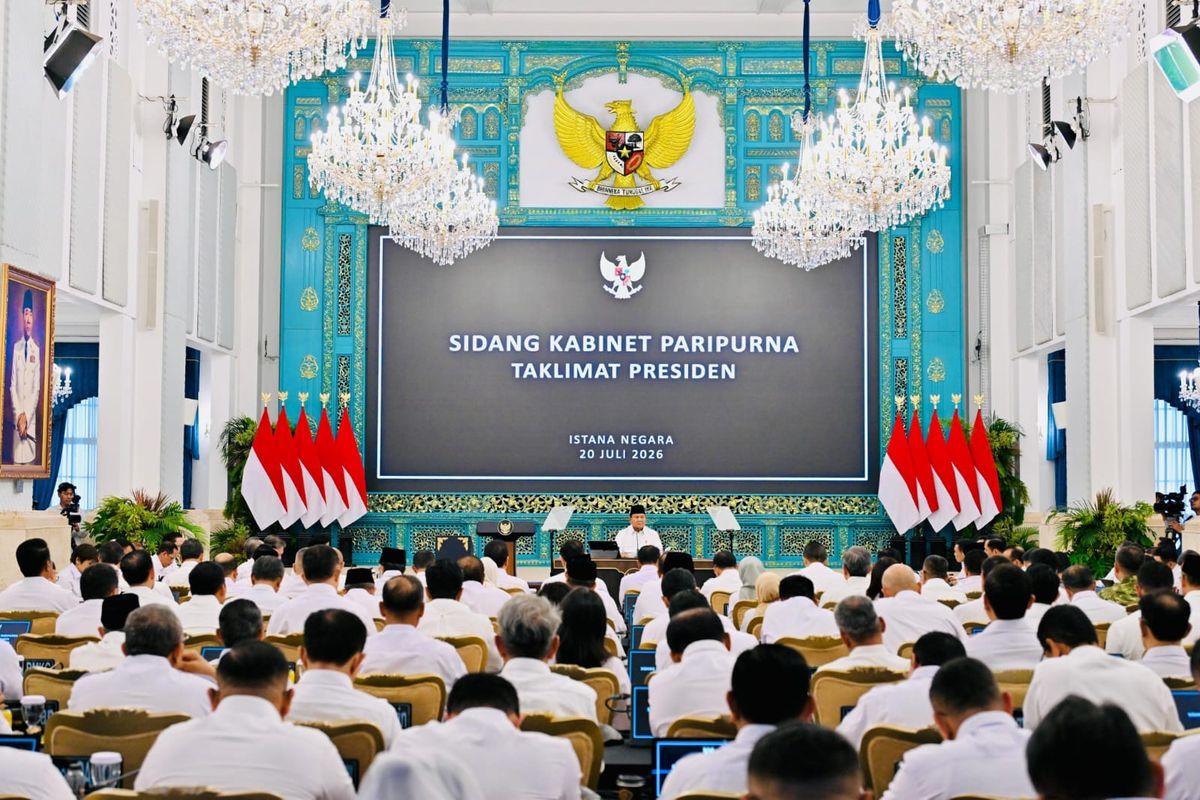
Without these three elements, cabinet expansion risks increasing budget burdens without providing commensurate value to public services.
Indeed, the formation and organization of the cabinet fall under the constitutional authority of the President as the head of government, as outlined in the 1945 Constitution of the Republic of Indonesia.
However, this authority does not imply that the cabinet's design is exempt from public scrutiny. Every exercise of executive authority must be accountable based on state operational needs, institutional effectiveness, and fiscal accountability principles.
In this context, Francis Fukuyama's thoughts in his book, "State-Building: Governance and World Order in the 21st Century," are once again relevant for understanding this issue.
Fukuyama emphasizes the importance of state capacity in performing governance functions effectively. The significance of the state does not automatically indicate robust capacity.
Expansion of structure and authority, without adequate institutional capability, may complicate coordination, weaken policy implementation effectiveness, and increase the space for inefficiency and weak accountability.
This means that state capacity building cannot merely be accomplished by adding institutions or positions; it must be accompanied by strengthening organizational capabilities to produce effective policies and public services.
If this framework of thought is applied to assess the current state of governance, several fundamental questions must be posed.
Does the current cabinet structure genuinely reflect the technocratic needs of the state or predominantly accommodate the interests of political consolidation?
Moreover, have the distributions of tasks among ministries, agencies, and government bodies been designed based on clear function differentiation?
Or are there still overlaps of authority, program duplications, and multiple agencies addressing similar fields without clear responsibility delineation?
As the second year of President Prabowo Subianto's administration approaches, a systematic institutional evaluation must be conducted.
This evaluation should include the suitability of mandates, workloads, position needs, coordination effectiveness, and operational costs of each institution.
The government also needs to measure the relationship between expenditures and outcomes achieved.
Thus, the addition of positions or the formation of new agencies should not solely be based on political considerations, but must have foundations in technocratic needs, organizational rationality, and measurable benefits.
Amid the debate about the vastness of the cabinet structure, we must also look at a more fundamental technical issue: how does the government ensure that its bureaucratic capacity matches the complexity of challenges faced by the state?
Latest data from Statistics Indonesia (BPS) shows that Indonesia's economy grew 5.29 percent year-on-year in the second quarter of 2026.
During the same period, the Gross Domestic Product (GDP) at current prices reached IDR 6,552.1 trillion, while the GDP at constant 2010 prices reached IDR 3,576.2 trillion (BPS, 2026).
This figure indicates that the national economy remains relatively strong.
However, these aggregate achievements do not automatically depict equitable prosperity or the capability of all social layers to cope with economic pressures.
Economic growth in the second quarter of 2026 also slowed compared to the first quarter of 2026, which grew 5.61 percent year-on-year.
The decline of 0.32 percentage points does not inherently indicate weakness in all economic sectors, but serves as a reminder that growth achievements must be interpreted alongside other indicators, such as job creation, public purchasing power, industrial performance, and the distribution of development benefits.
Good economic growth on paper is insufficient if it has not been fully translated into job security, income increases, and welfare felt by the public.
The issues awaiting government resolution are instead becoming longer, as if the state’s homework list never truly ends.
The rupiah continues to face pressure, job opportunities are not promising enough, industries are plagued by issues and layoffs, the middle class is increasingly squeezed, poverty remains a major challenge, and law enforcement continues to need reform.
Before one issue is resolved, another arrives: forest and land fires, bureaucratic reforms needing proof, debates on the military's expanding role in civil matters, governance of the Free Nutritious Meals (MBG) program needing continuous improvement, and natural disasters repeatedly testing the state's preparedness.
The problem is that while the list of government positions continues to grow, the list of public issues shows no signs of decrease.
In such a situation, the public surely does not need merely the addition of officials or optimistic statements that sound reassuring on podiums.


























