
BNPB: 5,940 Families Affected by Flooding in Bandung City
-
News
-
2 minutes ago
This article was translated by AI. Read the original article on Kompas.com. See Original
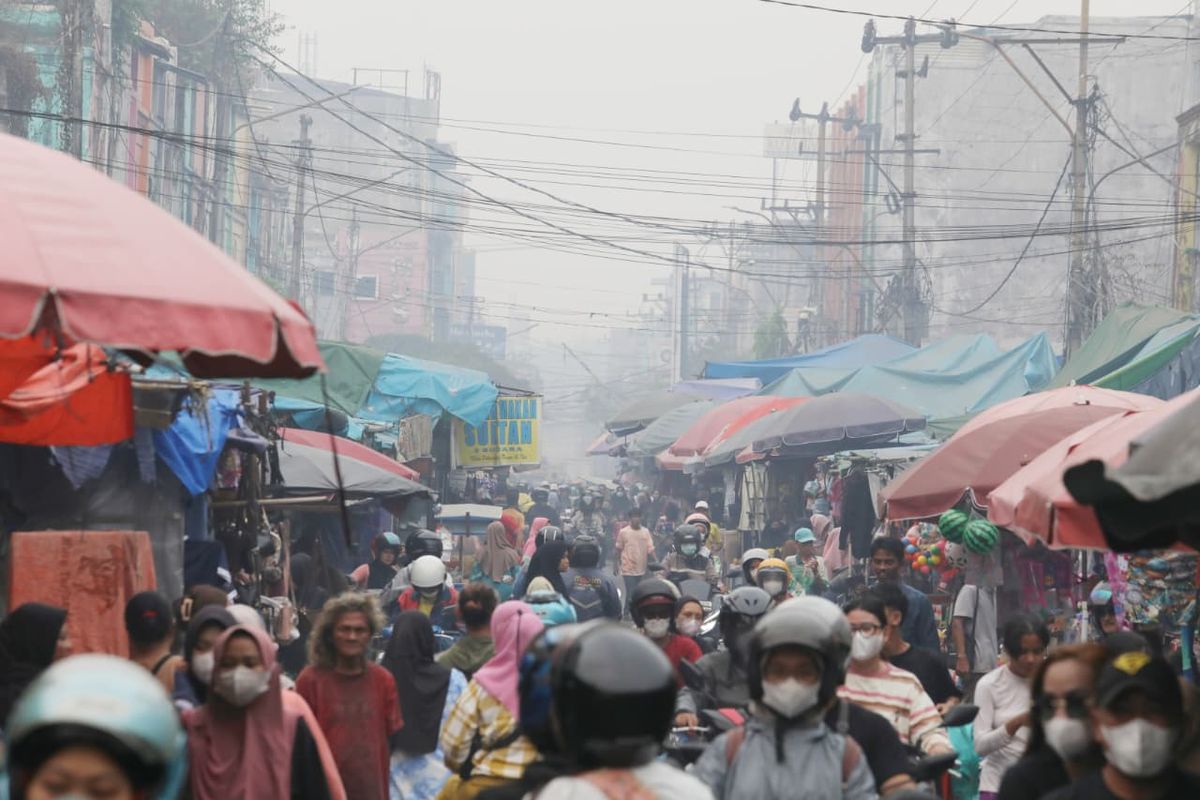
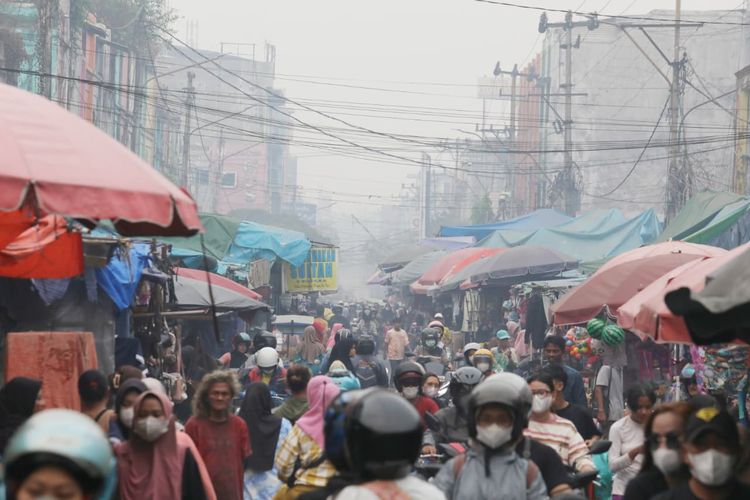
SATURDAY (10/10/2026) at 10:00 AM WIB, the air quality index (AQI) in Palembang registered 1,203, categorized as "Hazardous" (IQAir, 2026).
We, living in areas affected by forest and land fires, breathe in numbers that were never designed for human comprehension.
Imagine a figure above 301 is already deemed hazardous, and we are inhaling polluted air at 1,203. What does this mean?
The standard AQI used by IQAir spans from 0 to 500.
Beyond 300, the official alert system is already at the highest level: Hazardous.
This means that, from a health perspective, the entire population will be seriously affected. Not just humans, but also animals and plants.
IQAir only displays measurements up to 500 on its official map. The figure of 1,203 appears when local sensors measure extremely high concentrations of PM2.5 particles.
The AQI formula continues to function, causing the numbers to swell far beyond 500.
For me, the number 1,203 is not just data. It's the government's "Performance Index" announced to us.
The government conveys, with a tone of emotional weight, that everyone is working tirelessly to extinguish the fires from air-conditioned offices in Jakarta, Palembang, Jambi, Pekanbaru, Palangka Raya, Pontianak, Banjarmasin, and other major affected cities.
Yet here, on our own soil, the state has failed to provide us with one of the most basic necessities: breathable air.
We are no longer fully living. We're merely surviving amidst choking, coughing, dry throats, and burning eyes, surrounded by toxic smoke.
Two days earlier, the ASEAN Special Meteorological Centre (ASMC) reported that numerous air quality monitoring stations in Peninsular Malaysia, Singapore, Borneo, and Sumatra were at unhealthy to dangerous levels (ASMC, 2026).
Amidst those numbers, on September 29, the government announced the sealing of 57 corporate entities whose concession areas have burned a total of 34,636 hectares (KLH, 2026).
The figure of 57 was presented as proof of the state's presence. However, WALHI stated that at least 372 companies are suspected of being involved in forest and land fires this year, based on the distribution of hot spots and tracing of group affiliations (WALHI, 2026).
This means that only about 15 percent of those indicated have been sealed. Hot spots are not criminal evidence, and companies have the right to contest.
The Deputy Minister of Environment himself reminded that hot spot data does not automatically prove a company's culpability (KLH, 2026).
Environment Minister Jumhur Hidayat stated on one occasion that the sealing is based on the principle of strict liability.
If that principle is genuinely applied, the question of who struck the match becomes irrelevant. The only question is who holds the land permit.
A second question could continue: Why was the peat left dry, becoming a warehouse for fuel?
While authorities are busy searching for the firestarter, landowners or permit holders breathe easy in their air-conditioned offices and are never asked to explain.
The scale of the fires is significant. The monitoring system of Sipongi from the Ministry of Forestry reported 202,004.30 hectares burned from January to July 2026 (Kemenhut, 2026), and for six priority provinces, about 72,088.61 hectares had been recorded by September (Kemenko PMK, 2026).