

Malang Student Dies, Legislator Calls for Fundamental Reforms in Child Protection
-
News
-
8 minutes ago
This article was translated by AI. Read the original article on Kompas.com. See Original
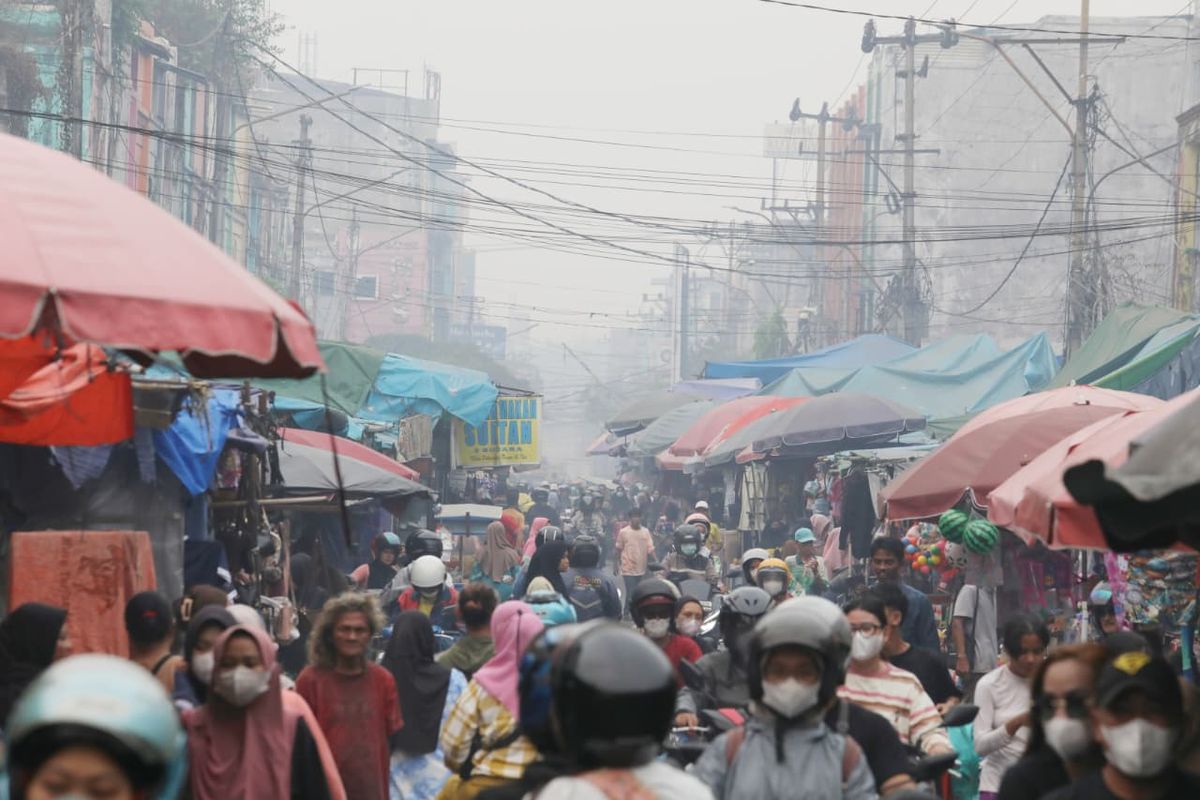
At that time, the Coordinating Minister for Political, Legal, and Security Affairs, Djamari Chaniago, even acknowledged that the peak of El Niño had yet to be reached. This means these numbers are not the peak but rather the slope of rising figures.
The regional data is even more alarming. WALHI West Kalimantan reported 6,910 hot spots throughout August, with distribution across 115 oil palm plantation permits and 51 forest utilization permits, as well as 14 forest utilization areas that burned (WALHI Kalbar, 2026).
In Central Kalimantan, WALHI found 32,796 hot spots and around 38 impacted concessions; in Riau, 34 corporate areas recorded a total fire area of 16,277.5 hectares (WALHI, 2026).
In South Sumatra, the region that nurtured and raised me, WALHI South Sumatra counted 22,690 hot spots within concessions from September 1 to October 2, almost 17,000 of which were in peat ecosystems (WALHI Sumsel, 2026).
On October 7, Deputy Minister of Environment Diaz Hendropriyono inspected peat fire sites in Talang Kelapa District, which included plantations and residential areas, and then chaired a meeting with 43 concession-holding companies in the area where the fires occurred.
Data from KLH for the 57 sealed entities points in a similar direction: 19 are in West Kalimantan, 12 in South Sumatra, with 88.9 percent of the burned area in Kalimantan (KLH, 2026).
Actually, in 2025, the then Minister of Environment Hanif Faisol Nurofiq referred to Presidential Instruction Number 3 of 2020 as a basis for acting against concession holders allowing fires. Now there is Presidential Instruction Number 11 of 2026 addressing the strengthening of the ban on land clearing by burning.
Every new regulation made hastily is a quiet acknowledgment that the old ones lack power, because they have no enforcement strength.
A government that has to repeat orders annually to the same parties signifies a government that lacks authority. The public cannot place hope in them.
The state issues HGU and forestry utilization permits, then sits as a judge over those permits.
The absurdity peaks when the reported parties include state-owned enterprises, which WALHI has recorded as having repeatedly burned land (WALHI, 2026). Investigators, permit issuers, and landowners converge within one entity.
There is also the discrepancy in figures: KLH mentions 34,636 hectares in the 57 corporate concessions, while Sipongi records about 72,088.61 hectares in six provinces as of September (Kemenko PMK, 2026).
The coverage and dates differ, but that rough comparison suggests that the 57 corporate concessions contribute approximately 48 percent or less. Who controls the remainder has not been explained.
Data from the National Police adds another layer. As of September 28, the Criminal Investigation Department (Bareskrim) is handling 341 police reports covering an area of 30,566.55 hectares: 245 individual reports for 5,181.61 hectares, and 96 corporate reports for 25,384.94 hectares (Bareskrim Polri, 2026).
This means approximately 83 percent of the issues lie with corporate filings.
However, all 196 suspects identified are individuals, with only four suspects related to corporations recorded by September 30.
Eight out of ten hectares are pursued through corporate filings, but 196 out of 200 suspects are individuals. This is the direction of our legal system: always focused downwards.
The impacts are now evident across borders. On Friday, October 9, Malaysia closed schools in its capital and several states.
The closures are expected to affect around two million students, as the Air Pollution Index in Kuala Lumpur was about 170 (Malaysian Ministry of Education, 2026).
On the morning of that day, 37 areas were reported as unhealthy according to Malaysian government data. Sultan Ibrahim stated that schools would close when the "Air Pollution Index" (API) reaches 150 or higher.
Prime Minister Anwar Ibrahim admitted to directly contacting President Prabowo and requested his foreign minister to arrange an emergency ASEAN environmental ministers meeting (Anwar Ibrahim, 2026), while Malaysia added artificial rain operations (Malaysian Government, 2026).
Singapore is not faring any better. The "National Environmental Agency" (NEA) noted a 24-hour "Pollutant Standard Index" (PSI) of 192 in the central region on October 9, the highest since smoke returned in September 2026.