
UI Law Professor Critiques Perception that MPR Cannot Make Regulations
-
News
-
14 minutes ago
This article was translated by AI. Read the original article on Kompas.com. See Original
On a risk-based approach, it should also involve monitoring and evaluation at the midstream level, ensuring execution capacity and recovery if issues arise downstream.
The implementation of IPU Guidelines can be outlined as follows.
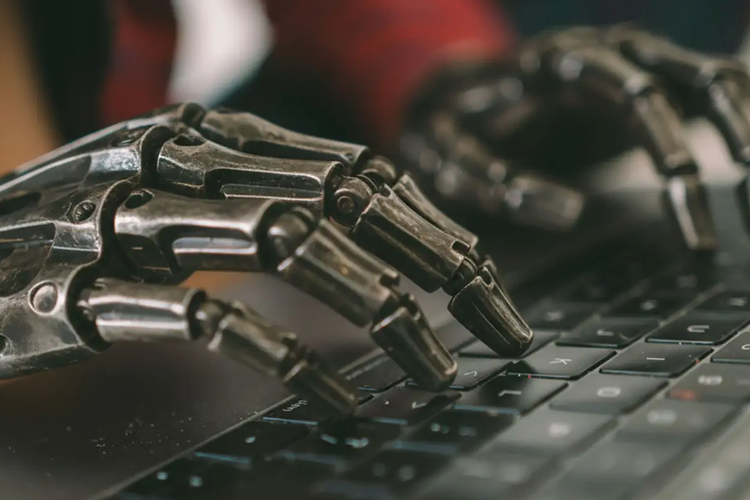
First, AI can be utilized to support various parliamentary functions, from administrative tasks, research, and legislative drafting to transparency and public engagement.
However, AI application cannot be standardized. Each national parliament has different work cultures, needs, resources, and technological capabilities.
Each parliament must independently determine the areas most in need of and most ready for AI support while maintaining democratic principles, accountability, and the public interest.
Second, in research and legislative functions, AI can help process large volumes of documents and data more rapidly.
AI can identify regulatory trends and bills, compare various provisions to find similarities, differences, overlaps, or potential conflicts, and assist in assessing the impact of a bill.
AI can also be utilized to map changes resulting from new legislation, find experts and relevant information sources, and process public input.
AI can help parliaments produce more data-driven and evidence-based policies, although the final decision remains with humans.
Third, AI can enhance the efficiency of parliamentary administrative work. Routine tasks like scheduling meetings and sessions, managing and archiving documents, translation, sorting letters or emails, and report drafting can be supported or automated by AI.
AI can assist in data processing and present it in reports or visualizations that are easier to comprehend.
With reduced routine work, parliamentary personnel can focus more on tasks requiring analysis, deliberation, and human interaction.
Fourth, in terms of transparency, AI can make parliamentary work more open and accessible to the public.
AI can rapidly transcribe and take minutes of debates during meetings, provide legislative information searches, create visualizations of a bill's journey, and summarize bills, reports, and sessions in simpler language.
Importantly, AI can also help analyze economic data and financial information to support public oversight.
In this way, technology not only enhances parliamentary efficiency but also aids the public in understanding parliamentary actions.
Fifth, AI can ultimately strengthen the relationship between parliament and the public. Chatbots and virtual assistants can swiftly provide information and respond to public inquiries.
AI can help categorize and understand extensive public input.
Social media content analysis using AI can offer insights into public opinions. AI can also aid in creating more accessible multimedia content.
The IPU stresses that AI utilization should be viewed as a supporting tool, not a substitute for parliament members. Here, AI functions as a co-pilot, not an autopilot.