

UI Law Professor Critiques Perception that MPR Cannot Make Regulations
-
News
-
14 minutes ago
This article was translated by AI. Read the original article on Kompas.com. See Original
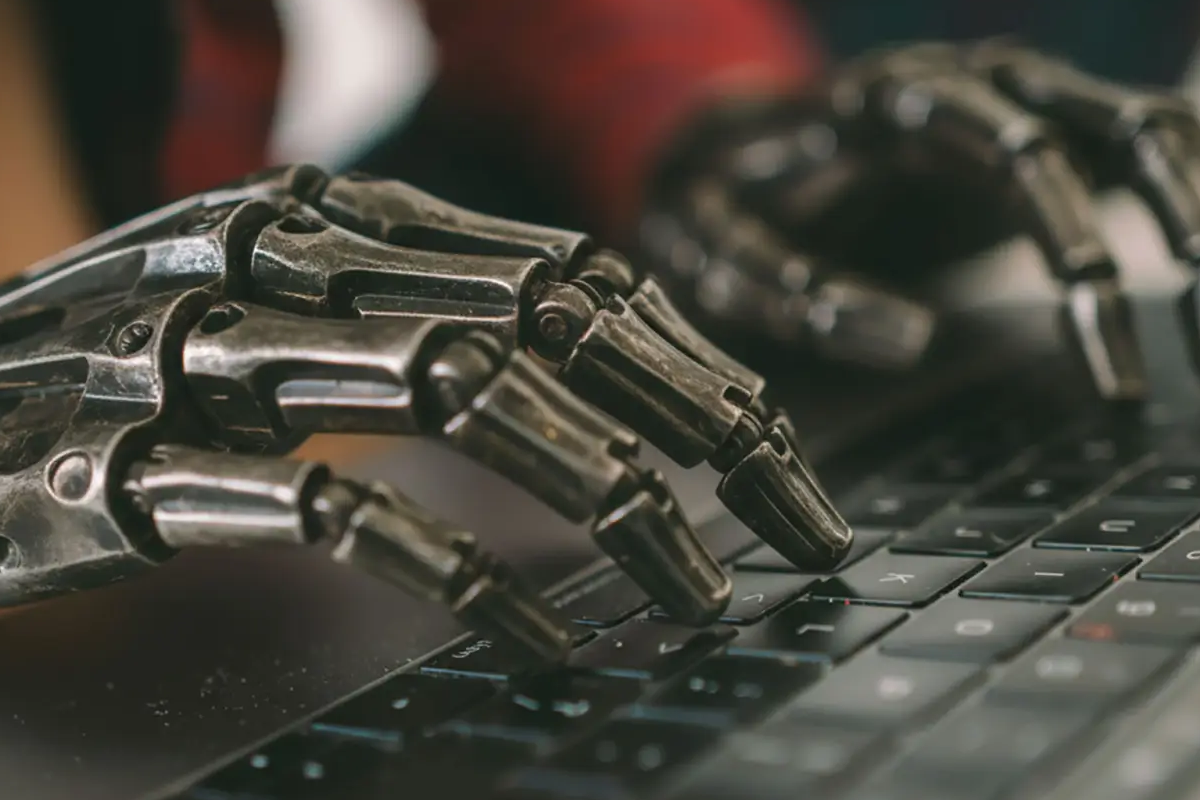
CAN Artificial Intelligence (AI) be used to draft laws? This question frequently arises in discussions and academic settings.
The answer is that AI can assist in drafting initial drafts, structuring articles, conducting research, and analyzing legal data for bills.
However, AI cannot autonomously create laws. There must still be a significant human role, under strict oversight by humans.
It is important to understand that AI is not a legal subject and does not possess legal status. AI often experiences information hallucinations, creating outputs that are workslop and biased.
In the context of legislation, the phenomenon of "AI workslop" is a serious issue. It can occur when drafters use AI to quickly produce laws.
"AI Workslop" refers to when AI generates drafts that seem neat and correct at first glance. However, they are superficial, inconsistent, lacking substance, and do not meet the legal drafting prerequisites.
In many cases, AI does not speed up the process; instead, it can create additional burdens for legislative teams who must sift through, correct, and overhaul articles generated by AI that are contextually irrelevant.
To minimize this, law drafters should not position themselves merely as prompters. They must continue to conduct thorough legal research. This is where legal expertise is essential.
AI will gladly provide links to reliable references if we request them. Drafters can then trace those original links or search for additional issues via search engines to obtain trustworthy sources.
All substance and drafting processes must ultimately be verified and fully supervised by humans, who must be responsible for the final output.
The Inter-Parliamentary Union (IPU) recently released a report titled “Implementing AI in Parliaments: Taking Stock and Planning the Next Steps Together” (1/7/2026).
According to the 2026 World e-Parliament Report, about 88 percent of parliaments globally have utilized AI.
The Centre for Innovation in Parliament (CIP) meeting of the IPU from May 13–15, 2026, in Rome reported that AI adoption in parliaments is progressing much faster than its governance.
Initial data from the World e-Parliament Report 2026 indicates that many parliaments still face issues regarding capacity, governance, organizational culture, and the use of “shadow AI” by members and staff.
As a global organization established in 1889, the IPU is composed of parliaments from various countries with a mission to strengthen democracy, peace, human rights, equality, and sustainable development.
One product of the IPU is the "Guidelines For AI In Parliaments", which serves as guidance for utilizing AI in parliament. The IPU guidelines are crucial for AI development.
The success of AI platforms relies not only on technological sophistication but also on clarity regarding the users, decision-makers, coordination, and human-centered oversight.
The IPU also emphasizes the importance of data, human resources, and technological sovereignty.
The IPU warns that parliamentary data, particularly confidential documents, emails, drafts, and unstructured information, pose the greatest risks in AI implementation.
The recommended approach is to start with a limited, well-managed dataset and then gradually develop to avoid building AI on weak data governance.
Technological sovereignty does not necessarily mean building everything in-house. However, it is vital to ensure data and system portability if the technology provider changes or ceases its services.
Another important consideration is the emergence of agentic AI systems, which do not only produce information but can also autonomously execute actions without human instruction.
It is essential to anticipate developments to prevent incidents involving autonomous AI like those seen with OpenAI in the US and Australia.
AI governance must be established prior to implementation, with redesign processes, human oversight, and independent monitoring from the outset. The infrastructure must also adopt security by design and security by default.
Regarding AI use in our parliament, we can also refer to the Oxford Academic report “AI tools in Parliament: Analytical framework and empirical insights” (15/7/2026), authored by Francesco Bromo et al.
This report identifies several categories of AI use in parliament, including drafting and amending bills, assisting in drafting, editing, revising, and checking regulatory consistency.
In Parliament, AI is also widely used for transcription and translation, converting speeches into text, providing explanations, and translating minutes and parliamentary materials.
In relation to meaningful public consultation, AI can be openly used by parliaments to expand communication, participation, and public access to legislative information.
Importantly, AI is also beneficial for cybersecurity and application development, supporting threat detection, programming, and IT functions.
The development of AI-powered platforms is always dynamic. Thus, infrastructure should not only be adequately constructed with security by design upstream.
On a risk-based approach, it should also involve monitoring and evaluation at the midstream level, ensuring execution capacity and recovery if issues arise downstream.
The implementation of IPU Guidelines can be outlined as follows.
First, AI can be utilized to support various parliamentary functions, from administrative tasks, research, and legislative drafting to transparency and public engagement.
However, AI application cannot be standardized. Each national parliament has different work cultures, needs, resources, and technological capabilities.
Each parliament must independently determine the areas most in need of and most ready for AI support while maintaining democratic principles, accountability, and the public interest.
Second, in research and legislative functions, AI can help process large volumes of documents and data more rapidly.
AI can identify regulatory trends and bills, compare various provisions to find similarities, differences, overlaps, or potential conflicts, and assist in assessing the impact of a bill.
AI can also be utilized to map changes resulting from new legislation, find experts and relevant information sources, and process public input.
AI can help parliaments produce more data-driven and evidence-based policies, although the final decision remains with humans.
Third, AI can enhance the efficiency of parliamentary administrative work. Routine tasks like scheduling meetings and sessions, managing and archiving documents, translation, sorting letters or emails, and report drafting can be supported or automated by AI.
AI can assist in data processing and present it in reports or visualizations that are easier to comprehend.
With reduced routine work, parliamentary personnel can focus more on tasks requiring analysis, deliberation, and human interaction.
Fourth, in terms of transparency, AI can make parliamentary work more open and accessible to the public.
AI can rapidly transcribe and take minutes of debates during meetings, provide legislative information searches, create visualizations of a bill's journey, and summarize bills, reports, and sessions in simpler language.
Importantly, AI can also help analyze economic data and financial information to support public oversight.
In this way, technology not only enhances parliamentary efficiency but also aids the public in understanding parliamentary actions.
Fifth, AI can ultimately strengthen the relationship between parliament and the public. Chatbots and virtual assistants can swiftly provide information and respond to public inquiries.
AI can help categorize and understand extensive public input.
Social media content analysis using AI can offer insights into public opinions. AI can also aid in creating more accessible multimedia content.
The IPU stresses that AI utilization should be viewed as a supporting tool, not a substitute for parliament members. Here, AI functions as a co-pilot, not an autopilot.