

The Paradox of Seats and Spectators
-
News
-
Just now
This article was translated by AI. Read the original article on Kompas.com. See Original
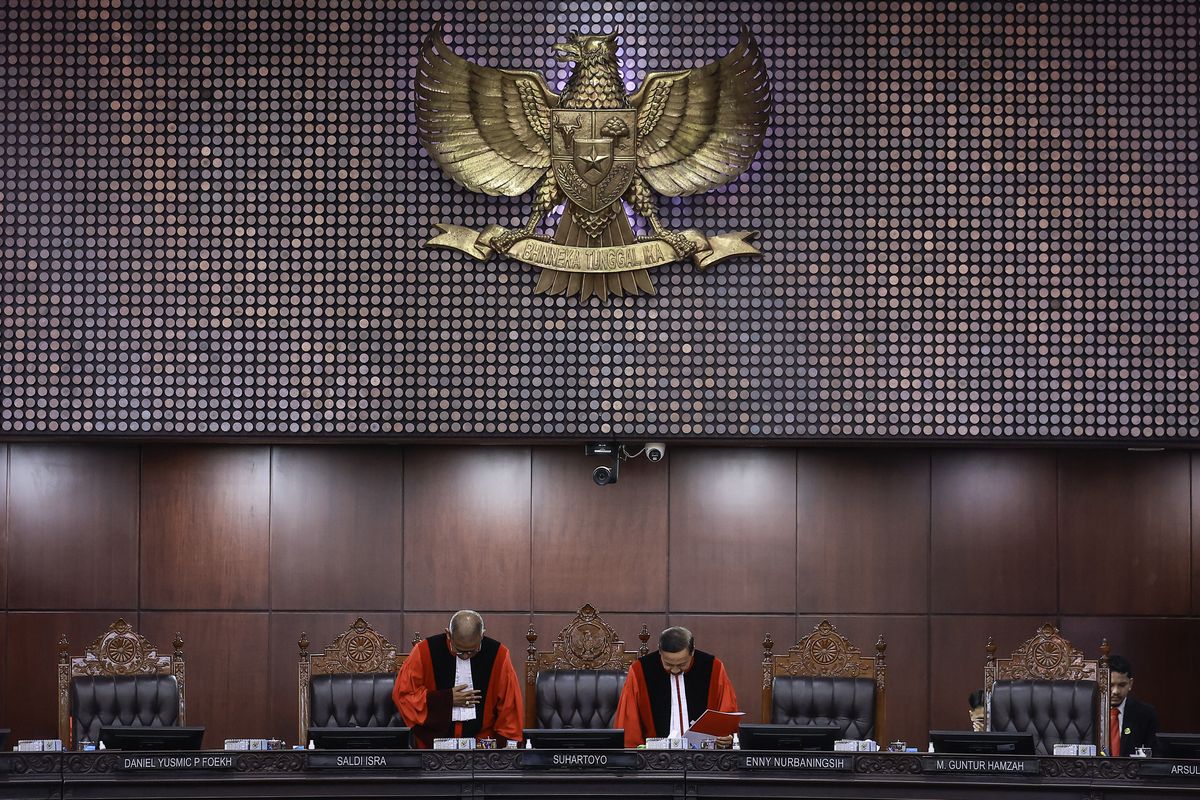
This type of ruling is regarded as atypical and inconsistent with general procedural law.
As is known, in civil litigation, particularly civil procedural law, if a judge grants an objection regarding the legal standing of the applicant or plaintiff, the judge will not consider the core of the request or the main issue.
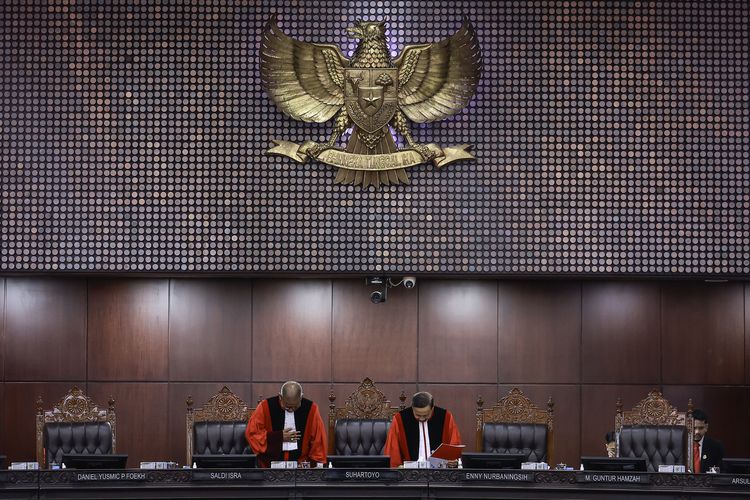
However, in MK Decision Number 01/PHPU.PRES-XXIV/2026, the Court considered the core request concerning Gibran's eligibility requirements, as mentioned above, even though its ruling stated the request could not be accepted due to the Court upholding the legal standing exception of the Applicants.
The steps taken by the Court, in the author’s view, are understandable.
First, referring to Article 5 Paragraph (1) of Law No. 48 of 2009 on Judicial Power, the actions undertaken by the Court can be seen as an obligation to delve into, follow, and understand the legal values and sense of justice that exist in society.
Second, theoretically, the breakthrough made by the Court can be justified at least from the perspectives of the theory of free law (Freiheitslehre) and progressive law.
The free law theory posits that judges have the task of creating law.
In carrying out their duties, judges are not bound by legislation primarily; rather, law serves as a tool to solve problems, and solutions need not align with legal resolutions.
Thus, judges bear the responsibility not just to apply the law, but to create appropriate solutions for specific events.
Judges need to generate law to resolve the issues at hand. (Sudikno Mertoksumo, 1991; Darji Darmodihadjo and Shidarta, 2004)
By demonstrating that it did not find or obtain convincing evidence of Gibran’s diploma abroad that equates to a senior high school diploma, the Court showed that constitutional judges have created law beyond the norms of general procedural law.
In this way, the Court aimed to resolve important public issues that had not been previously addressed by existing judicial institutions.
In a similar vein, the breakthroughs made by the constitutional judges are understood in the context of the progressive law teachings developed by Satipto Rahardjo.
Progressive law holds that the process of change no longer centers on regulations but on the creativity of legal actors in actualizing the law within the appropriate context of time and space.
Progressive legal actors can effect change by creatively interpreting existing regulations without waiting for changes in regulations.