

The Paradox of Seats and Spectators
-
News
-
Just now
This article was translated by AI. Read the original article on Kompas.com. See Original
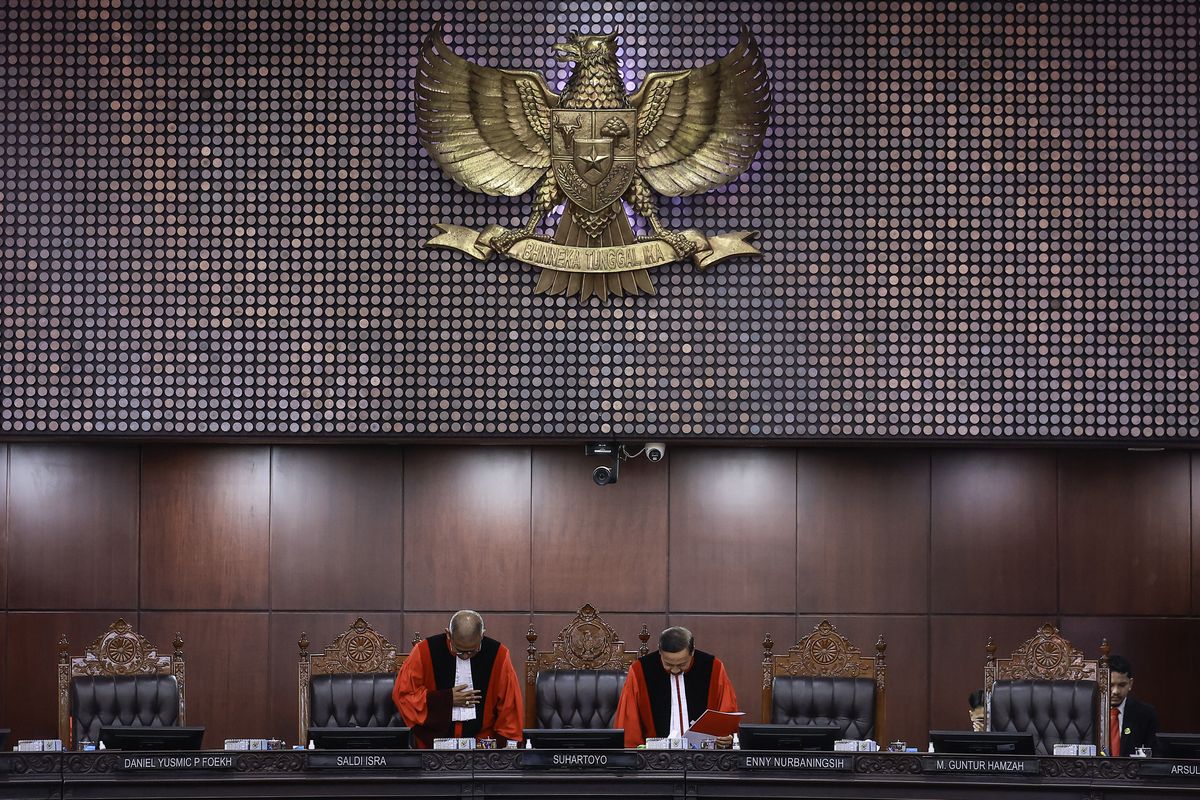
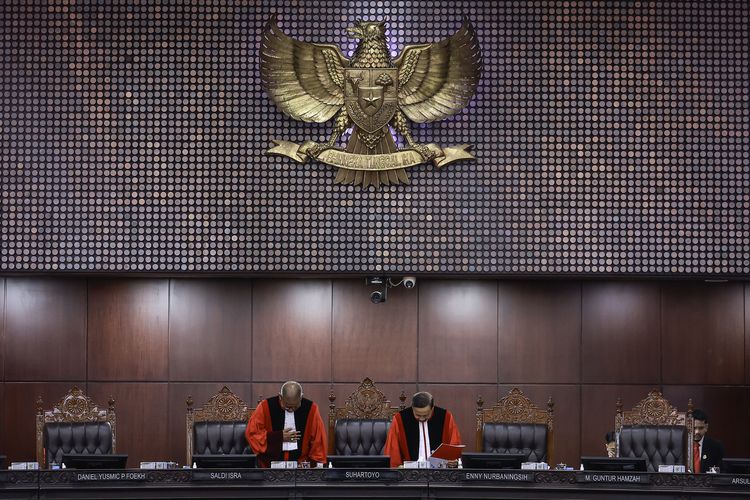
The Court's three viewpoints illustrate how the Court works towards achieving legal justice.
In considering and ruling on the requests submitted by the Applicants, the Court relied on existing positive law.
In this context, the Court applied the provisions of legislation to the facts that arose during the trial.
In addition to relying on legal justice as previously stated, the Court also seemed to operate on the principle of moral justice.
The Court transcended the boundaries of formal regulatory provisions and made legal breakthroughs and discoveries as a form of its constitutional moral responsibility.
From the author's reading, the essence of moral justice in the "Gibran diploma" ruling is apparent, firstly, when the Court made a legal finding on something not regulated by law.
In its legal considerations, the Court emphasized its "responsibility" to uncover the substantive truth regarding the case brought forward by Denny Indrayana et al.
The matter adjudicated by the Court pertains to issues not covered by regulation concerning which institutions have the authority to resolve disputes over presidential and vice-presidential election results following the inauguration of elected candidates.
Nevertheless, the Court assumed that constitutional burden. The Court named itself as a manifestation of the principle of ius curia novit. (see: page 362)
Secondly, related to the principle of ius curia novit, the Court rejected the limitation on the timeframe for submitting cases.
The Court addressed the issue as a special circumstance, wherein it had to bear responsibility and unearth the substantive truth regarding the legal issue that garnered public attention: namely, Gibran's eligibility requirements. (see: pages 376-377)
Thirdly, even though the Court did not decide on the core of the request, it deliberately entered into consideration of the special circumstances regarding the fulfillment of the vice-presidential candidacy requirements for Gibran Rakabuming Raka.
In considering those special circumstances, the Court stated:
"... In the trial, no convincing evidence was found or obtained indicating that Gibran Rakabuming Raka has a diploma/certificate from abroad that could be equated with a minimum education of senior high school, madrasah aliyah, vocational high school, madrasah aliyah vocational program, or other equivalent schools as referred to in the norms of Article 169 letter r and Article 227 letter l of the Election Law." (see: page 375)
The Court's stance, on one hand, not deciding on the core request because it upheld the legal standing exception of the Applicants due to not being presidential and vice-presidential candidates, but on the other hand considering the core request, has been viewed by some parties as a contradictory ruling.