Prabowo Gathers Gerindra Cadres in Hambalang, Dasco and KDM Attend
-
News
-
43 minutes ago
This article was translated by AI. Read the original article on Kompas.com. See Original

JAKARTA, KOMPAS.com - The ongoing revision process of the Election Law has reached the discussion stage regarding the potential addition of parliamentary seats and the use of electronic counting systems.
The proposed addition amounts to 11 seats in the House of Representatives (DPR RI).
This discussion of 11 additional seats and e-accounting emerged during the first closed-door meeting of the Draft Law (RUU) Special Committee with the DPR RI Expertise Agency, held on Thursday (8/10/2026).
However, the Special Committee has yet to make a decision on these two issues.
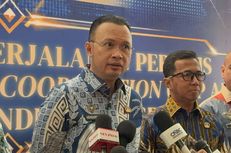
Deputy Chairman of Commission II of the DPR RI, Aria Bima, stated that the meeting is currently focused on synchronizing the draft before delving deeper into the substance of the Election Law revision.
"These closed meetings should ensure that we identify the core issues related to elections and not revisit problems previously aired in the media or public discussions," Aria said after the meeting on Thursday.
He emphasized that the current discussions have not yet reached the overall reading of the academic manuscript.
"This is merely to synchronize the draft we want to include," he added.
Despite this, Aria indicated that several public interest issues are still being discussed, including the parliamentary threshold and the presidential threshold.
Other topics included the appointment of election organizers, the Election Organizing Honorary Council (DKPP), and gender quotas.
The committee is also discussing the arrangement of electoral districts (dapil), the proposal to add DPR seats, and the possible use of technology in vote counting.
The idea of adding approximately 11 DPR seats has surfaced in discussions about the arrangement of electoral districts and enhancing regional representation.
However, this figure has not yet become an official proposal agreed upon by the Special Committee.
"This might be a rationalization, maybe there are 11 additional seats from the current three," Aria explained.
He noted that determining the number of DPR seats must consider fairness principles in seat distribution across districts. This consideration does not only involve proportionality based on population but also the representation of regions.