

Rumors Emerge That Jeff Bezos Wants to Fund the Relocation of the Javan Rhino
-
News
-
13 minutes ago
This article was translated by AI. Read the original article on Kompas.com. See Original
JAKARTA, KOMPAS.com - The ongoing revision process of the Election Law has reached the discussion stage regarding the potential addition of parliamentary seats and the use of electronic counting systems.
The proposed addition amounts to 11 seats in the House of Representatives (DPR RI).
This discussion of 11 additional seats and e-accounting emerged during the first closed-door meeting of the Draft Law (RUU) Special Committee with the DPR RI Expertise Agency, held on Thursday (8/10/2026).
However, the Special Committee has yet to make a decision on these two issues.
Deputy Chairman of Commission II of the DPR RI, Aria Bima, stated that the meeting is currently focused on synchronizing the draft before delving deeper into the substance of the Election Law revision.
"These closed meetings should ensure that we identify the core issues related to elections and not revisit problems previously aired in the media or public discussions," Aria said after the meeting on Thursday.
He emphasized that the current discussions have not yet reached the overall reading of the academic manuscript.
"This is merely to synchronize the draft we want to include," he added.
Despite this, Aria indicated that several public interest issues are still being discussed, including the parliamentary threshold and the presidential threshold.
Other topics included the appointment of election organizers, the Election Organizing Honorary Council (DKPP), and gender quotas.
The committee is also discussing the arrangement of electoral districts (dapil), the proposal to add DPR seats, and the possible use of technology in vote counting.
The idea of adding approximately 11 DPR seats has surfaced in discussions about the arrangement of electoral districts and enhancing regional representation.
However, this figure has not yet become an official proposal agreed upon by the Special Committee.
"This might be a rationalization, maybe there are 11 additional seats from the current three," Aria explained.
He noted that determining the number of DPR seats must consider fairness principles in seat distribution across districts. This consideration does not only involve proportionality based on population but also the representation of regions.
"This speaks to the principle of fairness in formulating the number of seats per district, which is also a strengthening of the unitary state, not just about representative proportionality of the populace," he said.
Aria believes that the addition of seats could be justified if the policy aims to enhance regional representation.
"If the rationale for adding seats is to strengthen the law as part of bolstering regional representative representation, then it makes sense," he clarified.
Nonetheless, the PDI-P politician reiterated that the figure is merely feedback from the DPR RI Expertise Agency.
"There is nothing concrete yet; this is just an input from the expertise agency," he remarked.
Aria added that the arrangement of electoral districts also needs to respond to public concerns about voter disenfranchisement and representation issues.
"We must respond to the public's concerns regarding the loss of the representative principle with the disappearance of voter counts, right? This needs our attention," Aria stated.
Aside from the arrangement of DPR seats, the Special Committee discussed the potential use of technology to modernize the election system, particularly in the vote counting process.
Aria said e-accounting is one option under consideration. Meanwhile, the application of e-voting has not become a choice at this stage of discussions.
"We feel somewhat overshadowed by India, which has partially implemented this, right? If e-voting is not feasible for now, then we consider e-accounting," Aria commented.
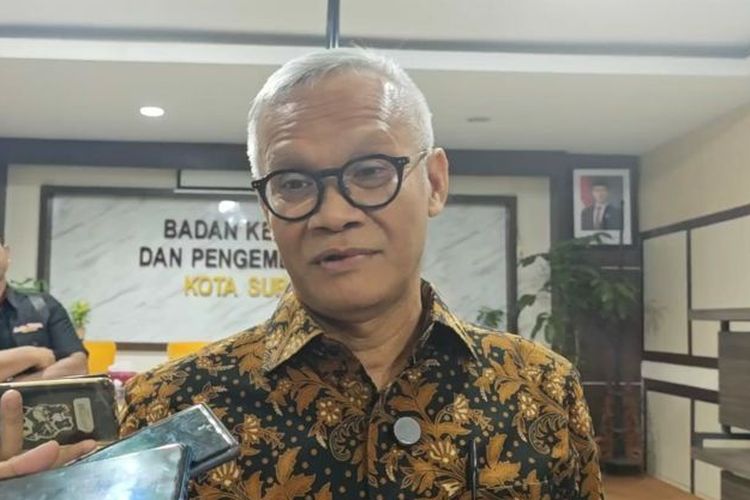 Deputy Chairman of Commission II of the DPR, Aria Bima in Solo, Central Java. Discussions on the revision of the Election Law will invite several experts from various universities.
He explained that e-accounting still requires voters to come to the polling station to cast their votes. The difference lies in the counting process, which is performed electronically.
"With e-accounting, marking or voting is still done physically, but once completed, the counting is done electronically," he said.
Aria added that the electronic counting process will still follow a tiered mechanism up to the regional levels.
"With e-accounting, we still go to the booths, mark our ballots, and then submit them for counting, which happens in stages at the KPUD and DPRD levels," Aria explained.
With this scheme, voters will still cast their votes through marking or check-in, with electronic technology utilized solely in the counting process, not to replace the voting procedure at polling stations.
As for e-voting, it remains a topic for further study. The Special Committee intends to learn from the experiences of other countries, including India, before considering its implementation in Indonesia.
"Regarding e-voting, we want to observe India, which has a relatively large population and similar educational and economic standards to ours, and yet they have implemented e-voting," he stated.
Aria indicated that the Special Committee will continue to synchronize the draft with the DPR RI Expertise Agency. Once this stage is complete, the Special Committee will resume discussions with teams from respective factions.
The follow-up discussions are scheduled to take place after the DPR recess for two weeks. According to the schedule established by the Special Committee, the next meeting is planned for November 2, 2026.
"So, after the recess, we should be able to discuss this further," Aria remarked.
Previously, Commission II of the DPR RI formed the Special Committee for the Election Law to initiate the preparation and discussion of the revision of the law.
Commission II appointed 23 members of the DPR as leaders and members of the Special Committee. Deputy Chairman of Commission II from the Gerindra faction, Bahtra Banong, was designated as the Chairman of the Special Committee.
Commission II aims to finalize the academic manuscript and draft of the Election Law within three months, or by the end of December 2026 at the latest.
The discussions for the Election Law are targeted to be completed by March 2027 and may be immediately enacted into law.


















