

Health Minister Prays for President Prabowo to Live to 100 Years
-
News
-
3 minutes ago
This article was translated by AI. Read the original article on Kompas.com. See Original
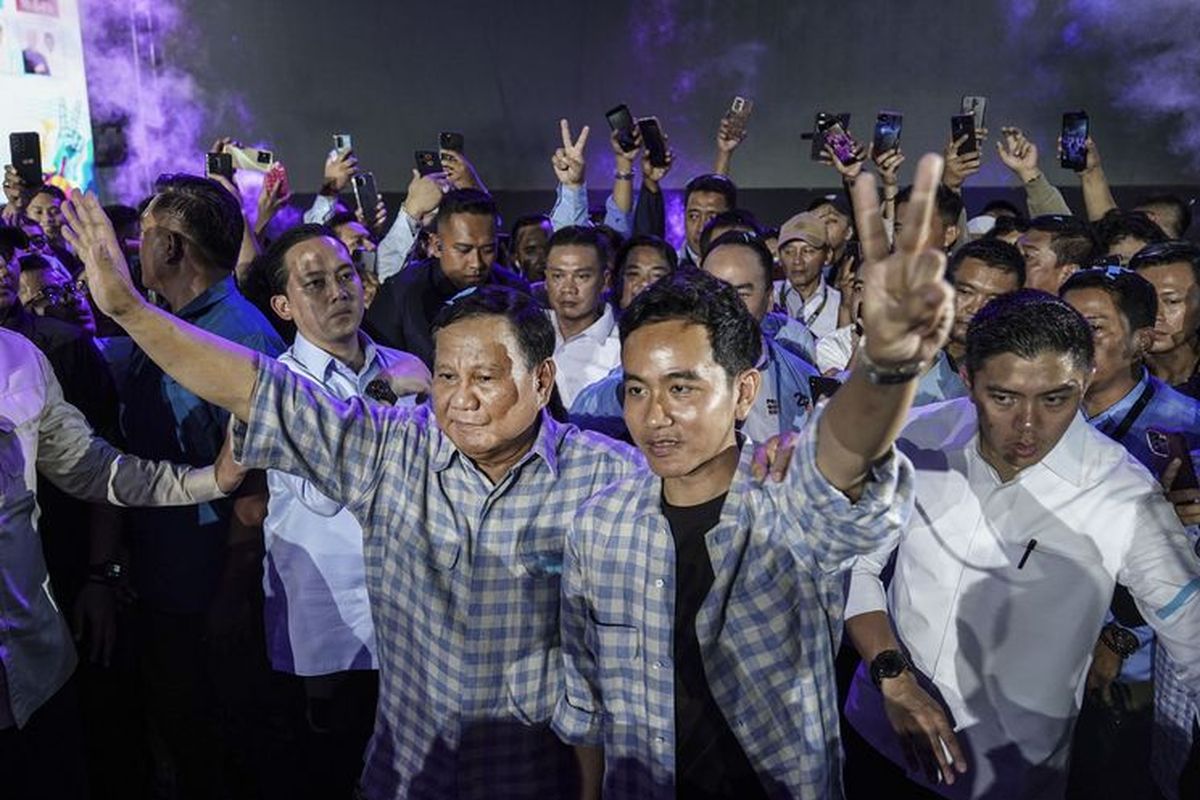
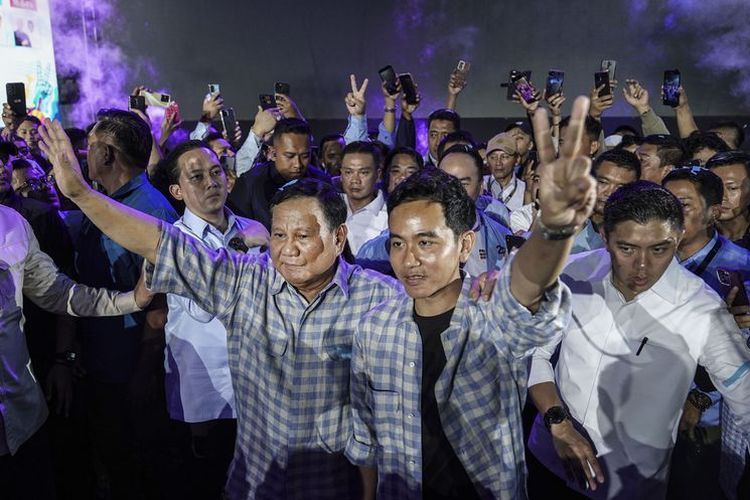
THERE are two events that occurred almost simultaneously on the night the Constitutional Court announced its ruling regarding the education qualification of Vice President Gibran Rakabuming Raka.
In Medan Merdeka Barat, Jakarta, the constitutional judges stated that they found no convincing evidence that Gibran possesses a high school diploma, but they could not disqualify him.
Meanwhile, in Kertanegara, Jakarta, President Prabowo Subianto hosted Joko Widodo, Gibran's father, in a closed-door meeting lasting two hours at Prabowo's invitation.
Earlier in the day, the Government Communication Agency announced that the President had fully handed the matter over to the judiciary.
Two days later, the Palace stated that it was still studying the ruling, requesting two to three days, and emphasized that Gibran’s legitimacy remained intact.
The Deputy Minister of State Secretary couldn't even confirm whether the President was aware of the ruling’s contents.
This sequence reflects a larger pattern than a single case. Prabowo's political strategy relies on two things: embracing and holding back words. The question is, where is this political direction heading, and who truly benefits?
Embracing is the most consistent feature of Prabowo's leadership. Almost all parties have joined the government, except for the PDI-P.
Former presidents are welcomed in turn. Anwar Usman, the Chairman of the Constitutional Court at the time of the 90 ruling, was appointed as a member of the Presidential Advisory Council just four days before Gibran's case was decided.
Benedict Anderson in his classic essay, The Idea of Power in Javanese Culture (1972), explains that in Javanese power dynamics, a powerful ruler is not one who eliminates adversaries but one who absorbs them into his orbit.
Prabowo, who did not originate from that tradition, seems most adept at navigating it.
The President's stance on the Constitutional Court ruling can be understood within this framework. There are no decisive statements backing Gibran, nor any distancing.
Thomas Schelling in The Strategy of Conflict (1960) indicates that ambiguous signals are often more valuable than clear ones, as they compel all parties to guess, while the sender remains free.
The Constitutional Court's ruling gives Prabowo a comfortable position. Gibran remains in office, maintaining stability, but his chances for 2029 weaken.
For a president, a vice president who persists but no longer poses a threat is the most manageable.


























