

Health Minister Prays for President Prabowo to Live to 100 Years
-
News
-
3 minutes ago
This article was translated by AI. Read the original article on Kompas.com. See Original
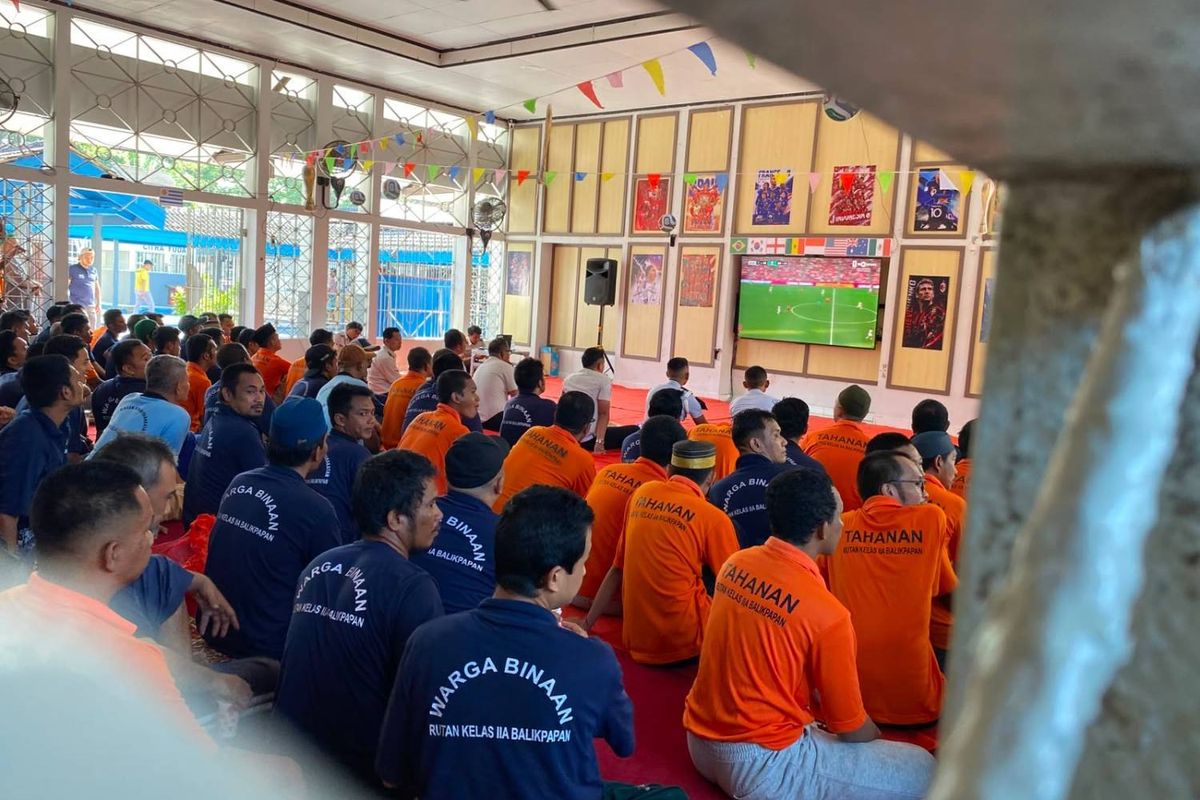
THERE is something intriguing about how we treat someone after they are sentenced. When prison doors close, it seems as if we assume their entire life has come to a halt.
Their freedom is stripped away, their mobility is constrained, and their social connections are severed from the life they once knew.
In public consciousness, punishment is often understood as the suffering one must endure for their actions.
However, amidst that belief, there is a question seldom discussed openly: does the removal of a person's freedom also necessitate the sidelining of their entire humanity?
This question finds relevance when Commission XIII of the Indonesian House of Representatives begins to raise the discourse on providing family booths and sexual aids for inmates.
On September 24, 2026, member of Commission XIII Yanuar Arif Wibowo advocated for the management of family booths as part of guidance and social reintegration.
Two days later, Commission XIII Chairman Willy Aditya discussed the fulfillment of sexual health needs of female inmates, including health education, alternative medical tools, safety, and privacy protection.
On September 30, Willy again proposed family booths and sexual aids in prisons. This discourse places an issue long considered taboo into a more open institutional discussion.
This initiative should be interpreted as a gateway for reforming the correctional system. Not because every proposal must be accepted without scrutiny, but because the state needs the courage to address tangible issues that may not always be comfortable for society.
Sexuality is a part of human life. However, within the confines of prison, it confronts borders of law, discipline, health, morality, and power.
Discussing it openly is a first step toward a more responsible understanding of this issue.
So far, debates about inmates often stop at questions of what is appropriate for them to receive.
Public attention is more readily drawn to the severity of punishment, the length of incarceration, or the strictness of oversight.
Little space is afforded to discussing how human life unfolds behind prison walls, including how one maintains relationships with their partner and family.
In fact, someone serving a sentence does not automatically lose their identity as a partner, parent, or family member. Their status as an inmate does not erase all the dimensions of humanity inherent in them.


























