

Prabowo: I Want to Confess, I’m a Soldier but Afraid of Doctors
-
News
-
8 minutes ago
This article was translated by AI. Read the original article on Kompas.com. See Original
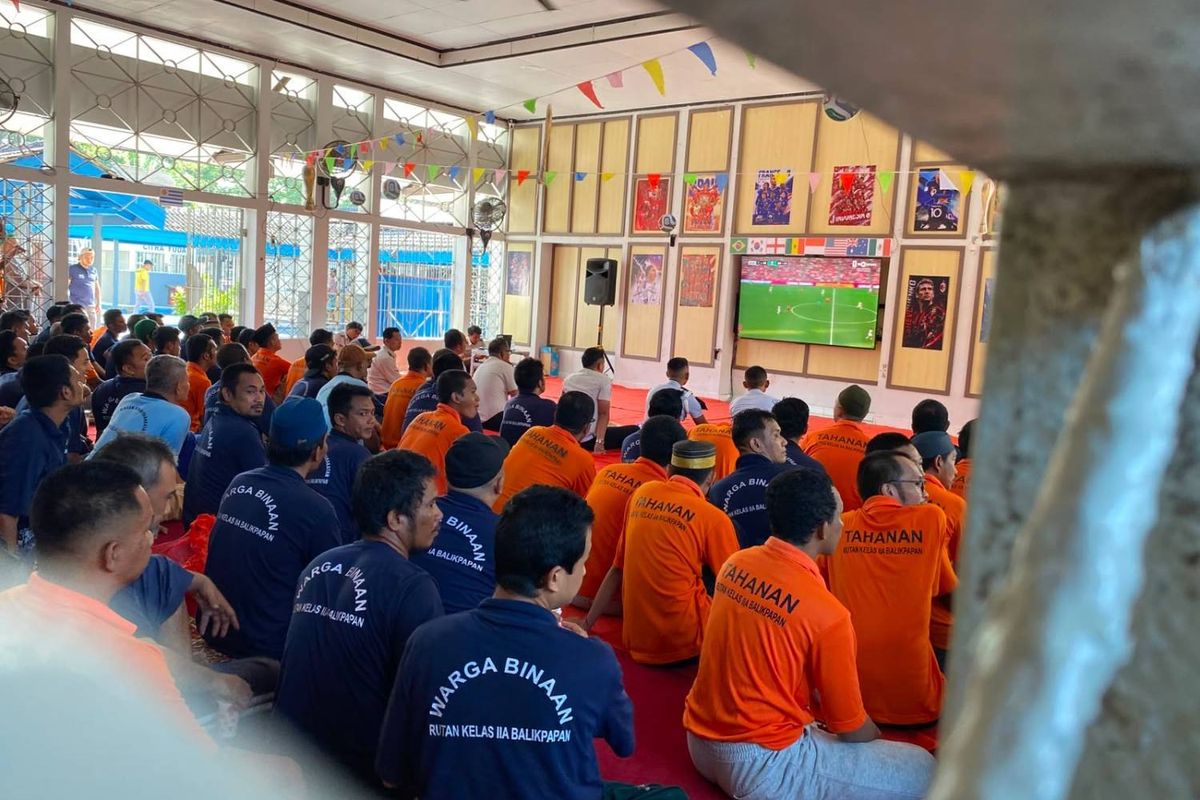
Here, an anthropological perspective helps us see the issue more clearly. Prisons are not just buildings that separate individuals from society, but institutions that regulate daily life.
Time, space, interaction, and personal relationships are all structured under surveillance. In Erving Goffman’s concept of total institutions, the lives of inhabitants in such institutions are shaped by governance regulating various aspects of their existence.
Meanwhile, Michel Foucault illustrates how the body becomes part of disciplinary and power mechanisms.
Both perspectives raise an important question: to what extent do restrictions on the body become part of punishment, and how does the state ensure that these restrictions do not undermine human dignity?
Family booths, in this context, should not merely be understood as spaces to fulfill biological needs. They can be discussed as part of efforts to maintain relationships that may experience strain during incarceration.
Distance, limited meeting times, lack of privacy, and economic burdens can affect relationships between partners. However, the impact is certainly not uniform across families.
Therefore, attention should not only focus on the existence of facilities but also on how the needs of inmates and their partners are understood, how both parties’ consent is ensured, and how access to those facilities is managed fairly.
The same holds true for discussions around sexual aids. This issue should not be inflated into sensational debates about inmates’ sexual behavior.
More crucial is how individual needs, health, privacy, and safety can be integrated into a framework of responsible policy.
If these issues remain wholly concealed, institutions miss the chance to understand the real risks and needs.
Conversely, if discussed openly, the state has room to examine health standards, usability, proportional oversight, and protections for inmates.
Of course, not every need can be directly translated into a right to specific facilities. Policy proposals still require legal grounding, medical studies, readiness of facilities, and security considerations.
There are also issues that must not be overlooked: how to ensure that facilities are accessible not only to inmates with money or influence?
How to protect women and vulnerable groups from pressure? How to maintain confidentiality and prevent abuse of power?
These questions are not reasons to halt discussions, but rather, they are crucial components of the process of designing viable policies.


























