

Prabowo: I Want to Confess, I’m a Soldier but Afraid of Doctors
-
News
-
8 minutes ago
This article was translated by AI. Read the original article on Kompas.com. See Original
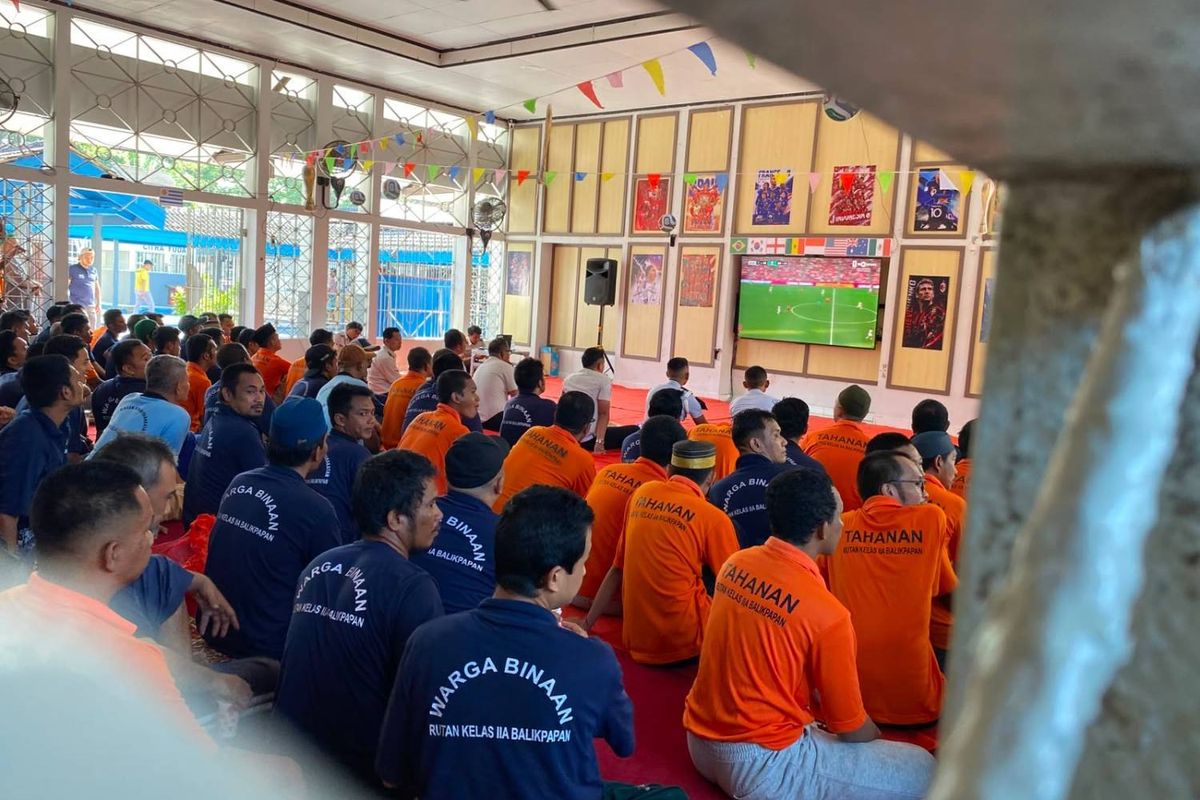
Here, the Indonesian House of Representatives plays a significant role. The courage to bring the sexual issues of inmates into public discourse needs to be accompanied by diligent oversight and measurable policy formulation.
Political statements alone are not sufficient. The government, through the ministry responsible for corrections, must assess needs, establish accountable mechanisms, and ensure that each policy is implemented within the framework of prevailing laws.
It is also essential to distinguish between proposals currently being discussed and policies that have been formally instituted.
As it stands, this discourse should be understood as a discussion agenda, not as evidence that these facilities have become national policy.
Furthermore, this issue should prompt us to reconsider the very meaning of incarceration.
If the goal of corrections is to prepare inmates for reintegration into society, then guidance should not only include job training, education, or religious activities.
Social relationships and the ability to maintain family responsibilities should also be priorities, without neglecting the needs of victims, the rights of others, and the obligations of inmates to serve their sentences.
Social reintegration is not just about physically returning someone to society, but also about preparing the conditions for them to rebuild their social life responsibly.
We need to move away from the notion that attending to inmates’ needs equates to leniency in punishment.
Criminal justice and respect for human dignity are not two concepts that must negate each other.
An individual must still be held accountable for their actions, while the state remains obligated to implement corrections humanely, safely, and non-discriminatorily.
Punishment restricts freedom based on law; it should not be an excuse to cease critical thinking about all the human needs that still live within it.
Ultimately, the discourse on family booths and sexual aids opens a larger conversation than the facilities themselves.
It tests how we perceive individuals who have committed legal violations: are they solely defined by past mistakes, or are they human beings with the potential to improve their lives?
The answer to that question will shape how we design the correctional system, not merely how we treat them while they are behind bars.
Therefore, the House of Representatives' initiative to raise this issue deserves to be progressed into serious, evidence-based, and open policy discussions.
Not by ignoring the law or sidelining public voices, but by ensuring that every decision has a clear basis and sufficient protections.
After all, the measure of humanity within a correctional system is not only evident in how tightly it locks the doors but also in how it safeguards human dignity behind those doors.
Someone may lose their freedom due to the law, but the state's duty is not to erase their humanity.


























