

Prabowo Gathers Gerindra Cadres in Hambalang, Dasco and KDM Attend
-
News
-
1 hour ago
This article was translated by AI. Read the original article on Kompas.com. See Original

JAKARTA, KOMPAS.com - Legal observers argue that an official must be held accountable for the remittance of Indra Kenz, which Immigration and Corrections Minister Agus Andrianto claimed was improperly processed.
The conditional release of content creator Indra Kesuma, commonly known as Indra Kenz, was revoked after the government discovered issues in the remittance process.
Minister Agus Andrianto stated that the cancellation of the conditional release was related to the remittance process, which was deemed not to adhere to procedure.
"Yes, we have revoked (the conditional release) because there was an incorrect remittance process," Agus said at Graha Pengayoman, Ministry of Law, Jakarta, on Monday (5/10/2026).
Conditional release is a form of right in the correctional system that allows inmates to serve their remaining sentence outside of prison after meeting specified requirements.
Therefore, when the remittance, which is part of the calculation of the prison term, encounters issues, the status of the conditional release that has been granted is also affected.
Inspector General of the Ministry of Corrections Rudi Setiawan stated that they have recommended to the Directorate General of Corrections (Ditjen PAS) that Indra Kenz's conditional release be revoked.
"And the conditional release has been recommended for cancellation to Ditjen PAS," Rudi said at a press conference at the Ministry of Corrections on Monday.
This recommendation arose following findings by the Ombudsman regarding luxury facilities in Class IIA Cibinong Prison in Bogor Regency.
In that inspection, three containers registered as state property were found.
These containers were used and filled by inmates, including Indra Kenz.
It seems that a remittance that was said to be out of procedure could bypass the inspection stages and subsequently affect the conditional release status of an inmate.
Who is responsible for this procedural error?
Criminal law expert at Al Azhar University Indonesia Suparji Ahmad stated that the responsible party cannot be immediately determined just by finding errors in the remittance granting process.
According to him, accountability must be traced based on the chain of authority and who made the error.
"Accountability must be investigated based on the chain of authority and who made the mistake," Suparji told Kompas.com on Wednesday (7/10/2026).
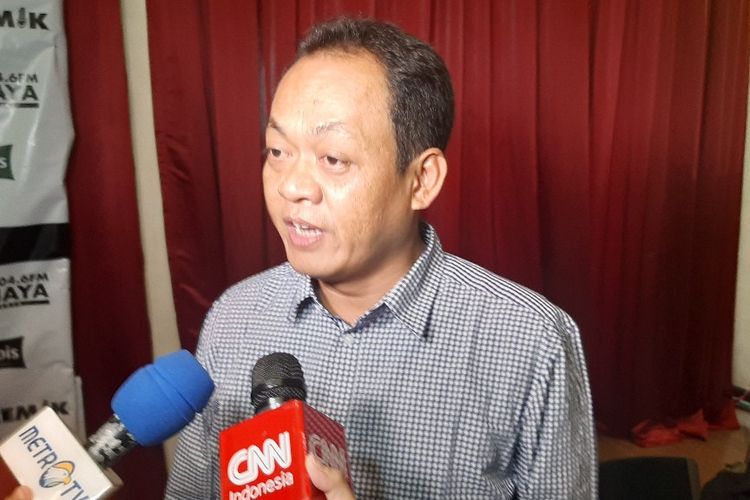 Legal expert from Al Azhar University Indonesia Suparji Ahmad during a discussion in Menteng, Central Jakarta, Saturday (11/1/2020).
He explained that the investigation could start from those who issued medical documents, officers who examined and validated the documents, prison officials who proposed the remittance, the Corrections Monitoring Team, verification officers, to the officials who made the decisions.
Therefore, according to Suparji, it is not accurate to place all blame on one person before an audit is conducted.
Institutionally, the government still bears the responsibility to correct any erroneous decisions.
Meanwhile, individual accountability should be assessed based on the nature of the error, whether it involves negligence, violations of standard operating procedures (SOP), abuse of authority, or even document manipulation.
"If it's merely an administrative oversight, the accountability framework would differ compared to intentional acts or forgery," Suparji stated.
On the other hand, inmates should not automatically be blamed for internal administrative errors in corrections.
According to Suparji, inmates can only be held accountable if it is proven they manipulated the process or provided false information.