

Prabowo Gathers Gerindra Cadres in Hambalang, Dasco and KDM Attend
-
News
-
1 hour ago
This article was translated by AI. Read the original article on Kompas.com. See Original

JAKARTA, KOMPAS.com - Legal observers argue that an official must be held accountable for the remittance of Indra Kenz, which Immigration and Corrections Minister Agus Andrianto claimed was improperly processed.
The conditional release of content creator Indra Kesuma, commonly known as Indra Kenz, was revoked after the government discovered issues in the remittance process.
Minister Agus Andrianto stated that the cancellation of the conditional release was related to the remittance process, which was deemed not to adhere to procedure.
"Yes, we have revoked (the conditional release) because there was an incorrect remittance process," Agus said at Graha Pengayoman, Ministry of Law, Jakarta, on Monday (5/10/2026).
Conditional release is a form of right in the correctional system that allows inmates to serve their remaining sentence outside of prison after meeting specified requirements.
Therefore, when the remittance, which is part of the calculation of the prison term, encounters issues, the status of the conditional release that has been granted is also affected.
Inspector General of the Ministry of Corrections Rudi Setiawan stated that they have recommended to the Directorate General of Corrections (Ditjen PAS) that Indra Kenz's conditional release be revoked.
"And the conditional release has been recommended for cancellation to Ditjen PAS," Rudi said at a press conference at the Ministry of Corrections on Monday.
This recommendation arose following findings by the Ombudsman regarding luxury facilities in Class IIA Cibinong Prison in Bogor Regency.
In that inspection, three containers registered as state property were found.
These containers were used and filled by inmates, including Indra Kenz.
It seems that a remittance that was said to be out of procedure could bypass the inspection stages and subsequently affect the conditional release status of an inmate.
Who is responsible for this procedural error?
Criminal law expert at Al Azhar University Indonesia Suparji Ahmad stated that the responsible party cannot be immediately determined just by finding errors in the remittance granting process.
According to him, accountability must be traced based on the chain of authority and who made the error.
"Accountability must be investigated based on the chain of authority and who made the mistake," Suparji told Kompas.com on Wednesday (7/10/2026).
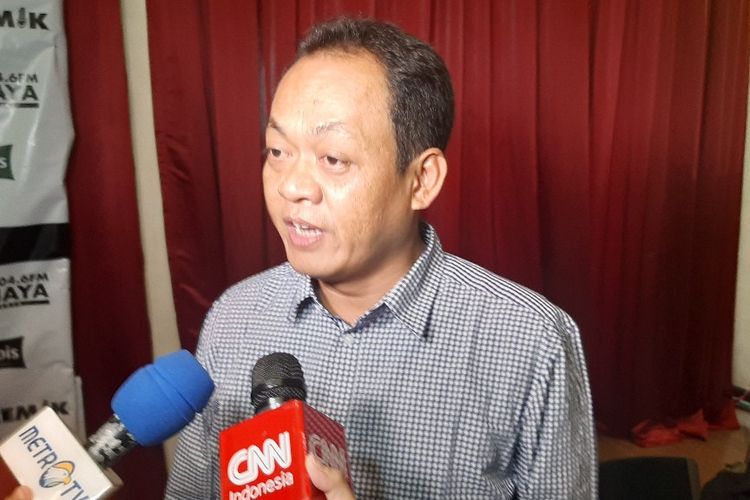 Legal expert from Al Azhar University Indonesia Suparji Ahmad during a discussion in Menteng, Central Jakarta, Saturday (11/1/2020).
He explained that the investigation could start from those who issued medical documents, officers who examined and validated the documents, prison officials who proposed the remittance, the Corrections Monitoring Team, verification officers, to the officials who made the decisions.
Therefore, according to Suparji, it is not accurate to place all blame on one person before an audit is conducted.
Institutionally, the government still bears the responsibility to correct any erroneous decisions.
Meanwhile, individual accountability should be assessed based on the nature of the error, whether it involves negligence, violations of standard operating procedures (SOP), abuse of authority, or even document manipulation.
"If it's merely an administrative oversight, the accountability framework would differ compared to intentional acts or forgery," Suparji stated.
On the other hand, inmates should not automatically be blamed for internal administrative errors in corrections.
According to Suparji, inmates can only be held accountable if it is proven they manipulated the process or provided false information.
The Indra Kenz case is seen as an opportunity to evaluate the overall management of inmate rights.
Suparji stated that this issue should be viewed in the context of correctional governance, not merely as an individual case.
"In my opinion, this issue must be seen as a matter of correctional governance, not just a personal case," he said.
He argued that there should be a clear distinction between the parties proposing and those verifying.
Additionally, documents serving as the basis for remittances must be audited, and the entire decision-making process should have a digital trail.
With such a system, each stage can be traced, from who inputs the data, verifies, to who gives the approval.
"There must be a clear separation between the proposing and verifying parties, an audit of all foundational documents, cross-checking of prison term calculations, and a digital trail showing who has input, examined, approved, and set each remittance," Suparji asserted.
This bolstering becomes increasingly important, especially when remittances are related to particular circumstances of the inmate.
Suparji cited long-term illness remittances, emphasizing that verification should not stop at merely examining one doctor's letter.
Diagnosis, treatment history, the competence of the physician providing the information, and the patient’s condition's compliance with criteria set forth in regulations need to be thoroughly examined.
"There must be a thorough check of the diagnosis, treatment history, the competence of the reporting doctor, and the patient's condition against the established criteria," he stated.
To prevent similar errors, Suparji proposed a layered verification system in the remittance process.
The first stage is administrative verification, which includes examining court verdicts, detention periods, rehabilitation registers, disciplinary violations, and all remittances received by the inmate previously.
The next stage is substantive verification.
For remittances granted due to health conditions, for instance, independent medical second opinions should be sought, especially if the remittance directly impacts the qualification for conditional release.
"In my view, layered verification is necessary," Suparji stated.
Moreover, calculations of prison terms need to be integrated into a digital system.
This system would allow for automatic recalculation of sentence periods when a remittance is canceled or under review.
Conditional releases should not be issued before resolving these issues.
"All calculations of prison terms must be digitally integrated so that when a remittance is canceled or under examination, the system automatically recalculates the two-thirds duration of the prison sentence and does not issue the conditional release until the matter is settled," he asserted.
Suparji also encourages the establishment of an audit trail and random audits by the Inspectorate.
This mechanism allows for thorough tracking of every remittance decision: who proposed it, who verified it, what documents were used, and who provided final approval.
"There must be an available audit trail and random audit mechanisms by the Inspectorate," stated Suparji.
He emphasized that the fundamental principle must be that remittances and conditional releases remain a right for inmates who meet the criteria.
However, granting these rights must be done objectively, transparently, and responsibly.
"We must ensure that correctional rights do not become uncontrolled discretionary spaces," he warned.
The procedural errors in Indra Kenz's conditional release have also drawn the attention of the House of Representatives (DPR).
Deputy Chairman of Commission III DPR Ahmad Sahroni stated that any procedural errors in the remittance process need to be investigated to identify responsible parties.
"If procedural errors are found, we need to trace who is accountable. If there are elements of violation or crime and sufficient evidence, they must be prosecuted according to the law," Sahroni told Kompas.com on Tuesday (6/10/2026).
 Deputy Chairman of Commission III of the House of Representatives Ahmad Sahroni at the DPR Building. Deputy Chairman of Commission III Ahmad Sahroni urged police to be alert to the potential emergence of gambling practices disguised as game centers in other areas, following similar cases uncovered in Jakarta.
He noted that evaluations should not only focus on a single, publicly highlighted case.
Sahroni believes that a comprehensive evaluation of remittance provisions in prisons is necessary to ensure the rights of inmates are granted in accordance with the rules.
"In my opinion, a thorough evaluation is indeed necessary," he said.
He indicated that DPR would coordinate through related commissions to promote firmer, transparent, and objective law enforcement.
Sahroni also reminded that improvements should not occur only when a case reaches the spotlight.
"We must ensure oversight is pervasive among all inmates and that every provision of rights aligns with applicable regulations," he stated.
The case involving Indra Kenz began with allegations of fraud through the Binomo application.
Eight users of the app reported to the National Police's Criminal Investigation Agency (Bareskrim) on February 3, 2022, claiming to have suffered losses of around IDR 2.4 billion.
The case later expanded to include allegations of online gambling, spreading false information detrimental to consumers in electronic transactions, fraud, and money laundering.
Indra Kenz earned profits by demonstrating Binomo gameplay believed to be manipulated to always appear beneficial.
Tangerang District Court subsequently imposed a 10-year prison sentence and a fine of IDR 5 billion, with a subsidiary sentence of 10 months imprisonment on November 14, 2022.
Indra was charged with disseminating misleading information that harmed consumers in electronic transactions and money laundering offenses.
The verdict was appealed to the Banten High Court, which upheld the 10-year sentence.
However, the ruling changed the status of seized evidence to be returned to the victims, rather than to the state.
Further legal action was rejected by the Supreme Court, making the decision legally binding (inkracht).
The final legal recourse through a Judicial Review (PK) submitted by Indra was again rejected by the Supreme Court in mid-December 2025.