


Habiburokhman Requests Ban on 4 Bullying Suspects in Malang from Taking Exams: No Special Treatment!
-
News
-
1 minute ago
This article was translated by AI. Read the original article on Kompas.com. See Original
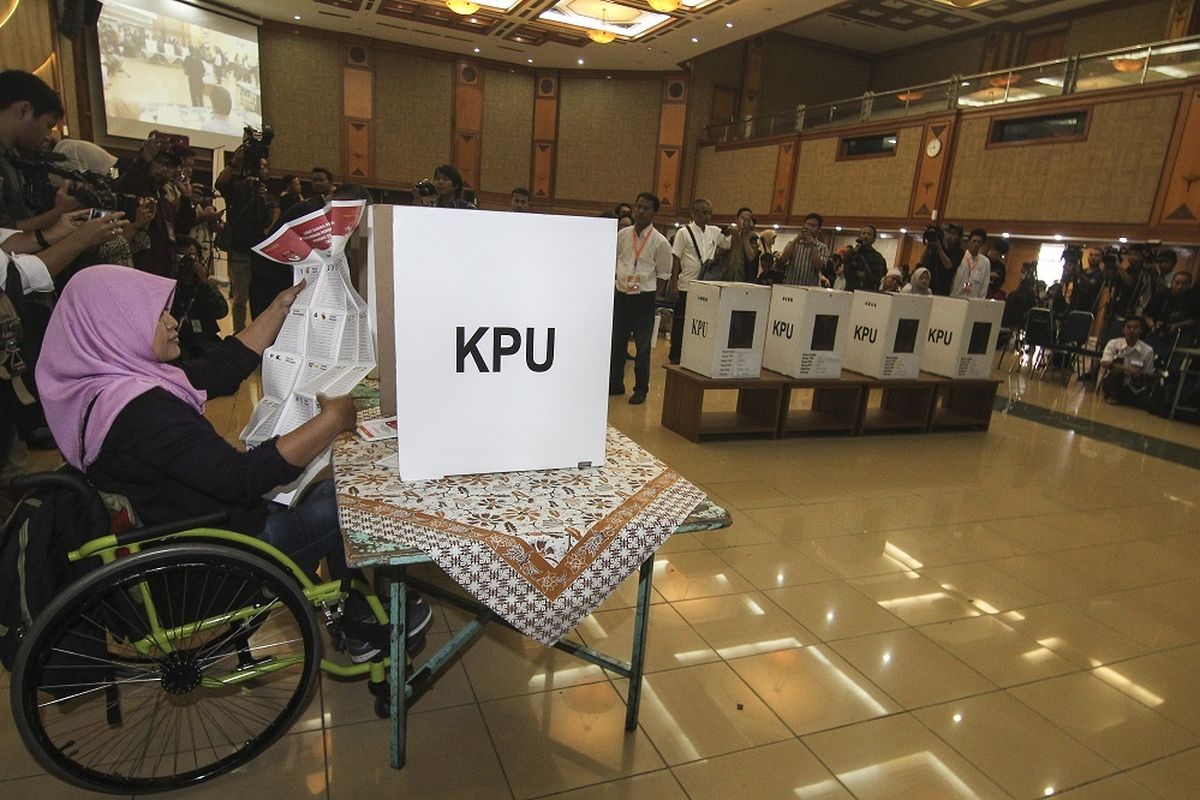
REVISION of the Election Law, which is included in the National Legislative Program and is targeted for discussion by Commission II of the DPR at the end of 2026, reopens the discussion on the political rights of persons with disabilities. On paper, the guarantees are already complete.
The Constitution guarantees non-discrimination, Law Number 8 of 2016 affirms the right to vote, to be elected, and to be an election organizer, and Indonesia has ratified the Convention on the Rights of Persons with Disabilities through Law Number 19 of 2011.
The Constitutional Court even expanded that guarantee to include the voting rights of persons with mental disabilities through Decision Number 135/PUU-XIII/2015.
What remains unresolved is the gap between recognition and the obligation to fulfill it. The right to vote or be elected can only be exercised when the state provides suitable accessibility and accommodations, while that obligation has yet to be formulated as a binding norm.
This gap is evident when elections are viewed from three positions of persons with disabilities: as voters, as candidates, and in front of the organizers.
As Voters
Data from the General Election Commission shows a regression in numbers. The registered disabled voters decreased from 1,247,730 in the 2019 elections to 1,101,178 in 2024.
In reality, their potential is estimated to exceed 14 million people, meaning that only about 8 percent have been recorded.
This decline, despite the expansion of legal guarantees, is more reasonably seen as a failure in data collection rather than a shrinking population.
Intellectually disabled individuals, the most vulnerable group, made up only about 5 percent of registered disabled voters in 2024.
The root of the problem lies in the norms, as the regulations on the voter list in the Election Law do not require the recording of various disabilities, and the recap report only includes gender.
Without this data, voters' needs cannot be legally translated into assistive tools, designs for polling stations, or socialization strategies.
This burden has increased following the Constitutional Court Decision Number 130/PUU-XXIII/2025, which expanded the scope of physical disabilities to include individuals with chronic illnesses with significant functional impairments through voluntary medical assessments.
This new group requires adjustments in data and accommodations, while the existing systems are still unable to capture the widely recognized variants.
The impact is felt on polling day. The Election Supervisory Body (Bawaslu) recorded 25,769 polling stations without Braille templates in 2024, and monitoring by the Disability Voter Assistance Program found that Braille voting aids were only available in about half of the polling stations.

























