


Prabowo: I Can Skydive from Tens of Thousands of Feet, but I'm Nervous Seeing a Syringe
-
News
-
3 minutes ago
This article was translated by AI. Read the original article on Kompas.com. See Original
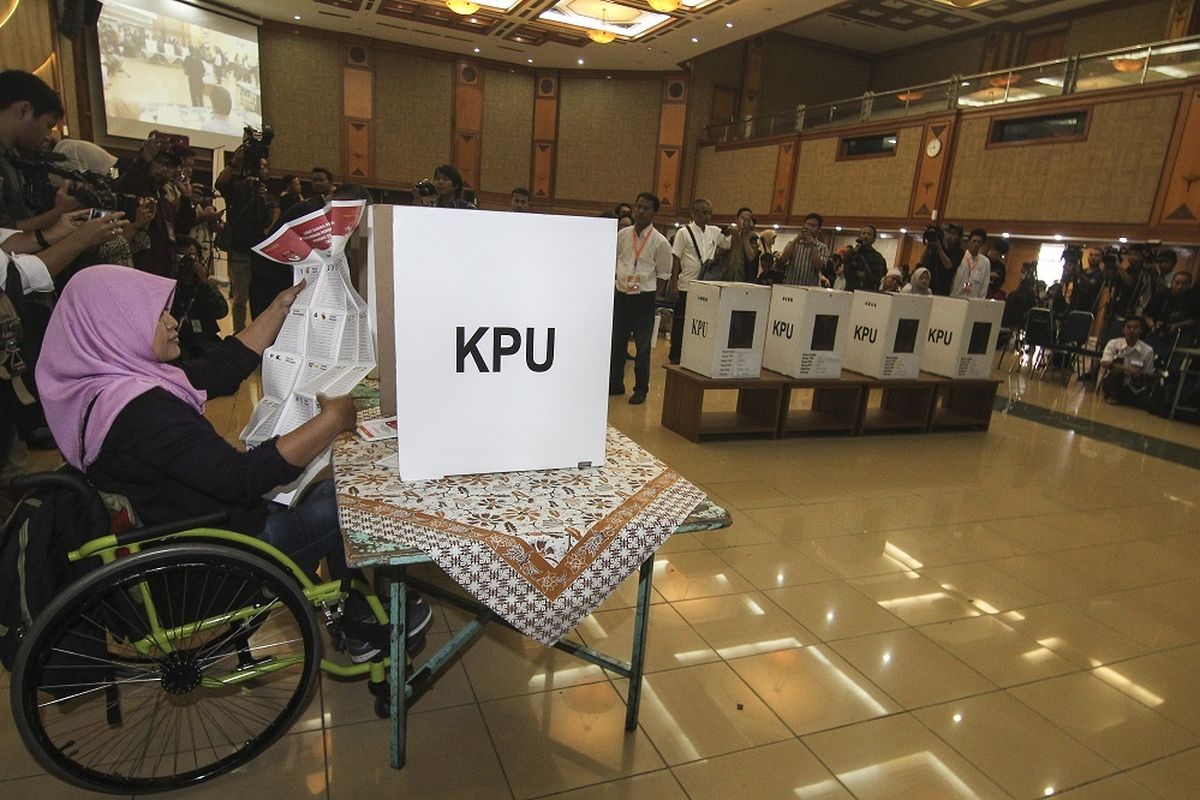
Studies by Lisa Schur and colleagues (2002 and 2017) show that polling station accessibility is directly linked to the participation of disabled voters, making tools like these a prerequisite for exercising their voting rights.
However, the standards still rely on implementing regulations without clear sanctions, while unregulated assistance threatens the confidentiality and autonomy of voting.
As Candidates
In the position of participants, barriers are written into the law itself. The phrase “physically and mentally healthy” appears in several candidacy requirements, including Article 169, 182, and 240 of Law Number 7 of 2017.
The explanation of the articles states that physical disabilities do not categorize as incapacity, yet the standards still measure health rather than the ability to perform duties.
Such standards open the doorway to discriminatory interpretations. In the 2019 elections, a wheelchair-using legislative candidate was deemed ill by medical staff, despite the fact that their condition stemmed from an accident and did not affect their work ability.
A more appropriate formulation already exists in Article 169(g), which states “able physically and mentally to perform the duties,” so what is needed is alignment of the norms.
However, removing a single phrase is not enough. More structural barriers exist beyond the health examination table, such as the high costs of a political system reliant on open proportional representation, limited access to party structures, and persistent stigma.
This combination of barriers is reflected in the near absence of representatives with disabilities in the DPR RI.
This situation does not reflect a lack of public support. In the DPD pathway, which does not go through parties, a candidate from West Java garnered approximately 313,000 votes, ranking 13th out of 43 candidates despite running at their own expense.
One case may not be sufficient for a conclusion, but this contrast indicates that the main barriers lie at the nomination door controlled by parties.
Thus, the right to be elected needs affirmative policy support, as argued by Prasetio, Masnun, and Widodo (2025).
This idea aligns with The Bill of Electoral Rights for Citizens with Disabilities from the International Foundation for Electoral Systems (2002), which asserts that disabilities should not serve as a basis for restricting political rights.
In the Hands of Organizers
Organizers design data collection, prepare polling stations, compile informational materials, and enforce candidacy requirements.

























