


Prabowo Instructs Renovation of All Community Health Centers and Every District to Have a Good Hospital
-
News
-
17 minutes ago
This article was translated by AI. Read the original article on Kompas.com. See Original
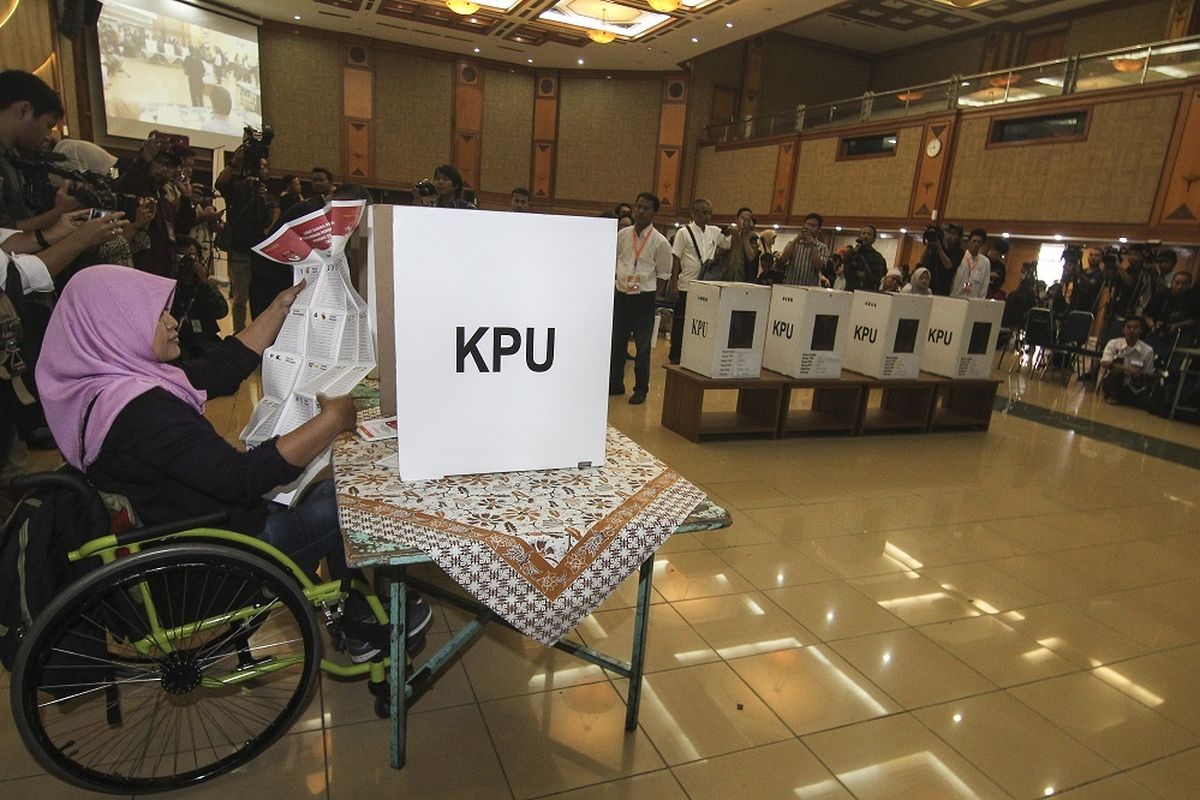
As long as accessibility is understood as an add-on facility relying on leftover budgets and staff initiative, its fulfillment will continue to be unequal across regions and phases.
Many accessibility guarantees are also regulated only in KPU Regulations, which can be altered by the organizers without a legislative process, thus weakening their binding nature.
In fact, most barriers arise long before polling day, beginning with inaccurate data collection, inaccessible information, and narrowing candidacy requirements.
The phrase “physically and mentally healthy” even appears in the recruitment requirements for organizers in Articles 21, 72, and 117. Yet, Article 13 of Law 8/2016 guarantees the rights of persons with disabilities to be organizers and overseers of elections.
One norm closes two doors simultaneously: both running as candidates and conducting elections from within.
On the enforcement side, complaint mechanisms are not yet available in an accessible format, and sanctions for failing to provide accessibility are not stringent.
Bawaslu's supervision is also hindered by the absence of an accurate disability database, while ethical enforcement has yet to consider neglecting accessibility as a violation.
The revision of the Election Law needs to elevate several guarantees from implementational regulations to the statutory level.
Among them, the obligation to record various disabilities in voter data, health requirements based on the ability to perform duties as per the model of Article 169(g), and specific nomenclature for accessibility budgets so they are no longer treated as additional expenditure.
Accessibility guarantees, suitable accommodations, and non-discrimination must be raised from principles in the preamble to binding norms that can be enforced throughout the electoral cycle, from data collection to dispute resolution.
When the nomination space is truly open, political parties can no longer treat disabled voters and candidates as mere complements.
Treating accessibility as charity positions individuals with disabilities as those waiting to be given.
In contrast, treating it as a legal obligation recognizes them as citizens entitled to a fair election designed from the start.
The revision of Law Number 7 of 2017 is an opportunity to ensure that the rights of persons with disabilities are guaranteed from the moment the regulations are drafted, whether when voting, running for office, or participating in the conduct of elections.

























