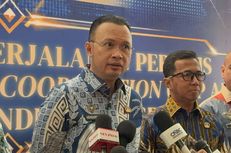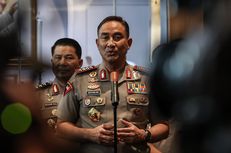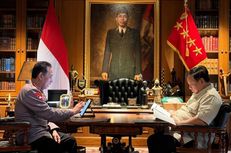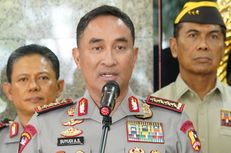


Prabowo Gathers Gerindra Cadres in Hambalang, Dasco and KDM Attend
-
News
-
1 hour ago
This article was translated by AI. Read the original article on Kompas.com. See Original
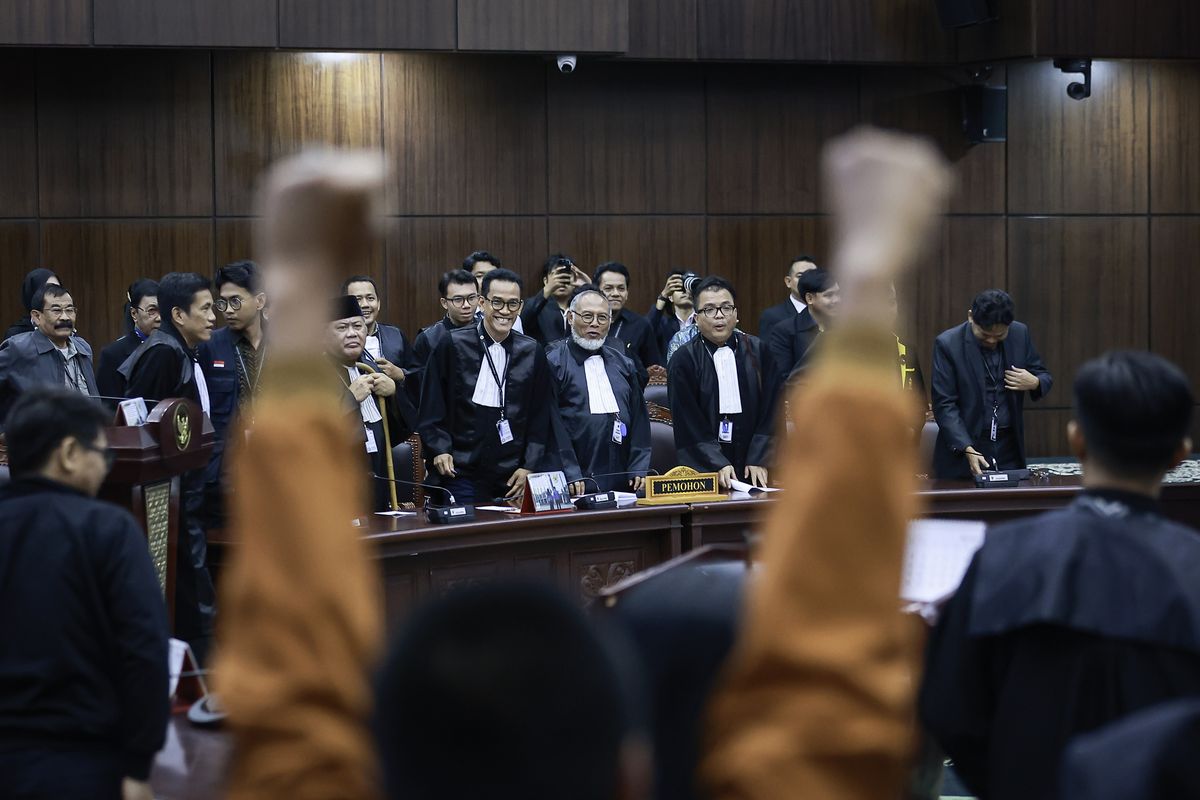
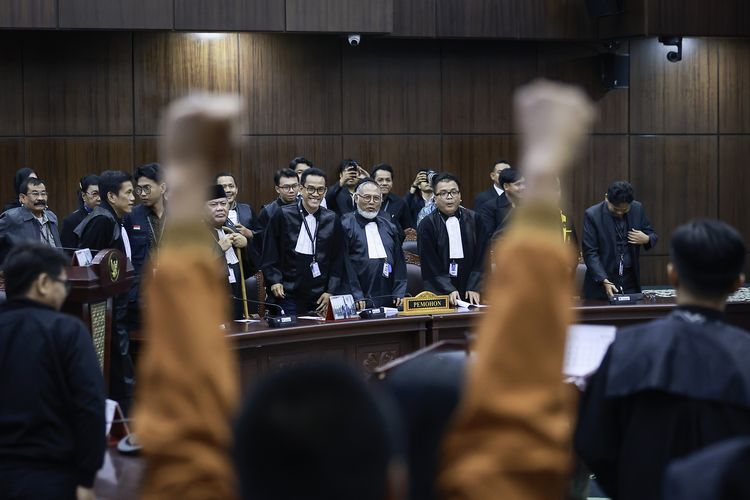
THERE IS something peculiar about the Constitutional Court's ruling regarding the educational qualifications of Vice President Gibran Rakabuming Raka.
It is not because the Court declared Gibran invalid as Vice President, nor because it stated that his diploma is counterfeit.
Rather, it is the ruling that presents two seemingly contradictory points: it declared the petition inadmissible, yet in its considerations, the Court stated it found no convincing evidence that Gibran possesses a diploma, certificate, or foreign degree that could validate his qualifications as having completed a minimum of high school education or equivalent.
This raises a more significant question than the diploma controversy itself.
If educational qualifications are among the requirements to hold a public office, who is truly responsible for ensuring that these qualifications are met before someone is sworn in?
This question is crucial because the issue only became a debate after Gibran was inaugurated as Vice President on October 20, 2024.
In its ruling, the Court explained that the petitioners lacked legal standing to bring the case.
The Court also assessed that the matter presented was no longer appropriately categorized as a dispute over presidential election results, as the nomination stages had ended and the elected pair had already been inaugurated.
Therefore, the Court did not use this case as grounds to annul or disqualify Gibran as Vice President.
This is where the public should not stop at asking, “So does Gibran have a diploma or not?”
While that question is indeed intriguing, there is a far more pressing issue of governance: how can the state ensure that all qualifications for a public official are thoroughly verified before the position is conferred?
Qualifications are not mere bureaucratic formalities. When someone is deemed qualified, the state confers upon them legitimacy, authority, access to public resources, and public trust.
If subsequently, those qualifications are called into question after the inauguration, the issue transcends a mere piece of documentation.
There are much larger institutional and public trust implications at play.
We are already accustomed to verification principles in bureaucracy. When someone applies as a state civil servant, their diploma is scrutinized.
When someone undergoes a position selection, their qualifications and competencies are assessed.
When an employee applies for a promotion, supporting documents must be accountable.
The state understands that one cannot simply claim to meet the requirements; they must be able to prove it.