

Prabowo Gathers Gerindra Cadres in Hambalang, Dasco and KDM Attend
-
News
-
2 hours ago
This article was translated by AI. Read the original article on Kompas.com. See Original
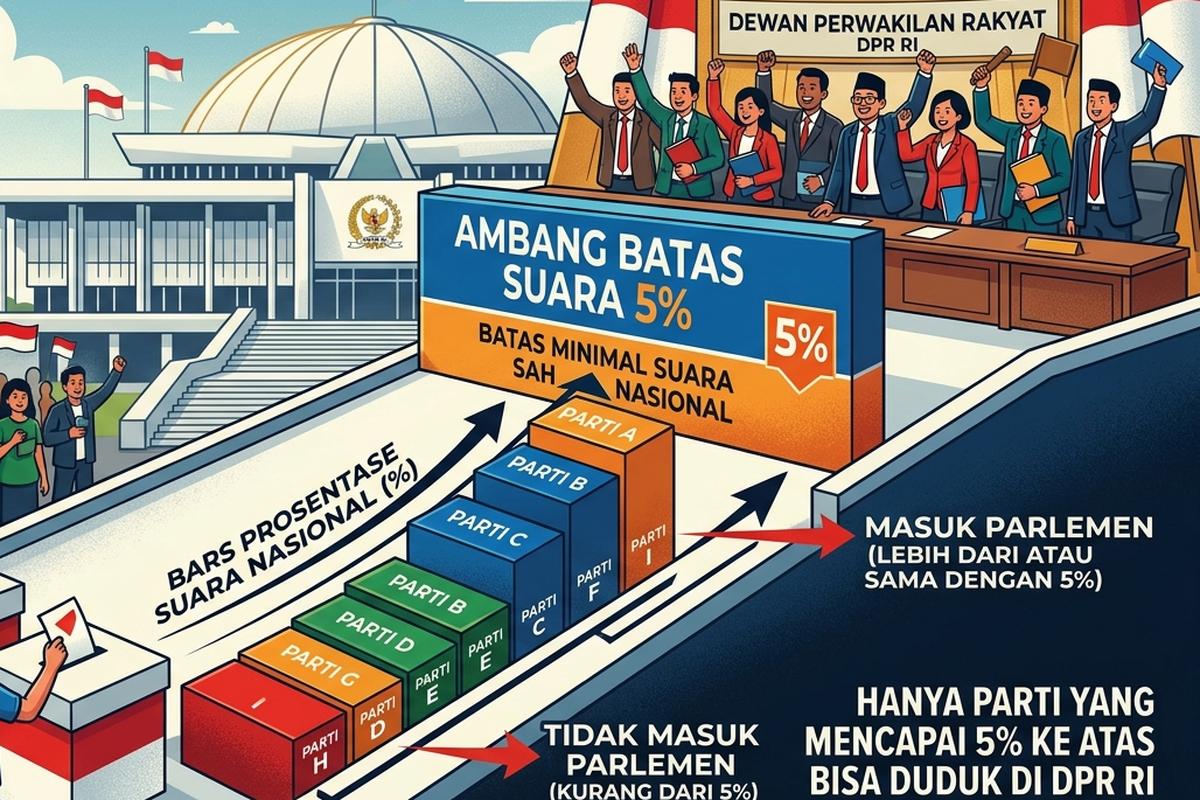
“We cannot consider the threshold separately from the number of participating parties, the geographical distribution of votes, and the system for converting votes into seats,” she explained.
She pointed out that the issue of unconverted votes is indeed related to the design of the electoral system.
Lawmakers must balance the representation of voters with the effectiveness of the parliament.
“If we talk about the impact, it is significantly substantial if the measure used is voter representation through DPR seats,” Neni stated.
“Therefore, the focus is on how to create a balance between representation and parliamentary effectiveness,” she added.
Perludem researcher Haykal observes that the impact of unconverted votes is significant when measured in terms of voter representation in the DPR.
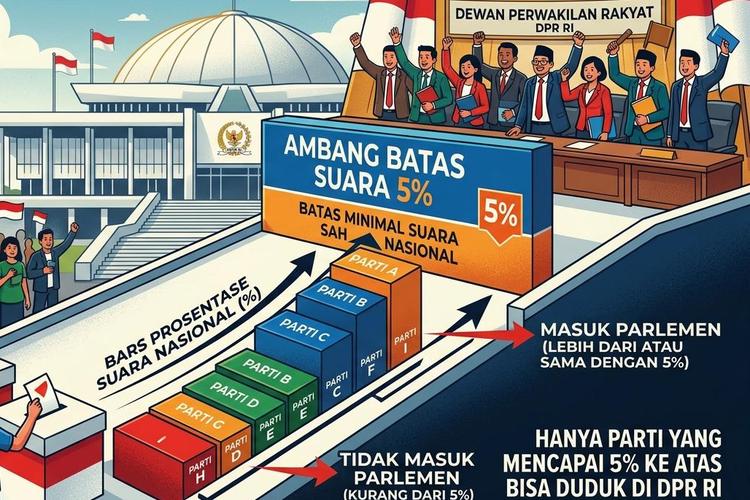
“It’s considerable. In 2024, because three parties that secured seats did not meet the PT, around 17 million votes cannot be converted into seats,” Haykal told Kompas.com on Thursday.
According to him, this situation indicates that there are voters who cast their ballots for certain political parties but do not achieve representation in the DPR.
“Thus, there are 17 million people who cast their votes, but it essentially means nothing,” Haykal said.
For Perludem, this issue is not just about how many parties enter the DPR, but how votes are converted into political representation.
When a party’s votes are below the PT at the national level, those votes cannot be used to secure DPR seats, even though cumulatively they number in the millions.
This situation also leads to an ongoing debate regarding PT that goes beyond merely simplifying the number of parties in parliament.
On the other hand, there are questions about how far this simplification can be implemented without increasing the gap between voter choices and the available seats in the DPR.
Neni considers joint factions and the evaluation of the parliamentary threshold are at different levels.
Joint factions are a solution at the institutional level of the parliament, whereas threshold evaluation touches on the design of the electoral system from the outset.