
Toward a New Vice President: Prabowo Gathers Proposals, MPR Prepares for Election
-
News
-
22 minutes ago
This article was translated by AI. Read the original article on Kompas.com. See Original
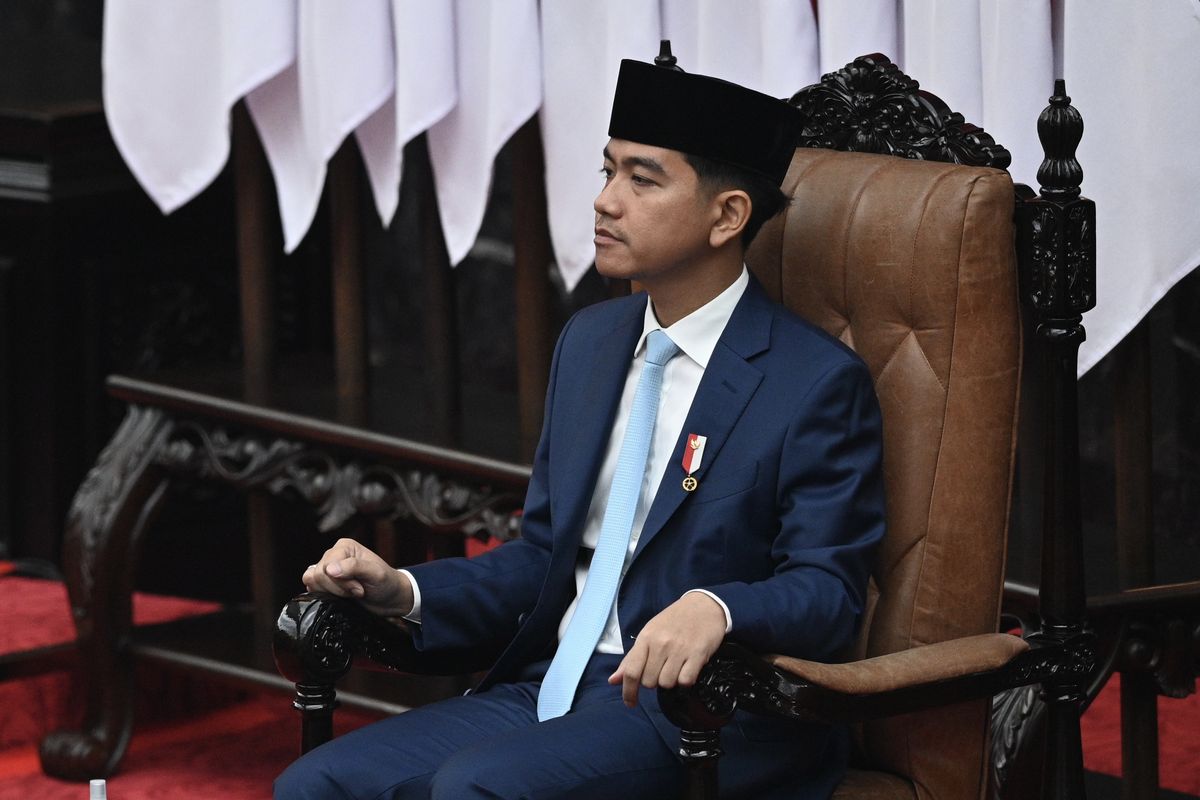
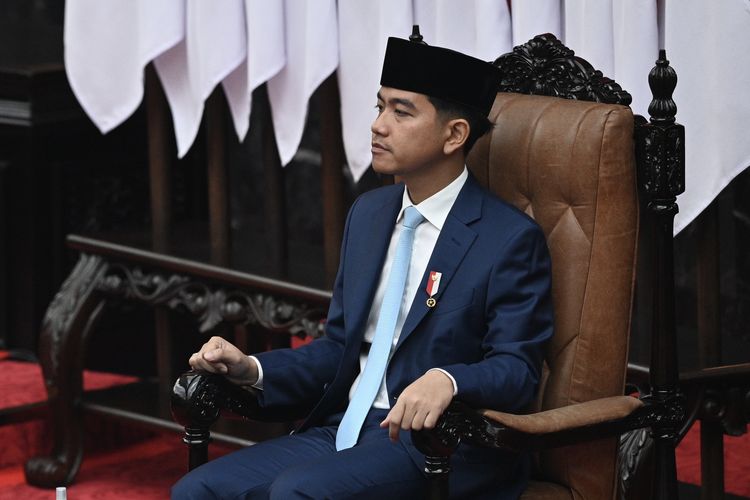
Astonishingly, Gibran does not ask President Prabowo to charge the Coordinating Minister for Political, Legal, and Security Affairs, the Minister of Law, and the Attorney General to represent him in the Court.
From the positive state perspective, whether liked or not, Gibran is part of the government. As the Vice President, Gibran has legitimate grounds to involve government elements in this matter.
Indeed, the actions he is accused of are personal in nature, but due to the status and their consequences from a perspective concerning the government’s appearance, Gibran is entitled, not obliged, to request government participation not within the framework of electoral law but as part of governance.
However, if Gibran insists on adhering to procedures—formality—that is not wrong, as procedures are also called upon by law to promote justice.
It is not wrong for Gibran to think that in this case, there is no legal emptiness. It is correct if Gibran believes the Court does not need to create new rules solely to examine this creative and artificial dispute.
It is not erroneous if Gibran thinks the applicable law is the law that exists here, now, and not somewhere else.
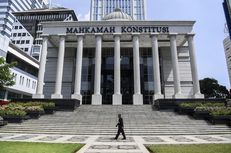
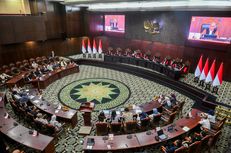
Based on that, Gibran can logically argue that this dispute should not be examined in the Court. He is justified in thinking this issue must be processed according to the existing procedural scheme stipulated in Article 7B of the 1945 Constitution.
The argument that the vice-presidential candidate requirements are not met by Gibran since registration is interesting. A new discovery that, according to the applicants, questions the validity of registration, thus rendering the "legitimacy" invalid, is also captivating.
It is not erroneous if Gibran considers the legal qualification against this new finding as an object— a legal matter—that is aimed at or encompassed by the norm of being "proven to no longer meet the requirements" in Article 7A of the 1945 Constitution. Consequently, that new finding cannot be examined by the Court.
In legal science, an action considered lawful at one time can become unlawful at another time due to objective reasons.
If a finding that emerges much later indicates something different, resulting in the annulment of the previous decision, then this new matter logically stands as an object targeted by the norm of "proven to no longer meet the requirements" in Article 7A of the 1945 Constitution. The law dictates that this new finding should be examined by the House of Representatives, not by the Court.
Gibran may not be an exceptional reader, especially compared to President Prabowo. However, within those considerable limitations, Gibran must be clever, and it would benefit him to spend some time dealing with Thomas Reid, an 18th-century Scottish philosopher who wrote about power. For Reid, power has a genealogy, an orbit.
Power, in his view, is too abstract a concept to define. The concrete form of power only manifests once it is in its orbit and utilized practically.
It would be good if Gibran also read the novel "Lord of the Flies" by William Golding, a philosophy instructor in Salisbury, England, who served as an English soldier during World War II.
This novel illuminates facets of praxis regarding power akin to Thucydides, the ancient Greek historian of the 5th century BC.
Gibran, alone in the midst of this storm, is not reconsidering his fate, letting his days be penned by the applicants and the Court, growing darker with each moment.
It would be remarkable if Gibran, in his solitude, sharpened his small intellect, recognizing the history of power and justice. It would be admirable if Gibran, with his modest intelligence, realized that the energy of distributive justice is always explosive.
At this point, Gibran must further stimulate his small intelligence to better understand the Court's brief yet epic history.
The Court always manages to enter and operate within the unpredictable. It is to be hoped that tonight's interim decision truly concludes this creative and artificial dispute.
If the nature of that interim decision differs, then Gibran's small intelligence must note the possibility that the Court's final ruling declares that "the KPU has been proven not to have examined Gibran's educational requirements documents as per the law or that his Certificate of Equivalent High School education is invalid."
Legal considerations are not law itself. That is true. The issue is that legal science justifies the facts declared within legal considerations as having legal value as factual evidence.
And prayers to Him, the true owner of power, must be intensified to tame the next storm of justice and to bring back political allies, who for some reason have now distanced themselves and should not continue to drift apart.
Regrettably, justice always provides reasons to end political friendships, leaving solitude sinking into an unwelcome conclusion.
Such is justice; it can always redirect ideas, as new light of reason emerges. In justice, betrayal does not exist. Justice is that graceful.