

Yusril on Gibran's Effort to Validate Diploma in PTUN: It's Pointless, MA Decision is Final
-
News
-
Just now
This article was translated by AI. Read the original article on Kompas.com. See Original
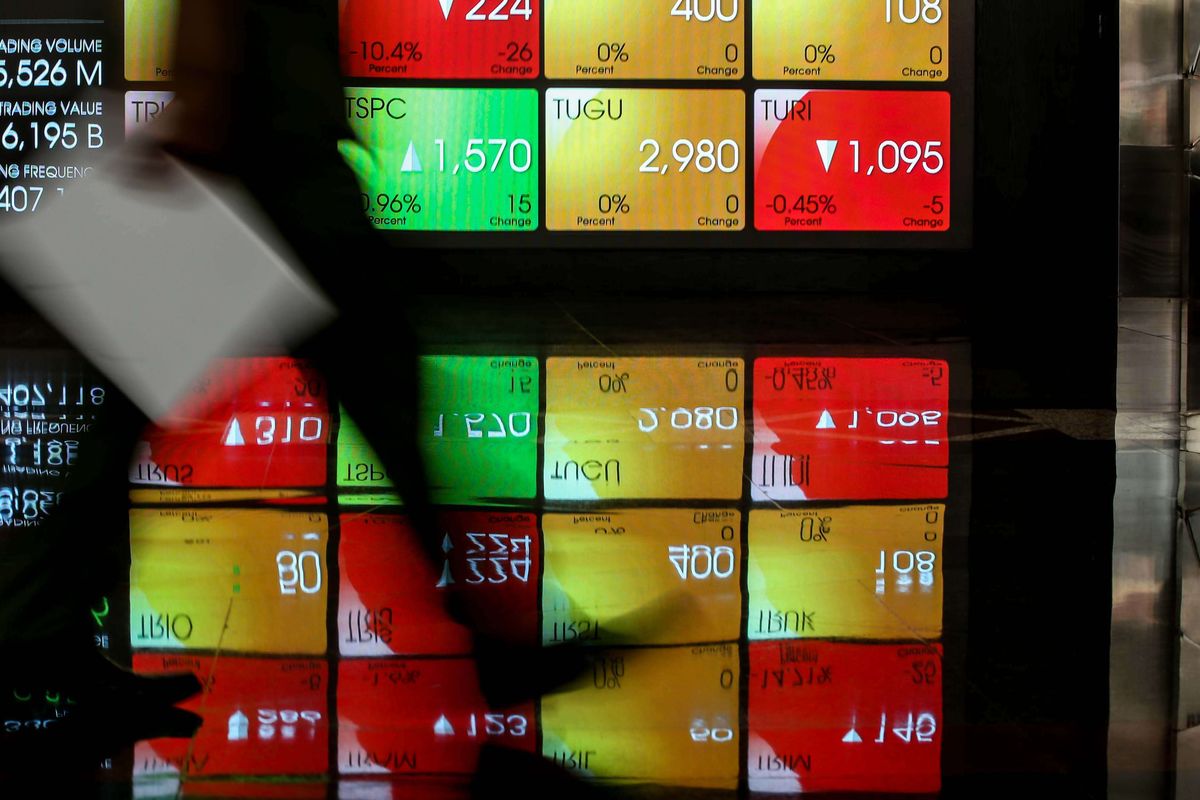
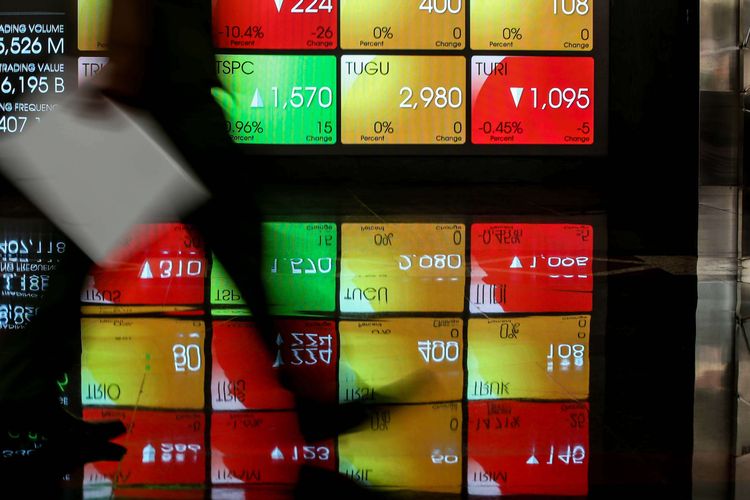
JAKARTA, KOMPAS.com - The Composite Stock Price Index (IHSG) is projected to remain in a consolidation phase with a tendency toward volatility.
The IHSG closed on Friday (18/9/2026) at 6,441 after declining again by 0.33 percent, while most Asian markets strengthened. This shows that the current issues affecting the IHSG are not solely driven by external sentiment.
Capital market observer and Republic Investor founder, Hendra Wardana, explained that foreign fund outflows, which recorded a net sell of around Rp 2.9 trillion throughout the week, remain a major burden on the market.
“Therefore, every IHSG rally still has the potential to be used by investors for profit taking or position liquidation,” he said in a written statement on Monday (21/9/2026).
As such, the room for an increase or rebound remains open but is not yet strong enough to immediately push the IHSG into a solid bullish trend.
“I expect the IHSG to move within the range of 6,350–6,600 this week, with 6,350–6,400 as key support and 6,500–6,600 as resistance,” he added.
As long as it stays above 6,350, the chance for a technical rebound is still open. Meanwhile, breaking through 6,600 would signal a more positive shift in momentum.
Hendra views global sentiment as a crucial factor that will determine market direction. The Federal Reserve’s 25 basis point interest rate hike makes investors reassess US monetary policy, especially given ongoing inflation concerns.
This situation means the US dollar and US bond yields are likely to continue exerting pressure on emerging markets, including Indonesia.
On the other hand, Brent crude oil prices have dropped to around 102.68 US dollars per barrel and West Texas Intermediate (WTI) to approximately 100.08 US dollars per barrel, providing some breathing space as worries over supply disruptions subside.
If oil prices continue to decline, global inflationary pressure could ease, potentially improving risk appetite sentiment.
Nevertheless, war and geopolitical tensions in the Middle East remain risks since oil prices are still at elevated levels.
Domestically, the rupiah’s movement around Rp 17,758 per US dollar, foreign fund flows, interest rate policy developments, and Morgan Stanley Capital Index (MSCI) issues will also be determining factors. Under these conditions, the IHSG remains highly sensitive to shifts in global sentiment and movements in large-cap stocks.
From a technical perspective, the IHSG needs to reclaim momentum above 6,500 to open space for a stronger rise.
The 6,400 area serves as initial support, while 6,350 is a more critical support level. If selling pressure intensifies again and the IHSG falls below 6,350, the risk of weakening towards 6,200–6,250 will open up.
Conversely, if the index can hold above 6,400 and then break through 6,500, the chance to test 6,550–6,600 increases substantially.
“This means that trading this week will still be a battle between bargain hunting and foreign selling pressure,” he noted.
Hendra advised investors not to aggressively chase gains, but rather to be selective in using corrections to enter stocks with strong fundamental catalysts or trading momentum.