


Cak Imin Encourages Pesantren-Based Vocational Schools to Elevate Standards to International Levels
-
News
-
4 hours ago
This article was translated by AI. Read the original article on Kompas.com. See Original
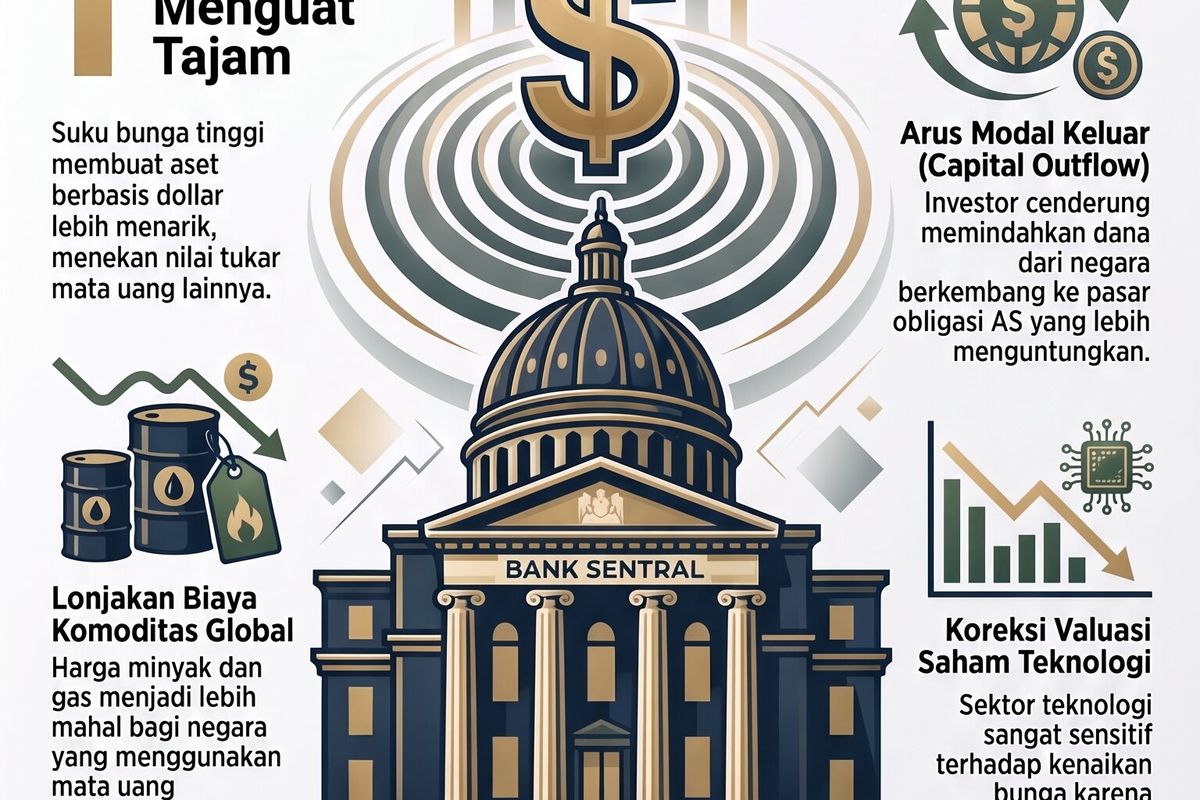
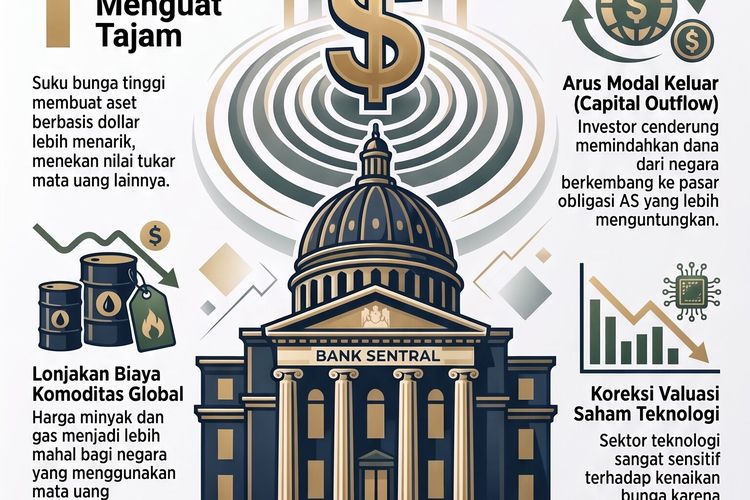
This situation can increase pressure on other central banks to respond to Fed policy changes; however, each central bank’s response may differ due to varied domestic economic situations.
The Fed’s rate hike occurred while several advanced economies’ central banks are also tightening their monetary policies.
The European Central Bank raised rates by 25 basis points the previous week.
Meanwhile, J.P. Morgan Asset Management forecasts that the Bank of Japan will also hike rates by 25 basis points this week.
Tai Hui, head of Asia Pacific market strategy at J.P. Morgan Asset Management, said that central banks in advanced economies are moving in tandem to tighten policies amid inflation concerns.
"Central banks in advanced economies are aligned in tightening monetary policy to address inflation worries," Hui said.
However, the Fed’s rate increase doesn’t necessarily mean all central banks worldwide will follow suit.
Inflation levels across Asia vary significantly. China and Thailand still face deflationary pressures.
In contrast, inflation in Australia and Japan remains above each central bank’s target.
Meanwhile, India’s inflation hovers around the midpoint of the Reserve Bank of India’s target range, according to BlackRock.
These differing conditions mean domestic monetary policies remain key considerations for each central bank.
Therefore, while a stronger U.S. dollar may limit room for monetary easing, it doesn't automatically dictate interest rate directions in every country.
Zandi cited Japan as an example, where yen depreciation adds justification for the Bank of Japan to continue raising rates.
"This indeed puts pressure on Japan to take similar steps and raise rates," Zandi explained.
Another impact of the Fed’s rate hike appears in the U.S. Treasury market.
Higher U.S. interest rates often push up Treasury yields. For global investors, these changes are an important factor in portfolio allocation.
Higher government bond yields make fixed income assets more competitive against equities.
Concurrently, rising rates increase corporate financing costs.
This dynamic also affects how investors value a company’s future earnings.
When interest rates rise, the present value of expected future profits tends to decrease.
Liz Ann Sonders, chief investment strategist at Charles Schwab, pointed out that what matters is not just the absolute yield level but also the speed and regularity of increases.
According to Sonders, 10-year U.S. Treasury yields reaching broadly 5 percent are justifiable given inflation levels, Fed policy expectations, and strong nominal economic growth.
"I believe if yields start moving out of control, the stock market will face greater adjustment challenges. However, I think the economy and markets can handle it to some extent as long as movements stay orderly," Sonders told CNBC.