

Cak Imin Encourages Pesantren-Based Vocational Schools to Elevate Standards to International Levels
-
News
-
2 hours ago
This article was translated by AI. Read the original article on Kompas.com. See Original
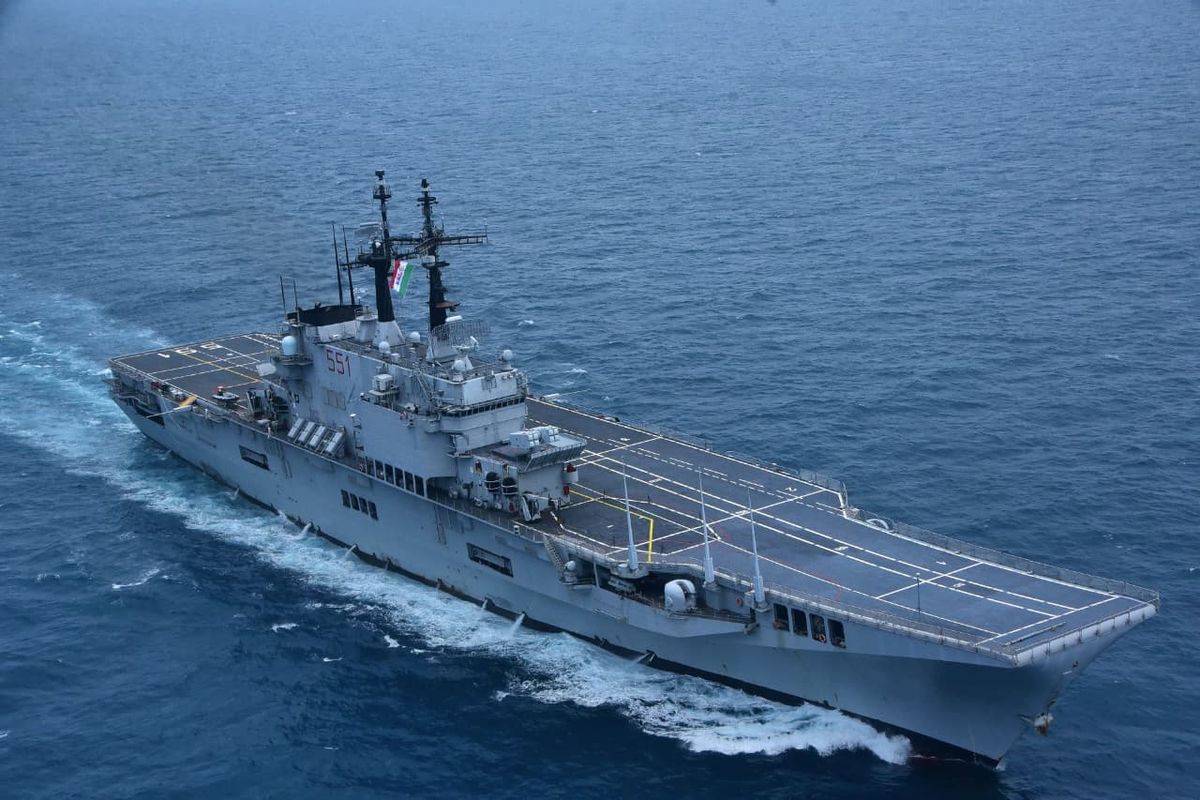
Thailand provides two comparisons that need to be read carefully.
The country signed a contract for a Type 071E LPD with China on September 9, 2019; according to a report in Naval News, its value is about 200 million US dollars.
Type 071 is 210 meters and designed to carry roughly 800 marines and 20 amphibious vehicles, differing in design and function from Garibaldi.
This figure is only an illustrative scale, not proof of which ship is better; fair comparisons must consider mission profiles, life cycle costs, operational readiness, armaments, aircraft, logistics, maintenance, and supporting infrastructure.
The other comparison is the Chakri Naruebet aircraft carrier, which CSIS analysts quoted by AP said spent much of its life docked due to operational and budget constraints.
When procuring defense equipment, what is bought is not just the hull but capabilities: to perform specific missions at a defined readiness level with affordable costs over the usage life.
Therefore, twelve things should be taken into account: mission capability, life cycle cost, operational readiness, maintenance costs, ship availability rate, human resources needs, base infrastructure, spare parts, interoperability, technology transfer, impact on the national industry, and humanitarian operational benefits.
The Ministry of Defense itself states the measure is not just cost but real strategic, operational, and humanitarian value. That is the principle of value for money; it is only convincing if supported by verifiable figures.
Cooperation with Italy opens opportunities. Retrofit will be carried out by PT PAL together with Fincantieri, with possible involvement of Leonardo for equipment.
Italian documents note that Indonesian procurement regulations prioritize domestic products, technology transfer, and offsets.
Meanwhile, Italy, according to AP, is eyeing agreements on submarines and aircraft. Indonesia deserves explicit, measurable, and schedule-bound technology transfer, not just collaborative experience.
So, can Garibaldi become a strategic asset for Indonesia? It can, if eight conditions are met.
First, transparent costs: retrofit, operating expenses, and total cost of ownership details open to the House and public.
Second, measurable retrofit with defined scope, stages, and auditable budget.
Third, clear operational readiness, including availability targets. Fourth, life cycle costs calculated through disposal.
Fifth, clear defense benefits. Sixth, clear humanitarian benefits with verifiable indicators. Seventh, real technology transfer.
Eighth, clear and measurable involvement of the national industry. The instrument is in the House’s hands: Defense and Navy budget discussions can require life cycle cost plans as annexes.
Without these conditions, we will never know if what is paid is commensurate with what is gained. With these conditions, the grant can mark the beginning of new capabilities.
Ultimately, the question is not whether Garibaldi is free or expensive, but whether every rupiah spent after the grant yields corresponding defense capability and public benefits.