

Cak Imin Encourages Pesantren-Based Vocational Schools to Elevate Standards to International Levels
-
News
-
2 hours ago
This article was translated by AI. Read the original article on Kompas.com. See Original
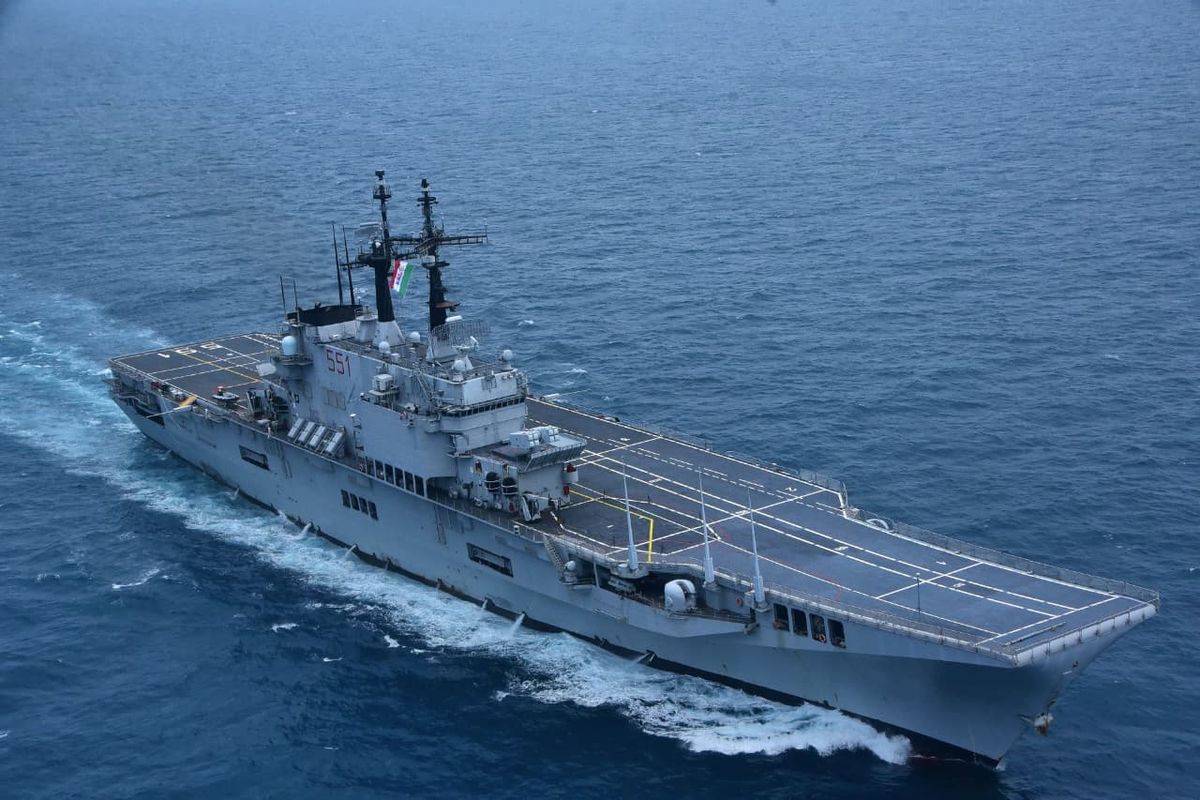
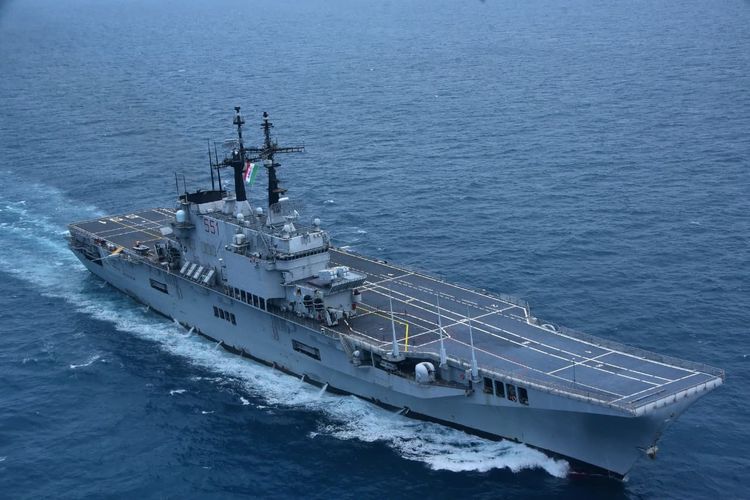
BEKAS Italian Navy aircraft carrier Giuseppe Garibaldi, 41 years old, docked at Tanjung Priok, North Jakarta, on Friday morning (18/9/2026).
The handover and renaming to KRI Sriwijaya are scheduled for September 24. The ship was received without a purchase price.
However, the word “free” only answers half the question: how much was paid at the time of delivery?
The other half—how much will be spent afterward—has not been fully disclosed publicly.
The Indonesian House of Representatives Commission I approved accepting the grant on July 20, 2026, and the plenary session ratified it the following day, with the ship’s value recorded at 54,022,426.67 euros.
The approval came with notes regarding operational readiness, budget continuity, technology transfer, and strengthening the defense industry.
This article does not intend to judge Garibaldi as a burden or asset.
It raises a more useful question for taxpayers: does every rupiah spent after receiving the grant translate into corresponding capabilities and public benefits?
The economic calculation of this grant is clearest from the Italian side.
An Italian Senate and Chamber of Deputies Study Service document (No. 649, February 27, 2026), summarizing the Defense General Staff report, estimates the ship’s value at about 54 million euros and states the transfer does not add a burden to the national budget.
Maintaining the ship as a reserve cost about 5 million euros in 2025, primarily for electricity, guard duties, security, and minimal operations to keep the ship habitable and intact.
If not transferred, the process of disposal and scrapping is expected to take at least 24 months and cost around 18.7 million euros.
According to the document, the grant was the most economically advantageous option.
The same document places the grant within broader defense and industrial cooperation, exemplified by opportunities for the Italian industry: six submarines (around 480 million euros), M-346 trainer jets (around 600 million euros), and three maritime patrol aircraft (about 450 million euros).
Defense diplomacy typically operates this way; the question is, what’s the return for Indonesia?
The document also notes that the ship has reserve status since December 31, 2024, as its operational cycle is deemed finished, and it will be delivered without functioning weapons systems.
Therefore, five things must be distinguished: acquisition price (zero), retrofit (modifications to meet needs), operating costs (fuel, crew), maintenance costs (regular upkeep, spare parts), and total cost of ownership, i.e., all expenses over its lifespan.
The 54 million euro value is not the price paid by Indonesia. The 5 million euro figure is not an operating cost but the cost to keep the ship “alive” at the dock; Italian documents specify it for 2025, while some media reports misstate it as a monthly expense.
At least three types of figures often get mixed. First, program financing.
AP reported the Finance Ministry approved funding of 450 million US dollars for the aircraft carrier program in 2025, while Janes reported a Bappenas letter (August 29, 2025) authorizing that maximum foreign loan for procuring the ship and supporting equipment.
That figure was established when the vessel was still planned to be purchased. The Ministry of Defense referred to a Finance Minister’s letter (September 12, 2025) as the basis for budgeting refurbishment and delivery; the author has not found this figure in open sources.
Second, retrofit estimates. According to Tempo, the Ministry of Defense cited an estimated ceiling of around Rp 7.2 trillion in February 2026 and approximately Rp 7.5 trillion on September 18.
According to House Commission I member TB Hasanuddin, as reported by Kompas.com (7/20/2026), retrofit could reach between Rp 7.2 trillion and Rp 16.8 trillion depending on requested specifications; AP quoted the upper bound—around Rp 16 trillion (900 million US dollars).
On September 8, according to Jawa Pos, the Ministry of Defense stated the Rp 7 trillion to Rp 16 trillion range was “unconfirmed.”
Third, final costs. As far as published, those numbers do not exist yet: PT PAL and Fincantieri are yet to assess the ship, weapons systems will be installed under presidential instruction, and propulsion system replacement is under study.
Therefore, the Rp 16 trillion is better understood as the upper limit of one specification scenario from a legislator, not an official cost.
Behind these figures are components that must be counted individually: engines and generators, electrical systems, radar and communication, structure, aviation and elevator systems, pipes and pumps, safety systems, spare parts, crew training, fuel, maintenance, and base operations.
The Indonesian Navy is preparing Lanal Lampung as one base and about 400 crew members; cost details have yet to be found by the author.
This is where total cost of ownership becomes the right measure: all expenses from acquisition to disposal.
The Ministry of Defense states a life cycle cost approach is used; the public awaits the figures. The key question: how much will Indonesia need to spend over 15–20 years, not just for initial retrofit?
The timeframe is still an assumption. The Navy Chief of Staff hopes the ship can be used for another 15–20 years; TB Hasanuddin estimates a remaining lifespan of about 10 years.
A Jakarta Defence Society analyst reminds that 15–20 years equals three to four presidential terms, meaning budget commitments must extend beyond one administration.
One more often overlooked factor: the scrapping costs avoided by Italy do not disappear. At the end of the ship’s life, similar costs will become the owner’s responsibility.
This need is real. Indonesia is an archipelagic country repeatedly struck by earthquakes, tsunamis, floods, and forest fires.
According to AP, President Prabowo said the ship will be converted into a helicopter and drone carrier to assist disaster management, including fighting forest and land fires.
The Navy Chief of Staff mentioned the need for a platform capable of carrying many helicopters to deliver logistics to remote areas, prioritizing military operations other than war.
The Ministry of Defense added humanitarian logistics support and disaster relief. Officials cited capacities ranging from 10 to 18 helicopters, depending on size and configuration.
It’s also important to clarify what Garibaldi actually is. It is a light aircraft carrier about 180 meters long with a full load of around 14,000 tons, designed for helicopters and short takeoff/vertical landing aircraft like the Harrier—not a catapult-equipped carrier launching conventional fighter jets.
The valuable functions do not automatically justify such a large platform. Can the same functions be achieved through LPDs, hospital ships, logistics ships, multipurpose ships, amphibious ships, new ships, or a combination?
Garibaldi’s argument is it provides a single hull with deck and hangar for numerous helicopters and drones, and serves as a mobile command center, unlike the Navy’s hospital ship, which according to PT PAL has deck space for two helicopters.
However, disasters spread over many locations while a single aircraft carrier can only be in one place at a time.
Which option delivers more value per rupiah can be tested with mission data; it should not be answered by assumptions, whether from admirers or skeptics.
Thailand provides two comparisons that need to be read carefully.
The country signed a contract for a Type 071E LPD with China on September 9, 2019; according to a report in Naval News, its value is about 200 million US dollars.
Type 071 is 210 meters and designed to carry roughly 800 marines and 20 amphibious vehicles, differing in design and function from Garibaldi.
This figure is only an illustrative scale, not proof of which ship is better; fair comparisons must consider mission profiles, life cycle costs, operational readiness, armaments, aircraft, logistics, maintenance, and supporting infrastructure.
The other comparison is the Chakri Naruebet aircraft carrier, which CSIS analysts quoted by AP said spent much of its life docked due to operational and budget constraints.
When procuring defense equipment, what is bought is not just the hull but capabilities: to perform specific missions at a defined readiness level with affordable costs over the usage life.
Therefore, twelve things should be taken into account: mission capability, life cycle cost, operational readiness, maintenance costs, ship availability rate, human resources needs, base infrastructure, spare parts, interoperability, technology transfer, impact on the national industry, and humanitarian operational benefits.
The Ministry of Defense itself states the measure is not just cost but real strategic, operational, and humanitarian value. That is the principle of value for money; it is only convincing if supported by verifiable figures.
Cooperation with Italy opens opportunities. Retrofit will be carried out by PT PAL together with Fincantieri, with possible involvement of Leonardo for equipment.
Italian documents note that Indonesian procurement regulations prioritize domestic products, technology transfer, and offsets.
Meanwhile, Italy, according to AP, is eyeing agreements on submarines and aircraft. Indonesia deserves explicit, measurable, and schedule-bound technology transfer, not just collaborative experience.
So, can Garibaldi become a strategic asset for Indonesia? It can, if eight conditions are met.
First, transparent costs: retrofit, operating expenses, and total cost of ownership details open to the House and public.
Second, measurable retrofit with defined scope, stages, and auditable budget.
Third, clear operational readiness, including availability targets. Fourth, life cycle costs calculated through disposal.
Fifth, clear defense benefits. Sixth, clear humanitarian benefits with verifiable indicators. Seventh, real technology transfer.
Eighth, clear and measurable involvement of the national industry. The instrument is in the House’s hands: Defense and Navy budget discussions can require life cycle cost plans as annexes.
Without these conditions, we will never know if what is paid is commensurate with what is gained. With these conditions, the grant can mark the beginning of new capabilities.
Ultimately, the question is not whether Garibaldi is free or expensive, but whether every rupiah spent after the grant yields corresponding defense capability and public benefits.