

Ahrie Sonta Appeals Dismissal Over Prabowo Wiretap Case Repercussions
-
News
-
Just now
This article was translated by AI. Read the original article on Kompas.com. See Original
Nonetheless, Ibrahim notes the impact of non-subsidized fuel price hikes on people’s activities remains limited.
He points to tourist destinations and eateries that remain busy.
This indicates the middle class still has consumption capacity, albeit with adjustments.
Ibrahim views the trend of frequent “small spending” as an adaptation to economic pressures.
People shift expenditure from eating out or buying ready-to-eat food to consuming at home.
They also opt to shop at traditional markets where prices for key commodities tend to be cheaper.
This approach helps control household expenses.
“It means middle-class families are also saving,” Ibrahim told Kompas.com.
This consumption shift is a way for people to maintain purchasing power amid relatively fixed incomes and rising expenses.
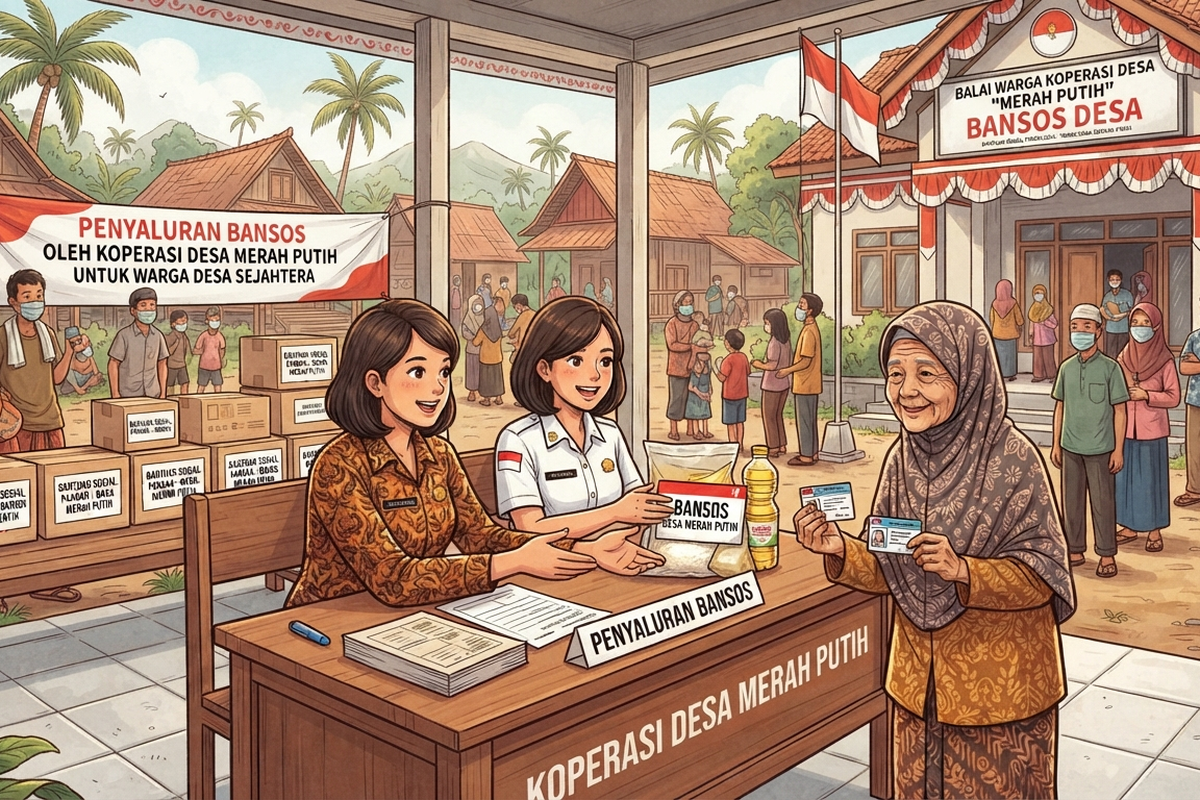
Ibrahim also highlighted the positive effect of social assistance disbursements on purchasing power in lower-income groups.
He explained that the third phase of social assistance disbursements provides extra funding for low-income people to meet daily needs.
Although the amount is around Rp 300,000, social assistance remains crucial for these communities.
The funds can be used to buy rice and other essential items.
Social assistance policies contribute to household consumption because recipients typically spend the money on daily necessities rather than saving it.
Therefore, social assistance disbursements can boost consumption in the short term.
This has the potential to contribute to economic growth in Q3 2026.
Ibrahim predicts Q3 2026 economic growth to be between 5.3 and 5.4 percent, partly driven by government interventions through social assistance for July, August, and September.
He cautions, however, that strong economic growth does not necessarily mean all social groups experience improved welfare.
Purchasing power today is influenced by government interventions through various aid and incentives.
Hence, strong consumption data may not fully reflect structural improvements in people’s economic conditions.
“Economic growth above 5 percent does not necessarily translate to improvements for the middle and lower classes,” Ibrahim said.
Ibrahim believes that investment growth and job creation are better indicators of fundamental economic improvement.
Investment influx into Indonesia that spurs factory construction, for instance, can generate new employment opportunities.
The resulting labor absorption then increases demand for housing and other economic sectors.
This differs from growth mainly supported by government-backed consumption.
Ibrahim noted the “small spending” phenomenon is also present among lower-income groups, differing mainly in spending patterns and capacities.