

Ahrie Sonta Appeals Dismissal Over Prabowo Wiretap Case Repercussions
-
News
-
Just now
This article was translated by AI. Read the original article on Kompas.com. See Original
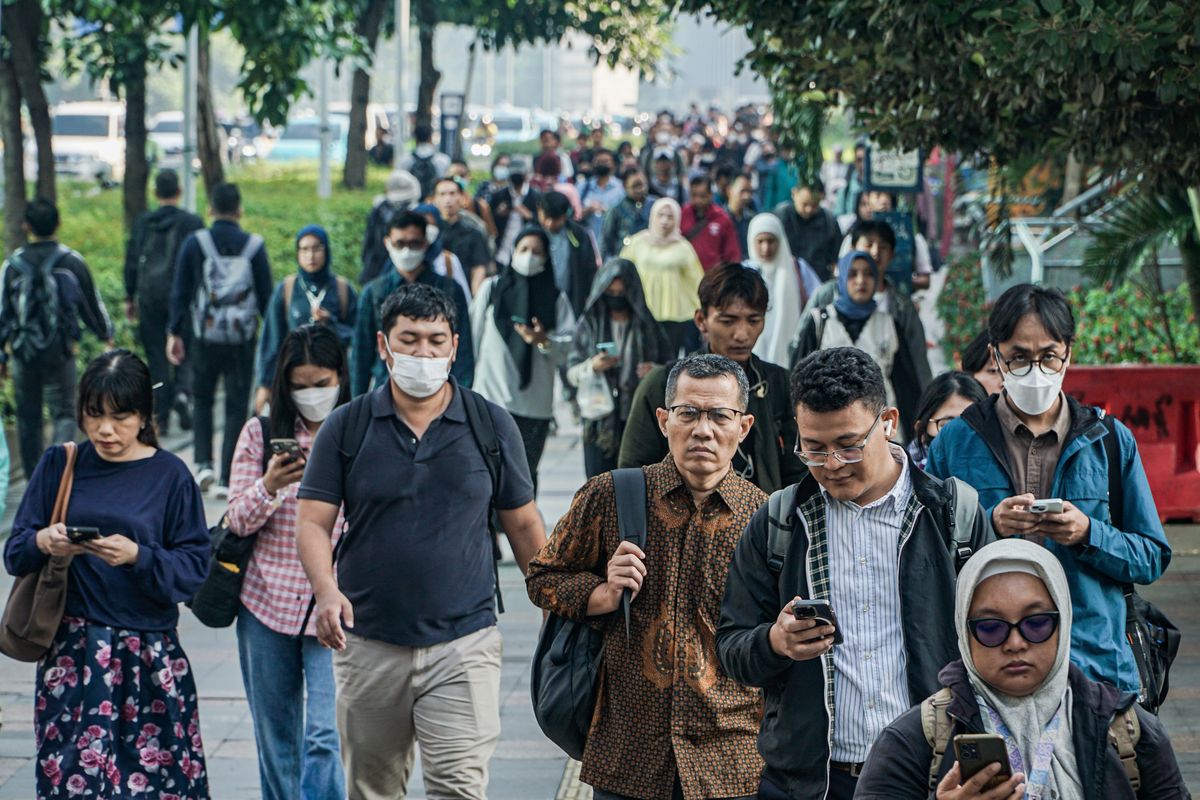
The self-reward phenomenon is also widely observed among office workers.
Demographically, Bhima noted that some Gen Z individuals realize that buying a house becomes increasingly difficult due to soaring home prices and mortgage interest rates.
This reality makes some people redirect their spending toward small pleasures.
Living with parents or renting rooms is deemed acceptable as long as there is room for enjoying café snacks or attending concerts.
“Based on demographic trends, Gen Z realizes that home ownership is becoming unreachable with rising house prices and mortgage rates, pushing them towards small-scale entertainment. Living with parents or renting is not a problem as long as they can go out for coffee or concerts,” Bhima explained.
Consumption pattern changes are also evident in the fast-moving consumer goods (FMCG) business.
Bhima said people increasingly buy products in sachets or smaller packaging.
Businesses refer to this as downsizing—reducing product size to keep prices affordable so consumers can still make purchases.
This shift is also visible in retail business trends.
Growth is not only seen in wholesalers offering bulk purchases but also in small shops (warungs) where consumers buy limited quantities.
Though this coping mechanism helps people maintain consumption amid economic pressure, Bhima warns it poses risks to the economy.
One risk is the middle class’s near lack of assets, no home ownership, and the potential to pass on debt to the next generation.
Meanwhile, changing shopping patterns create problems for FMCG businesses.
Primary goods dominate daily needs purchases, whereas items in demand tend to be linked to trends or hobbies.
Simultaneously, the experience economy sector is rapidly expanding.
However, these businesses tend to have relatively short lifespans. For example, padel courts have recently sprung up in many locations but suffer low occupancy and concerns about oversupply.
Bhima also highlighted that social protection coverage remains low.
He noted that the social protection budget for next year is only Rp 283 trillion, a 3.1 percent rise from the 2026 state budget of Rp 274 trillion.
Under these conditions, the social protection budget is insufficient to cover vulnerable populations.
He predicts the coping mechanism pattern will persist into 2027 if social assistance is not expanded and energy subsidy allocations remain inadequate.
“The coping trend will continue in 2027 if social assistance is not expanded and energy subsidy allocations fall short,” Bhima said.
Meanwhile, currency and commodity analyst Ibrahim Assuaibi believes that this year’s global crude oil price increase, driven by rising geopolitical tensions in the Middle East and Eastern Europe, has not caused people to stop consuming.
People continue spending, especially to meet daily needs.
This is evident in non-subsidized fuel consumption, which remains despite price hikes. Mobility needs compel people to keep buying non-subsidized fuel.
However, purchasing power pressures prompt the middle class to adjust spending patterns.
For example, they reduce non-essential travel or shorten trip distances.
They have also begun managing budgets for recreation and other consumptions.