Ahrie Sonta Appeals Dismissal Over Prabowo Wiretap Case Repercussions
-
News
-
1 minute ago
This article was translated by AI. Read the original article on Kompas.com. See Original
JAKARTA, KOMPAS.com - The rise in non-subsidized fuel prices during 2026 and the disbursement of social assistance (bansos) in the third quarter of 2026 have created two distinct economic conditions.
The increase in fuel prices has squeezed household spending, while the disbursement of social assistance has provided additional funds for recipient communities.
However, these contrasting conditions have led to a similar consumption pattern, with people still setting aside money for small purchases that bring joy or entertainment amid economic pressures.
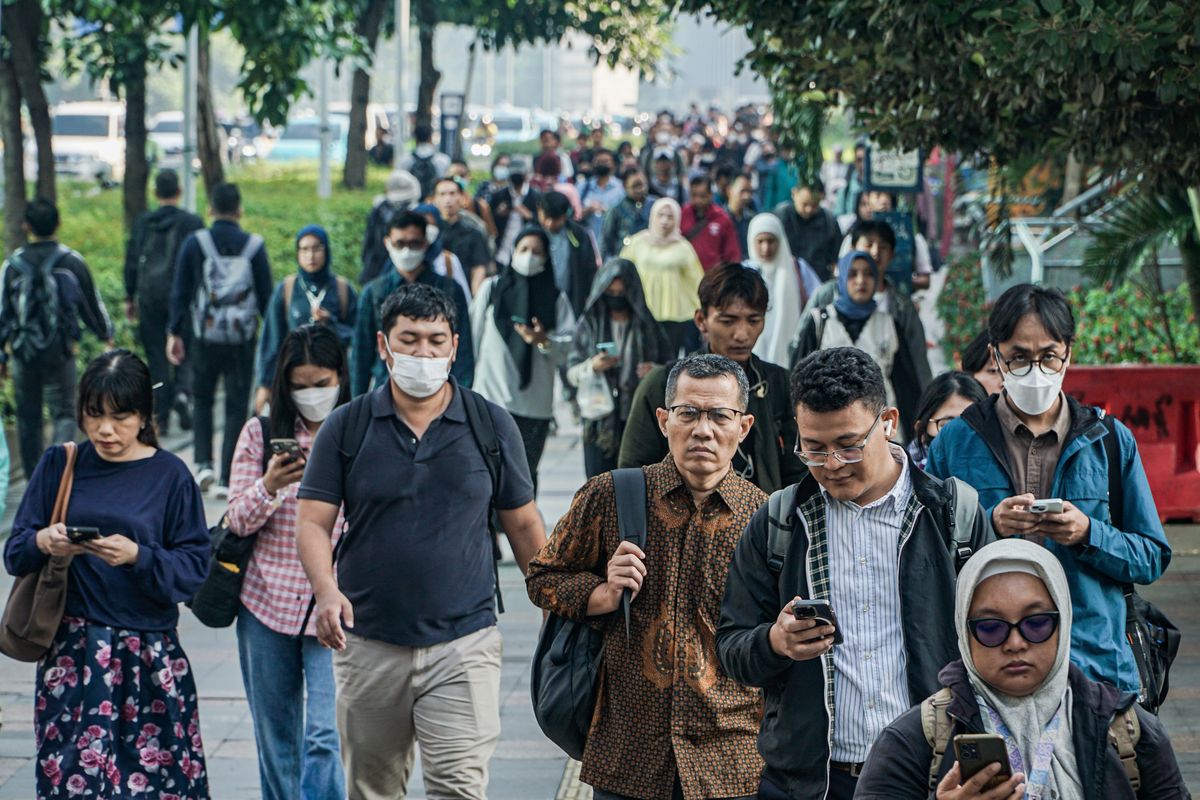
Among the middle class, higher fuel prices have pushed people to hold back on spending, especially on high-value needs.
Nonetheless, this saving does not equate to a total halt in consumption. People continue to maintain small expenses on food, beverages, or snacks as a relatively affordable form of entertainment.
Meanwhile, lower-income groups have received additional household funds through the Family Hope Program (PKH) and Non-Cash Food Assistance (BPNT) or staple food aid distributed between July and September 2026, starting in July.
As some basic needs are met, some of this budget can flow into small-scale consumption.
Thus, both cost pressures and additional social assistance income equally foster a pattern of “small spending,” albeit stemming from different backgrounds.
Executive Director of the Center of Economic and Law Studies (Celios), Bhima Yudhistira, said the lower middle class is currently under dual pressure.
This mainly arises from rising food prices and surges in non-subsidized fuel prices. Meanwhile, the social protection budget still focuses on the lowest income deciles.
“The issue now is that the lower middle class is facing double pressure, especially from rising food prices already being felt and nonsubsidized fuel prices. Meanwhile, social protection spending still targets the lowest deciles,” Bhima told Kompas.com on Saturday (19/9/2026).
The pressure worsens as global crude oil prices exceed 100 US dollars per barrel, while the subsidy quota is deemed insufficient through the end of the year.
The middle class also faces challenges from natural disasters that hamper productivity. Forest and land fires (karhutla), earthquakes, and flood recovery efforts in Sumatra are considered not yet optimal.
Moreover, grouping aid recipients by deciles based on the National Socio-Economic Single Data (DTSEN) has introduced new challenges.
Some people who previously received subsidies or social assistance are now excluded from recipient groups.
“Now there are about 145 million people approaching the middle class—still not quite middle class but excluded from various social assistance,” said Bhima.
These economic pressures have shifted people's consumption behavior.
According to Bhima, people now focus more on meeting primary or essential needs and reduce purchases of secondary goods.
Items increasingly cut back include motor vehicles and household appliances such as air conditioners and refrigerators.
However, amid tightened spending, the middle class exhibits a different phenomenon.
While cutting secondary spending, some still allow room for tertiary consumption in the form of small entertainment expenses.
Such consumption includes going to the cinema, attending music concerts, buying coffee at cafes, and purchasing premium sports equipment.
Economically, tertiary needs are typically addressed after primary and secondary needs are met. But current conditions reveal a different pattern.
Tertiary consumption as small-scale entertainment serves as a coping mechanism for the middle class to handle economic pressure.
With limited funds, people still seek ways to enjoy entertainment.
Some even resort to online loans to support these expenditures. Online credit, including paylater options, reached Rp 105 trillion by July 2026.
Most of these loans are allocated for goods and services consumption rather than productive activities.
 The fragile middle class phenomenon is drawing increased attention amid Indonesia's economic dynamics.
The self-reward phenomenon is also widely observed among office workers.
Demographically, Bhima noted that some Gen Z individuals realize that buying a house becomes increasingly difficult due to soaring home prices and mortgage interest rates.
This reality makes some people redirect their spending toward small pleasures.
Living with parents or renting rooms is deemed acceptable as long as there is room for enjoying café snacks or attending concerts.
“Based on demographic trends, Gen Z realizes that home ownership is becoming unreachable with rising house prices and mortgage rates, pushing them towards small-scale entertainment. Living with parents or renting is not a problem as long as they can go out for coffee or concerts,” Bhima explained.
Consumption pattern changes are also evident in the fast-moving consumer goods (FMCG) business.
Bhima said people increasingly buy products in sachets or smaller packaging.
Businesses refer to this as downsizing—reducing product size to keep prices affordable so consumers can still make purchases.
This shift is also visible in retail business trends.
Growth is not only seen in wholesalers offering bulk purchases but also in small shops (warungs) where consumers buy limited quantities.
Though this coping mechanism helps people maintain consumption amid economic pressure, Bhima warns it poses risks to the economy.
One risk is the middle class’s near lack of assets, no home ownership, and the potential to pass on debt to the next generation.
Meanwhile, changing shopping patterns create problems for FMCG businesses.
Primary goods dominate daily needs purchases, whereas items in demand tend to be linked to trends or hobbies.
Simultaneously, the experience economy sector is rapidly expanding.
However, these businesses tend to have relatively short lifespans. For example, padel courts have recently sprung up in many locations but suffer low occupancy and concerns about oversupply.
Bhima also highlighted that social protection coverage remains low.
He noted that the social protection budget for next year is only Rp 283 trillion, a 3.1 percent rise from the 2026 state budget of Rp 274 trillion.
Under these conditions, the social protection budget is insufficient to cover vulnerable populations.
He predicts the coping mechanism pattern will persist into 2027 if social assistance is not expanded and energy subsidy allocations remain inadequate.
“The coping trend will continue in 2027 if social assistance is not expanded and energy subsidy allocations fall short,” Bhima said.
Meanwhile, currency and commodity analyst Ibrahim Assuaibi believes that this year’s global crude oil price increase, driven by rising geopolitical tensions in the Middle East and Eastern Europe, has not caused people to stop consuming.
People continue spending, especially to meet daily needs.
This is evident in non-subsidized fuel consumption, which remains despite price hikes. Mobility needs compel people to keep buying non-subsidized fuel.
However, purchasing power pressures prompt the middle class to adjust spending patterns.
For example, they reduce non-essential travel or shorten trip distances.
They have also begun managing budgets for recreation and other consumptions.
Nonetheless, Ibrahim notes the impact of non-subsidized fuel price hikes on people’s activities remains limited.
He points to tourist destinations and eateries that remain busy.
This indicates the middle class still has consumption capacity, albeit with adjustments.
Ibrahim views the trend of frequent “small spending” as an adaptation to economic pressures.
People shift expenditure from eating out or buying ready-to-eat food to consuming at home.
They also opt to shop at traditional markets where prices for key commodities tend to be cheaper.
This approach helps control household expenses.
“It means middle-class families are also saving,” Ibrahim told Kompas.com.
This consumption shift is a way for people to maintain purchasing power amid relatively fixed incomes and rising expenses.
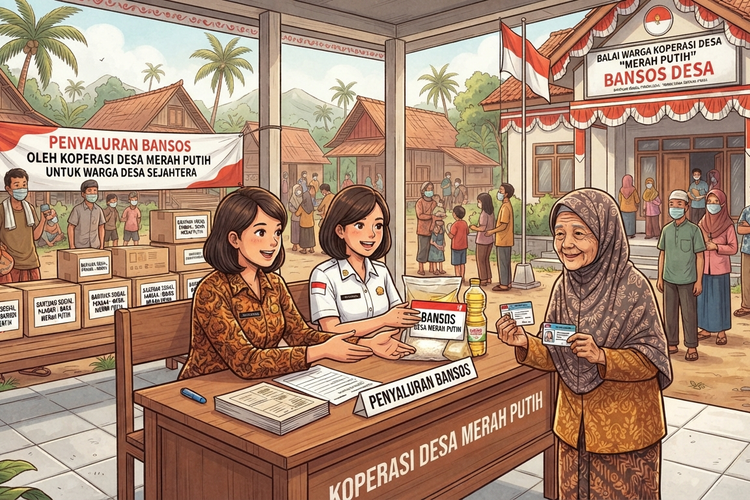 Illustration of social assistance (bansos) distribution through the Merah Putih Village Cooperative.
Ibrahim also highlighted the positive effect of social assistance disbursements on purchasing power in lower-income groups.
He explained that the third phase of social assistance disbursements provides extra funding for low-income people to meet daily needs.
Although the amount is around Rp 300,000, social assistance remains crucial for these communities.
The funds can be used to buy rice and other essential items.
Social assistance policies contribute to household consumption because recipients typically spend the money on daily necessities rather than saving it.
Therefore, social assistance disbursements can boost consumption in the short term.
This has the potential to contribute to economic growth in Q3 2026.
Ibrahim predicts Q3 2026 economic growth to be between 5.3 and 5.4 percent, partly driven by government interventions through social assistance for July, August, and September.
He cautions, however, that strong economic growth does not necessarily mean all social groups experience improved welfare.
Purchasing power today is influenced by government interventions through various aid and incentives.
Hence, strong consumption data may not fully reflect structural improvements in people’s economic conditions.
“Economic growth above 5 percent does not necessarily translate to improvements for the middle and lower classes,” Ibrahim said.
Ibrahim believes that investment growth and job creation are better indicators of fundamental economic improvement.
Investment influx into Indonesia that spurs factory construction, for instance, can generate new employment opportunities.
The resulting labor absorption then increases demand for housing and other economic sectors.
This differs from growth mainly supported by government-backed consumption.
Ibrahim noted the “small spending” phenomenon is also present among lower-income groups, differing mainly in spending patterns and capacities.