

Cak Imin Encourages Pesantren-Based Vocational Schools to Elevate Standards to International Levels
-
News
-
4 hours ago
This article was translated by AI. Read the original article on Kompas.com. See Original
Twelve years ago, when Joko Widodo was first inaugurated as president in 2014, one of his strategic visions was to position Indonesia as a world maritime axis.
This policy felt brilliant and spectacular because, for seven decades after independence, Indonesian presidents seemed confused navigating the direction of national military policy.
Only during President Joko Widodo’s era was the commitment to strengthening the maritime sector as a national comparative advantage loudly accentuated. However, it is regrettable that this policy lasted only one term.
The world maritime axis policy began to fade when President Joko Widodo entered his second term and further diminished during President Prabowo Subianto’s leadership.
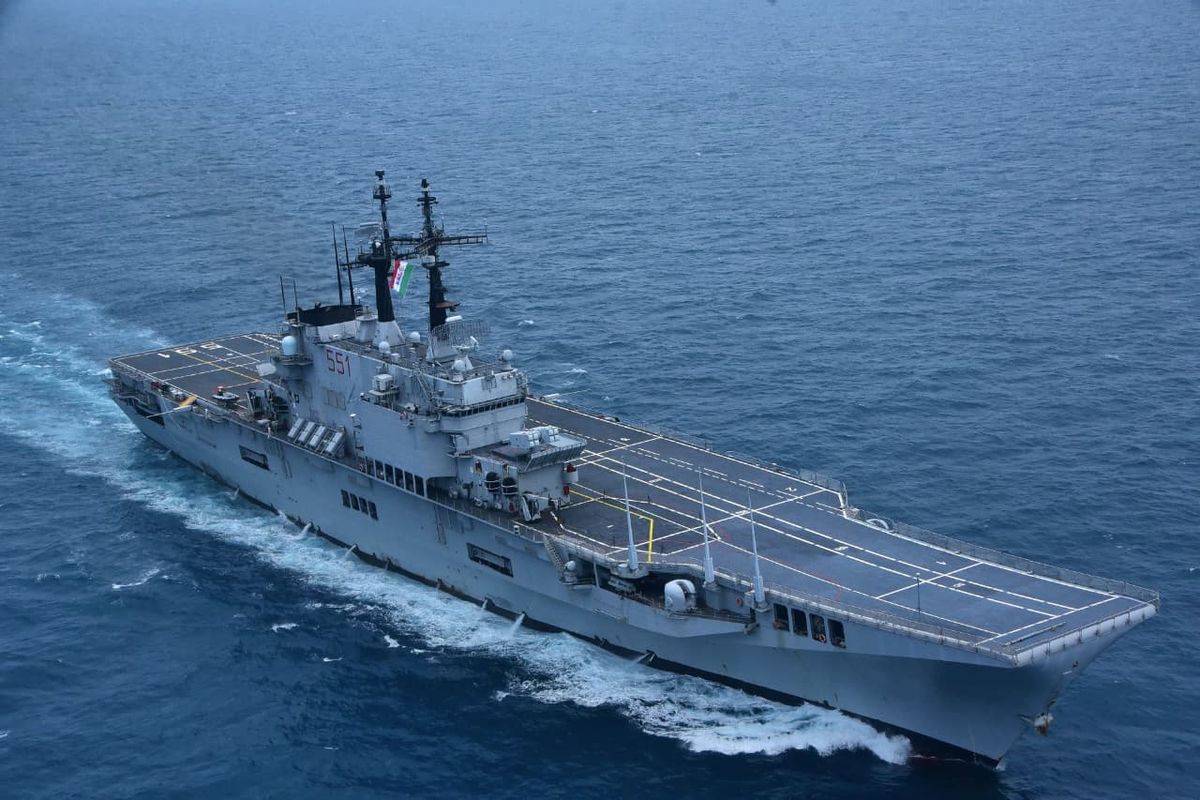
Therefore, the presence of Giuseppe Garibaldi in Indonesian waters brings at least three strategic benefits.
First, it serves as a moment to correct the direction of national maritime policy. It is time for the maritime domain to return to the center, becoming central to national defense policy after being sidelined for so long.
Second, the existence of Giuseppe Garibaldi as one of the national defense equipment assets can be a learning laboratory for the national strategic industry—PT. PAL—to study, develop, and eventually produce similar vessels independently as a product of the nation.
Third, the presence of Giuseppe Garibaldi can be a means to strengthen Indonesia's military diplomacy with Italy and other major European countries in the future.
Through the arrival of Giuseppe Garibaldi, the government should draft a more measured, maritime-oriented blueprint for national defense policy.
Prioritizing a massive continental orientation while sidelining the maritime domain, which is the main strength, is an unwise stance.
With the presence of Giuseppe Garibaldi, it is hoped that the government will strategically strengthen the minimum essential forces, particularly the navy, making it more comprehensive in carrying out defense duties, bolster the national maritime strategic industry so that it can independently produce aircraft carriers and other military ships in the future, and enhance naval military personnel capabilities simultaneously and continuously, especially in intelligence, surveillance, combat, diplomacy, and constabulary tasks.
If the government is willing and able to serve these strategic measures, the dream of becoming a maritime power state will not be hard to achieve. Benvenuto Garibaldi.