

Cak Imin Encourages Pesantren-Based Vocational Schools to Elevate Standards to International Levels
-
News
-
4 hours ago
This article was translated by AI. Read the original article on Kompas.com. See Original
It is true that Indonesia is an archipelagic state with more than 70 percent of its territory covered by waters and possesses over 17,000 islands.
It is accurate that Indonesia has one of the longest coastlines in the world—more than 90,000 kilometers—and sits on a highly strategic maritime geographic contour between two oceans: the Indian and the Pacific.
Nonetheless, these comparative advantages are only taken for granted.
Such advantages do not become competitive advantages unless supported by sound and reliable maritime policy and governance by the government.
The absence of an aircraft carrier even after more than eight decades of independence indicates Indonesia’s status only as a maritime state, not yet a maritime power state.
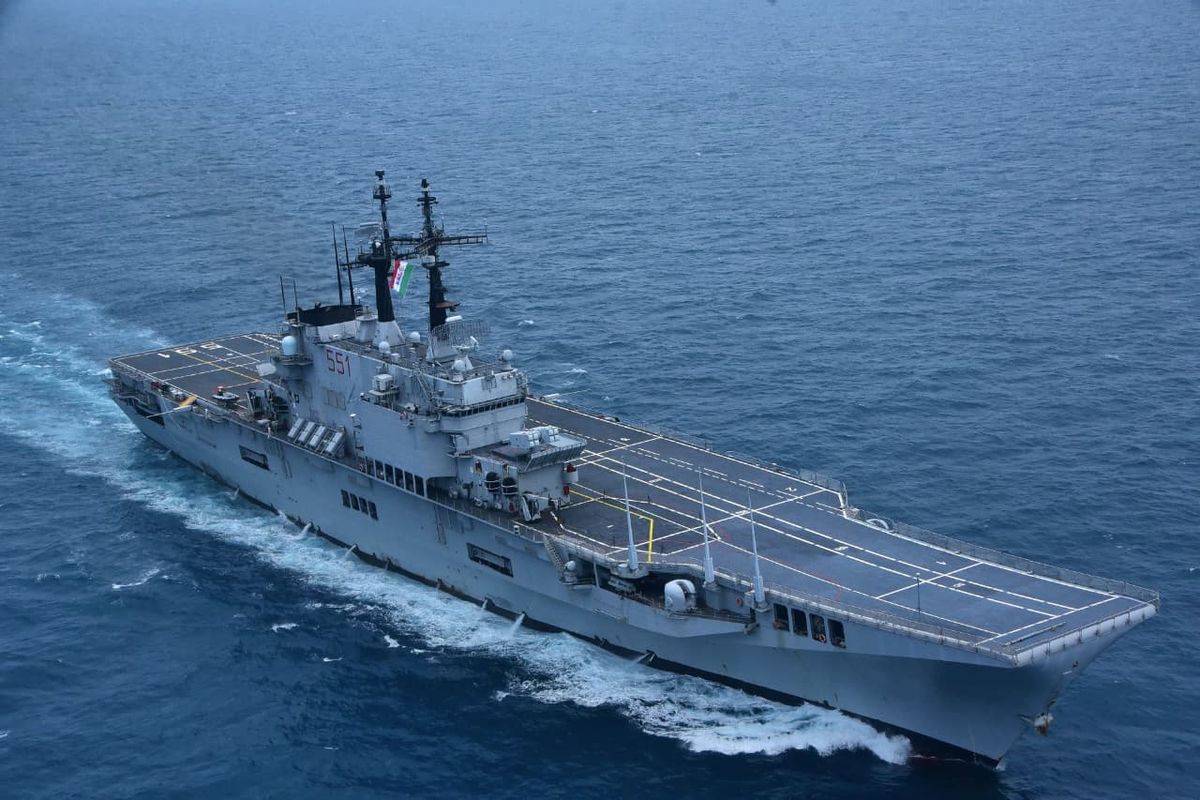
At the deepest level of awareness, the arrival of the old aircraft carrier Giuseppe Garibaldi serves as a catalyst for defense policymakers to review and even reconsider the direction of the country’s defense policy.
Like it or not, acknowledged or not, the country’s defense policy under President Prabowo’s administration currently returns to the old pattern—continental oriented.
This is reflected in the policy of expanding the number of regional military commands and massive development of territorial battalions.
This policy is not entirely wrong, but it is inappropriate and regrettable.
Many threats to national defense come from the sea, especially those based on transnational crimes such as drug trafficking, human trafficking, illegal fishing, smuggling of timber and illegal commodities, toxic waste disposal, and sand dredging in poorly guarded coastal areas.
Such maritime crimes occur massively and cause significant losses to the nation and society—violations of sovereignty and sovereign rights, loss of potential financial benefits, and collapse of the country’s defense dignity.
If the management of national defense capabilities is not conducted appropriately—focusing predominantly on the land domain as is currently the case—then the state may claim to benefit from military involvement in national development projects such as food and energy security through territorial development battalions and others.
However, the existing and potential losses suffered by the nation due to minimal presence and protection of maritime resources could, in a calculated sense, be greater than the benefits derived from the land territory.
Therefore, the arrival of the old Giuseppe Garibaldi aircraft carrier should not be viewed simply through the “naked” lens of its physical specifications alone.
More strategically significant is that its presence offers a “wake-up call” for the government to revisit the ongoing maritime defense policy, assessing whether it has been optimal in supporting national interests as stipulated in the constitution, the State Defense Law, and the TNI Law.