

Gibran: Time is Up
-
News
-
1 minute ago
This article was translated by AI. Read the original article on Kompas.com. See Original
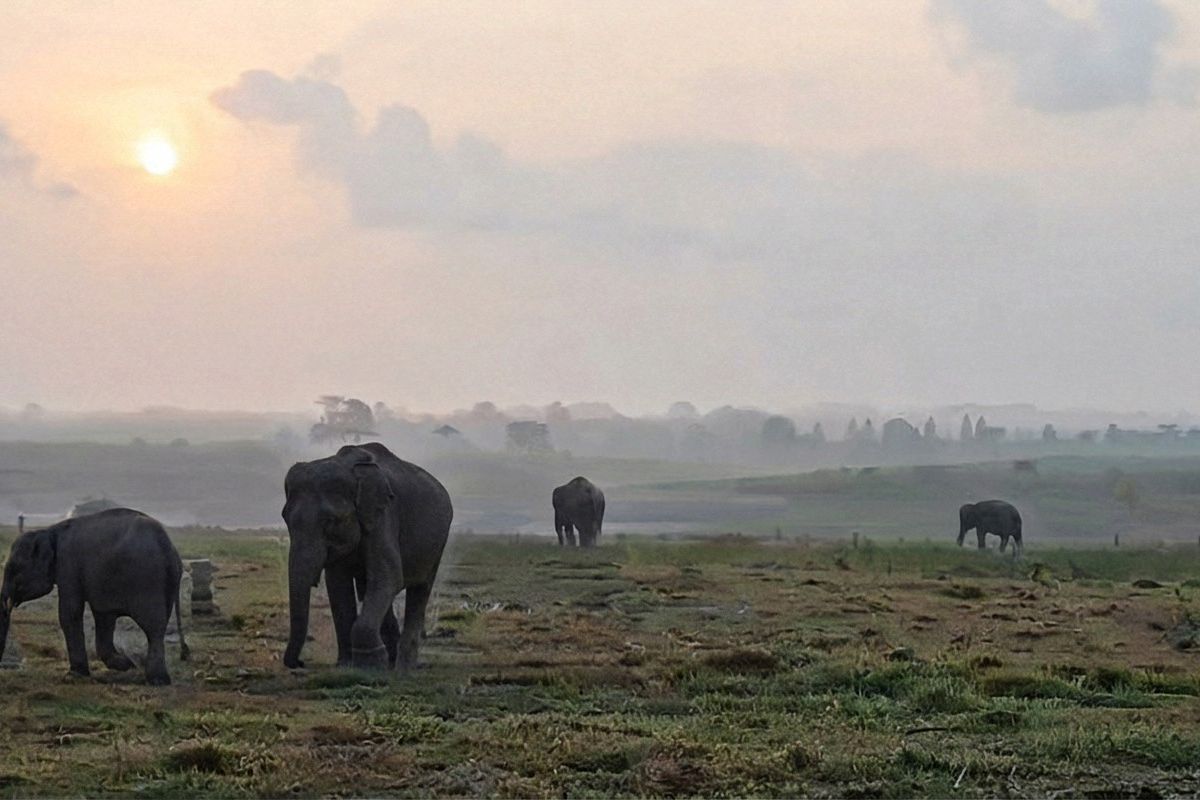
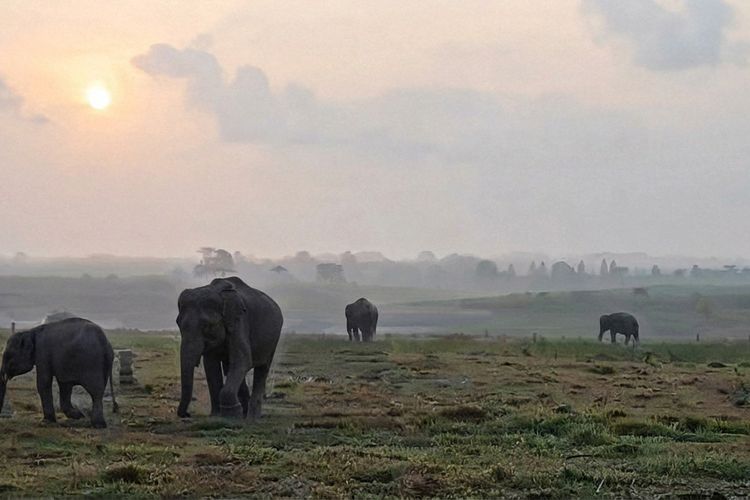
LAMPUNG, KOMPAS.com - Efforts to protect Sumatran elephants in Way Kambas National Park (TNWK), East Lampung, are shifting beyond simply building boundary fences.
In the conservation area covering roughly 125,000 hectares, managing negative interactions between humans and elephants now involves a combination of physical barriers, provision of animal needs, area surveillance, and careful planning of elephant habitats.
This approach is crucial because conflicts arise not only when elephants leave the park but also stem from habitat conditions and the needs of the elephants within the conservation area.
The Chair of the Joint Committee for Mitigation and Management of Negative Interactions with Sumatran Elephants at TNWK, Brigadier General TNI Sriyanto, explained that the infrastructure built is part of a broader mitigation system.
"Technology and physical structures are not the sole keys to protecting the conservation area," Sriyanto said during a visit to Way Kambas on Sunday (9/20/2026).
He emphasized that the presence of barriers should be accompanied by monitoring and engagement with both the elephants and local communities living nearby.
"No matter how sturdy the structures we build, if an elephant is angry, it will surely collapse. What matters most is our presence and a shared sense of unity. Way Kambas National Park belongs to all of us," he added.
One of the primary infrastructures developed is a boundary system along the park’s borders.
The barriers are not mere walls; their construction is tailored to the physical abilities of elephants and the area’s conditions, which face risks of flooding and erosion.
"The barrier construction is designed to stand at least 2 meters above water level during high tide or floods, with a 60-degree slope to prevent elephants from climbing, and made from reinforced concrete capable of withstanding the weight of a 5-ton male elephant," Sriyanto explained on Sunday (9/20/2026).
The foundations are also reinforced with stone to resist erosion caused by river currents that can reach speeds of 2 meters per second during floods.
The scale of construction is considerable, including 19,600 meters of steel pipe fencing, 23,335 meters of precast concrete canal walls and embankments, as well as 76,526 meters of standard canals and embankments.
Additionally, 18,420 meters of electrified H-Beam fencing and 22,930 meters of non-electrified H-Beam fencing have been installed.
To anticipate the movements of male elephants, 19,165 meters of electric barriers and 22,159 meters of steel pipe barriers were constructed. For female elephant areas, 8,755 meters of steel pipe barriers were built.
However, restricting elephants from leaving the park is not the only challenge.