

Gibran: Time is Up
-
News
-
1 minute ago
This article was translated by AI. Read the original article on Kompas.com. See Original
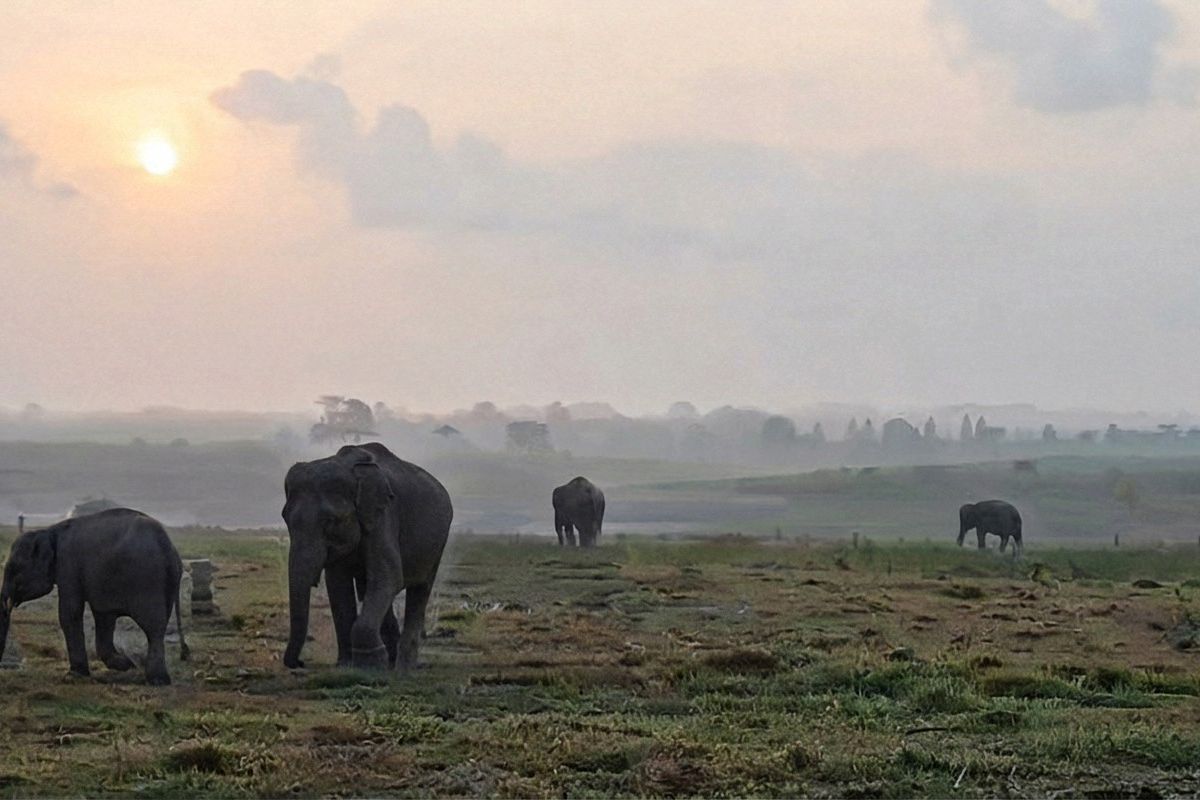
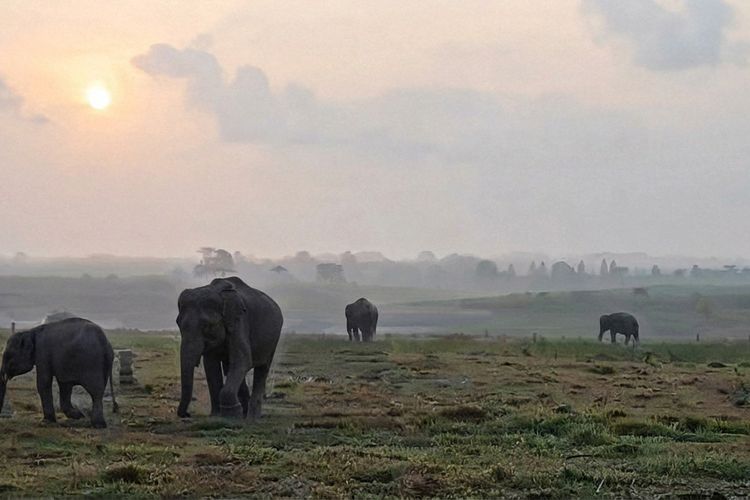
LAMPUNG, KOMPAS.com - Efforts to protect Sumatran elephants in Way Kambas National Park (TNWK), East Lampung, are shifting beyond simply building boundary fences.
In the conservation area covering roughly 125,000 hectares, managing negative interactions between humans and elephants now involves a combination of physical barriers, provision of animal needs, area surveillance, and careful planning of elephant habitats.
This approach is crucial because conflicts arise not only when elephants leave the park but also stem from habitat conditions and the needs of the elephants within the conservation area.
The Chair of the Joint Committee for Mitigation and Management of Negative Interactions with Sumatran Elephants at TNWK, Brigadier General TNI Sriyanto, explained that the infrastructure built is part of a broader mitigation system.
"Technology and physical structures are not the sole keys to protecting the conservation area," Sriyanto said during a visit to Way Kambas on Sunday (9/20/2026).
He emphasized that the presence of barriers should be accompanied by monitoring and engagement with both the elephants and local communities living nearby.
"No matter how sturdy the structures we build, if an elephant is angry, it will surely collapse. What matters most is our presence and a shared sense of unity. Way Kambas National Park belongs to all of us," he added.
One of the primary infrastructures developed is a boundary system along the park’s borders.
The barriers are not mere walls; their construction is tailored to the physical abilities of elephants and the area’s conditions, which face risks of flooding and erosion.
"The barrier construction is designed to stand at least 2 meters above water level during high tide or floods, with a 60-degree slope to prevent elephants from climbing, and made from reinforced concrete capable of withstanding the weight of a 5-ton male elephant," Sriyanto explained on Sunday (9/20/2026).
The foundations are also reinforced with stone to resist erosion caused by river currents that can reach speeds of 2 meters per second during floods.
The scale of construction is considerable, including 19,600 meters of steel pipe fencing, 23,335 meters of precast concrete canal walls and embankments, as well as 76,526 meters of standard canals and embankments.
Additionally, 18,420 meters of electrified H-Beam fencing and 22,930 meters of non-electrified H-Beam fencing have been installed.
To anticipate the movements of male elephants, 19,165 meters of electric barriers and 22,159 meters of steel pipe barriers were constructed. For female elephant areas, 8,755 meters of steel pipe barriers were built.
However, restricting elephants from leaving the park is not the only challenge.
If the fundamental needs of the animals within the park are not met, barriers risk becoming mere obstacles without addressing deeper issues.
Therefore, the development includes supporting facilities for elephant life.
A total of 46 shelters for male elephants and eight for females have been prepared. Additionally, there are 58 elephant drinking troughs and 20,000 red lemongrass seedlings planted.
A similar strategy involves cultivating bee colonies around the park. Besides helping to keep a safe distance from elephants, this beekeeping initiative aims to provide economic benefits to local communities.
Sriyanto previously explained that the number of beehive boxes distributed to communities has been steadily increasing—from around 900 initially to a projected 1,500 boxes.
"If we look at all the boxes distributed so far, next week it could reach 1,500 beehives," he said.
This approach indicates that surrounding communities are seen as part of the mitigation system, rather than just parties to be kept away from elephants.
Sriyanto said they also aim to adopt positive aspects from elephant management in other countries, including involving communities in feeding provision.
"We want to replicate those positive practices. The more often elephants move safely, the more tourists will come," he noted.
Director General of Natural Resources and Ecosystem Conservation (KSDAE) Satyawan Pudyatmoko stated that TNWK management aims to improve the quality of elephant life while reducing conflicts impacting local communities.
"The main goal of management is to enhance the quality of life for elephants and improve the welfare of communities living around Way Kambas National Park," Satyawan said.
He added that conflicts also relate to habitat changes caused by expanding settlements and agriculture around the park that were once elephant habitats.
Historical shifts in the area have led to overlaps between elephant habitats and human activities. Therefore, handling conflicts requires more than just preventing elephants from leaving the park.
Elephants also need supportive environments to meet their life requirements inside the park.
The shift in approach is also reflected in the surveillance systems being established.
There are 15 concrete observation posts and 10 modular two-story posts for monitoring the area. These facilities include a 43-meter-high watchtower, four ivory gates, and various monitoring equipment.
Field surveillance is strengthened with 15 drones, four patrol boats, 30 trail motorcycles, four double cabin 4x4 vehicles, and a four-wheeled vehicle.
Monitoring systems are increasingly using digital technology. Sriyanto mentioned that artificial intelligence-based systems can track elephant movements and help monitor animal conditions.
Thus, park management does not merely wait for elephants to leave the area before addressing conflicts. Animal movements are tracked, their basic needs fulfilled, and the boundaries between elephant habitats and human living spaces reinforced.
To support mobility and area supervision, 53,800 meters of concrete mattresses, 21,553 meters of embankment road surfacing, seven ARMCO bridges, and 38,982 meters of access roads have been constructed.
Sriyanto emphasized that this development must consider community interests and environmental functions.
"If it causes damage, that would be our violation. It must not be like that. The most important thing is that it benefits the residents," he said during discussions about mitigation infrastructure development.
Going forward, the program will focus on developing the Elephant Kitchen, building the PKG Command Center, converting researchers’ homes into elephant clinics, integrating the Elephant Response Unit (ERU), and adding several bridges to support park management.
Ultimately, the major task at Way Kambas is not just building barriers to prevent elephants from leaving. The challenge lies in ensuring elephants have adequate habitat and life necessities, while local communities can live and carry out activities without ongoing conflicts with wildlife.