

Indonesian National Police Explain the Reasons for Not Implementing ETLE Nationwide
-
News
-
1 minute ago
This article was translated by AI. Read the original article on Kompas.com. See Original
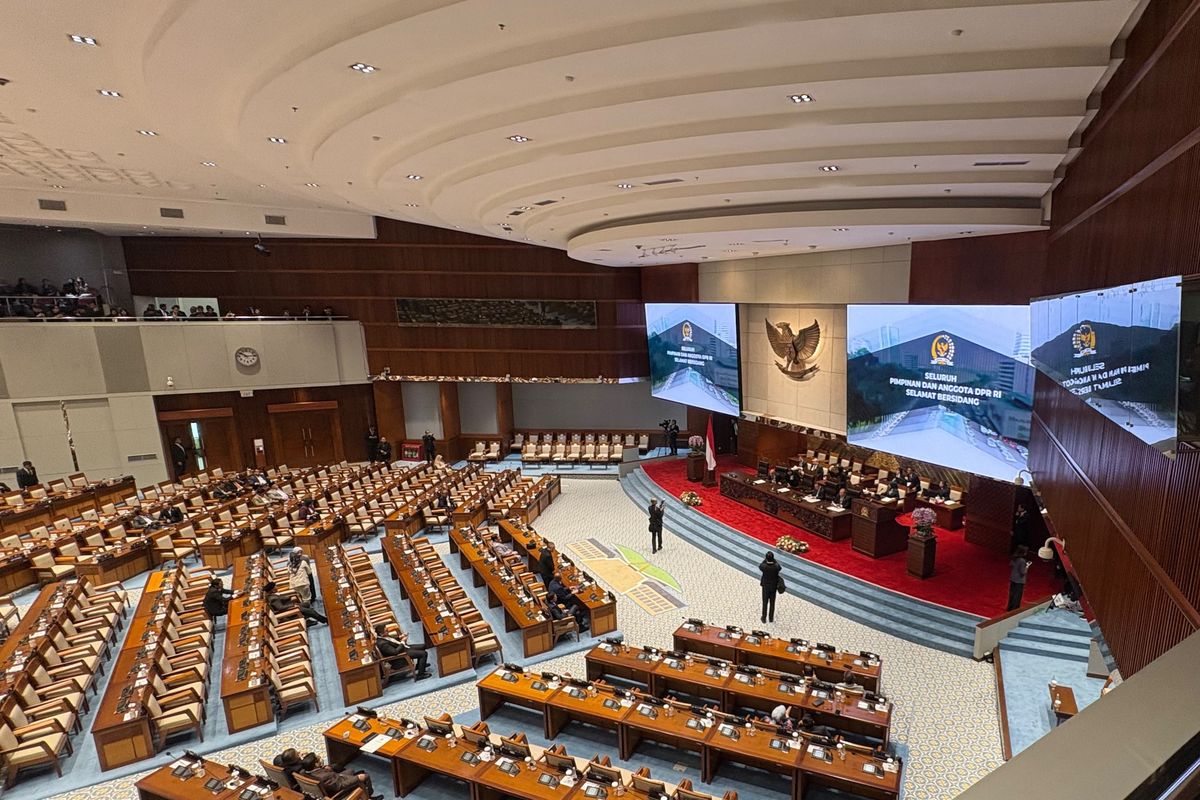
JAKARTA, KOMPAS.com - The government will prepare 13 implementing regulations for the Agrarian Reform Law recently passed by the Indonesian House of Representatives (DPR RI), in the form of government regulations (PP) and presidential regulations (Perpres).
The Minister of Agrarian Affairs and Spatial Planning/National Land Agency (ATR/BPN), Nusron Wahid, stated that the government is committed to completing all the statutory regulations mandated by the law.
"Furthermore, we are also committed to finalizing the legislative provisions mandated or delegated by the agrarian reform law draft, including government regulations that govern," Nusron said during a plenary meeting at DPR RI on Tuesday (22/9/2026).
Nusron explained that the government regulations being prepared will cover the planning, implementation, as well as the monitoring and evaluation of agrarian reform administration.
He continued that the government will also regulate the procedures for determining priority locations for agrarian reform.
Other regulations will relate to the procedures for transferring the status of state-owned goods, regional-owned goods, or those owned by state-owned enterprises (BUMN) and region-owned enterprises (BUMD).
“Then, resolution of agrarian conflicts; procedures for registration, management, use, utilization, and inheritance of joint ownership rights; land arrangement, control, and restrictions; determination of minimum and maximum limits for land possession and ownership; and public participation,” Nusron added.
In addition to government regulations, the government will also issue presidential regulations as derivative rules for the Agrarian Reform Law.
Nusron said the presidential regulations to be issued will include the agrarian reform roadmap.
The Perpres will also regulate the establishment, duties, functions, authorities, and organizational structure of the agrarian reform implementing institutions.
“Furthermore, the formation of supervisory boards; agrarian reform objects including other agrarian resources; written warnings, revocations, and granting of rights to other parties,” Nusron explained.
Nusron hopes that the passage of the Agrarian Reform Law along with its implementing regulations will strengthen the legal foundation for carrying out agrarian reform.
“The government hopes that with a stronger legal foundation, small-scale farmers, tenant farmers, farm laborers, traditional fishermen, indigenous communities, as well as vulnerable and low-income groups will increasingly feel the presence of the state through just agrarian reform administration,” said Nusron.
According to Nusron, agrarian reform is not only about restructuring land ownership and control.
“Agrarian reform does not stop at rearranging land control and ownership. Agrarian reform must ensure that land and other agrarian resources become a source of livelihood, prosperity, and support for the sustainable improvement of people's living standards,” he concluded.