

Wamenhaj: Health Istitaah is a Non-Negotiable Requirement
-
News
-
3 minutes ago
This article was translated by AI. Read the original article on Kompas.com. See Original
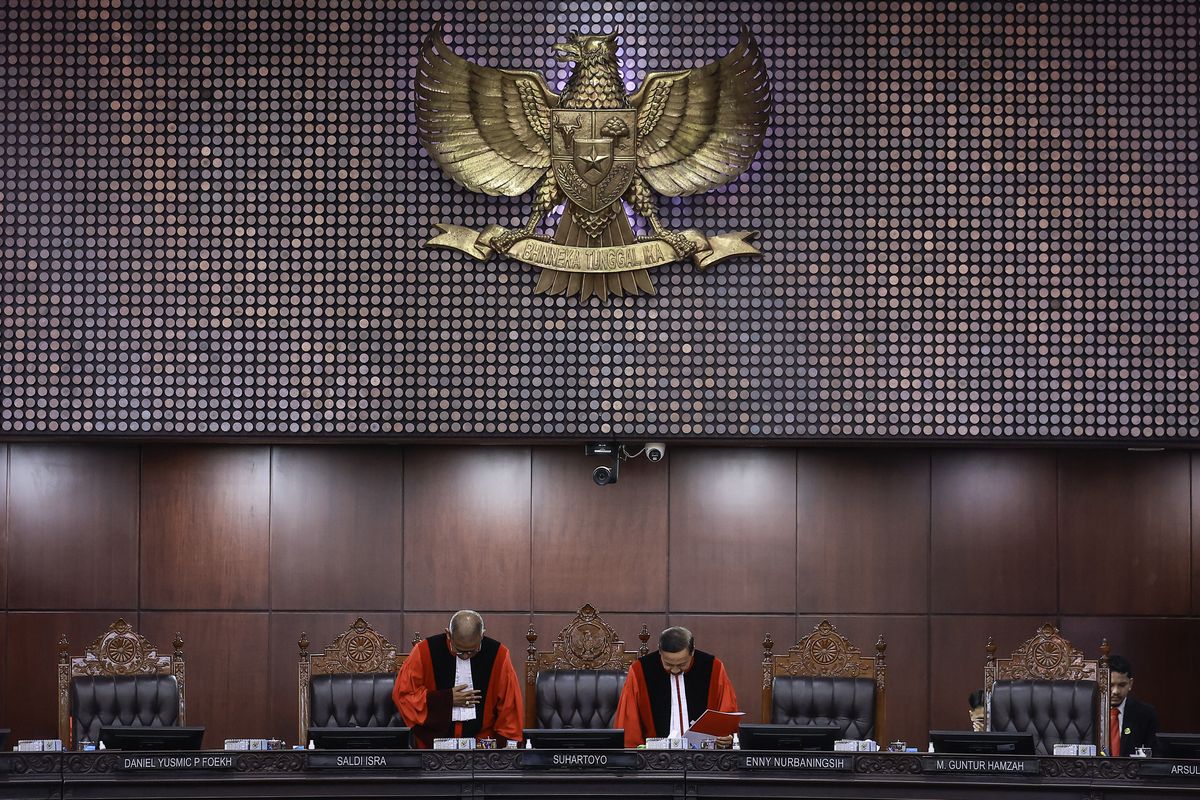
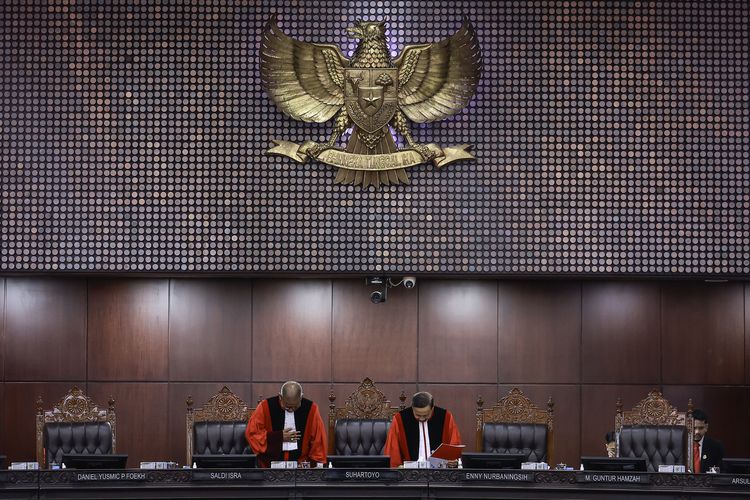
CHAIRMAN of the Constitutional Court (MK) Suhartoyo, along with the Constitutional Judges who adjudicated the Request for Dispute over the Results of the 2024 Presidential and Vice Presidential Election, issued their verdict on Tuesday (6/10/2026), through Decision Number 01/PHPU.PRES-XXIV/2026.
Immediately, the decision sparked both support and dissent. Controversy arose as the Court considered the issues or core of the request.
In fact, the ruling granted the legal standing exception of the Applicants, who were deemed not qualified to file the request as they were not presidential or vice-presidential candidates.
The author understands the a quo decision and recalls what Van Apeldoorn said.
Van Apeldoorn (1990) once stated that a judge's decision must first undergo a fair trial process, with considerations based on moral justice, not just legal justice.
The author sees that the MK decision, which garnered significant public attention, straddles the line between legal justice and moral justice.
The Court's perspective in the decision registered as the Dispute over the Results of the 2024 Presidential and Vice Presidential Election reflects the presence of legal justice, evident when the Court assessed and subsequently ruled on the Applicants' requests, which were not included in the regime for resolving disputes over presidential and vice-presidential election results.
The Court provided legal arguments because, factually, Gibran Rakabuming Raka was no longer a candidate for vice president in the 2024 Presidential and Vice Presidential Election.
According to the Court, the status of vice-presidential candidate ended when the elected candidate was sworn in on October 20, 2024, marking the conclusion of the electoral process for the 2024 Presidential and Vice Presidential Election. (see: page 376)
Secondly, it is evident when the Court constrained itself from stepping into the realm of disqualifying Gibran Rakabuming Raka from his position as Vice President.
The Court wisely allocated that authority to the institution empowered to assess the validity and fulfillment of the requirements for presidential and vice-presidential candidates as stipulated in the 1945 Constitution of the Republic of Indonesia. (see: page 376)
Thirdly, the Court still based its decision on Article 74 paragraph (1) letter b of the MK Law and Article 3 paragraph (1) of PMK 4/2023, which was amended by PMK 2/2024 when adjudicating the request, specifying that the Applicants in the presidential and vice-presidential election results dispute are the pairs of presidential and vice-presidential candidates.
On that basis, the Court ruled that the Applicants lacked legal standing to submit the a quo case.
Since the Applicants consisted of civil society organizations in the form of associations (Applicant I), political parties (Applicant II), and individual Indonesian citizens (Applicants III to XII).
Similarly, the position of the related parties was also not that of presidential or vice-presidential candidates.