

Habiburokhman Requests Ban on 4 Bullying Suspects in Malang from Taking Exams: No Special Treatment!
-
News
-
34 minutes ago
This article was translated by AI. Read the original article on Kompas.com. See Original
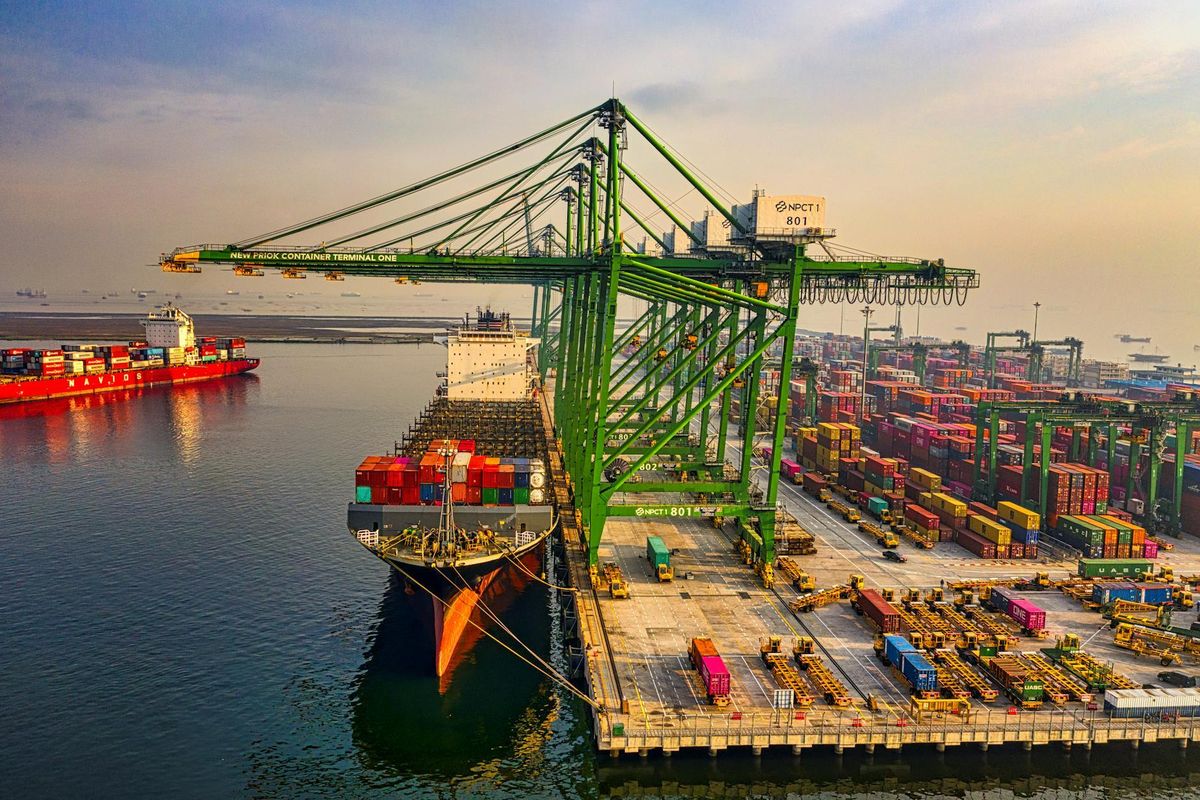
The Supply Chain Network Design theory from the MIT Center for Transportation and Logistics emphasizes the importance of designing logistics networks not as centralized hub-and-spoke systems relying on a single primary corridor, but as dynamically integrated multi-hub networks.
In this conceptual framework, Indonesia's islands are not treated as stand-alone industrial units (autarky) but as specialized production nodes interconnected within a regional value chain.
Each region focuses on developing downstream industries based on the comparative advantages of local raw materials, while advanced processing and integration of final products are distributed through measurable agglomeration economies.
The next theoretical step, rooted in Michael Porter's Creating Shared Value (CSV) concept from Harvard University, is to change our perspective on logistics costs, viewing them not merely as transport costs but as a variable that shapes ecosystem competitiveness.
High logistics costs in Indonesia are largely due to empty backhaul imbalances stemming from centralized consumption and manufacturing in Java.
An effective logistics system must be designed to create shared value in the raw material sourcing regions so that ships transporting raw or semi-finished goods to processing centers do not return empty but instead carry consumer goods and manufacturing inputs back to those areas.
Reconstructing this model demands an integration between spatial planning and national supply chain design, ensuring that the location of downstream industries outside Java is locked in by the certainty of multimodal connectivity and bi-directional loads.
Ultimately, responding to high national logistics costs cannot be achieved by escaping the geographical realities of the archipelago through ideas of industrial fragmentation by island.
The answer lies in strengthening supply chain architecture based on the concept of Resilient and Distributed Supply Chains.
Indonesia must be willing to invest in digitizing the supply chain, integrating the National Single Window, standardizing inter-island containerization, and developing energy infrastructure and initial processing facilities close to raw material sources.
By synergizing the locational advantages of eastern and western regions through precise cluster specialization, we can not only successfully reduce national logistics costs to approach ideal GDP levels but also lay the foundation for an inclusive, sustainable, and globally competitive Indonesian industrial sovereignty.

























