

Corruption in Crude Oil Management, Prosecutors: Riza Chalid and Irawan Prakoso Enriched by 543 Million US Dollars
-
News
-
2 minutes ago
This article was translated by AI. Read the original article on Kompas.com. See Original
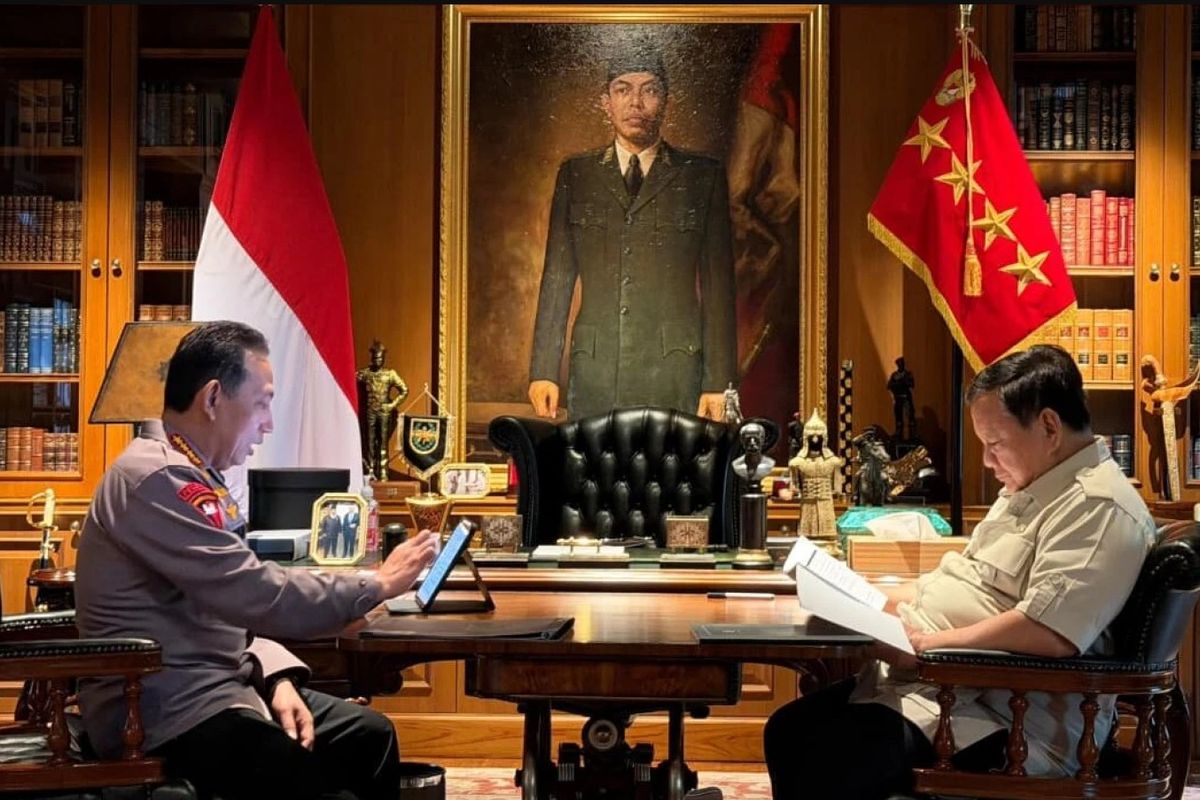
If Listyo Sigit refuses to attend for a second time, the procedure that will apply is in absentia, meaning the trial will proceed without the suspect’s presence.
In this context, the suspect will lose the right to defend themselves and to appeal.
It seems Listyo Sigit may prefer the in absentia route since he likely anticipates the penalties for ethical violations and, of course, to preserve his dignity as a former National Police Chief.
Regardless of the internal dynamics within the police, the case of illegal wiretapping of President Prabowo reveals many legal gaps that stakeholders must address, particularly the police as the institution from which these gaps arise, and the Commission III of the Indonesian House of Representatives, which oversees legal matters.
There are at least three legal gaps evident thus far.
First, there is a need to strengthen ethics and profession hearing mechanisms in police through more robust regulations providing legal certainty.
Second, speed and accuracy in responding to public aspirations for Commission III of the House of Representatives to swiftly draft a Wiretapping Law as an indirect consequence of the ongoing case.
Third, discussions regarding the drafting of a Law on the Procedure for the Implementation of the Death Penalty in Commission III of the House of Representatives.
All three of these issues require urgent attention from Commission III of the House of Representatives to strengthen the legal foundation in the republic and ensure legal certainty for the public.
First, regarding the Regulation that governs ethical and professional hearings within the police.
The shift from Regulation No. 7 of 2022 to Regulation No. 4 of 2026 has been quite internal and appears to be “Very Polri.”
However, in every regulation, there is room for oversight and vigilance.
Enforcement of the professional code of ethics within the police cannot be resolved with internal mechanisms alone.
In the context of handling Listyo Sigit’s ethical case, the mechanism of the hearing led by three-star generals indeed appears simpler and less complicated, with decisions made from a very internal paradigm by the National Police Chief.
However, such a situation could be at the heart of why Listyo Sigit is reluctant to attend the hearings.