
No Health Complaints, Amran: Maybe It's Because I Walk a Lot in the Fields
-
News
-
3 minutes ago
This article was translated by AI. Read the original article on Kompas.com. See Original
THE END OF Gibran Rakabuming's tenure as Vice President, following political pressure to initiate impeachment proceedings through a statement of opinion by several factions in the Indonesian House of Representatives (DPR RI), marks a new chapter in Indonesia's constitutional politics.
The ball is now in President Prabowo Subianto's court. Not only must he ensure the continuity of government, but his political decisions will determine who will accompany him in leading the country until the end of his term.
Constitutionally, the President is required to propose two vice presidential candidates to the People's Consultative Assembly (MPR).
Following this, the MPR has a maximum of 60 days to elect and appoint a replacement vice president. The President has a deadline of 14 days to submit the two names.
A letter containing the two candidate names was delivered directly by President Prabowo to MPR Chairman, Ahmad Muzani.
When asked by reporters about the names proposed, Prabowo instead demonstrated a martial arts move. The movements he displayed seemed to suggest that his political choices are difficult to predict.
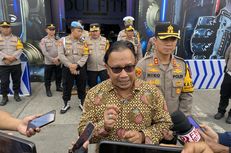
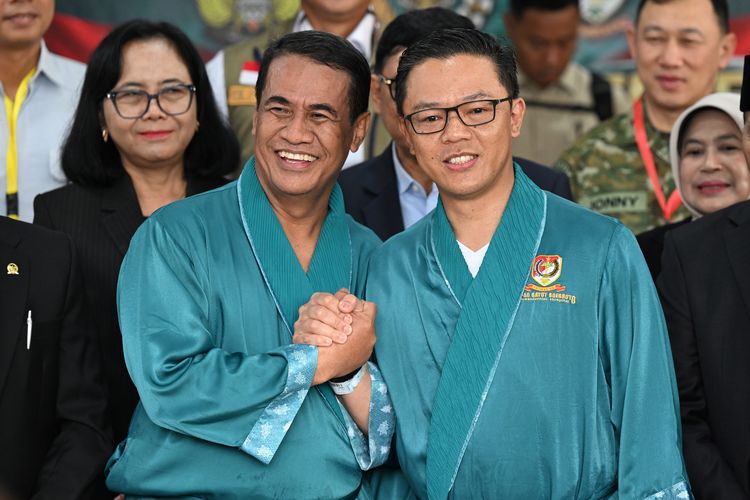
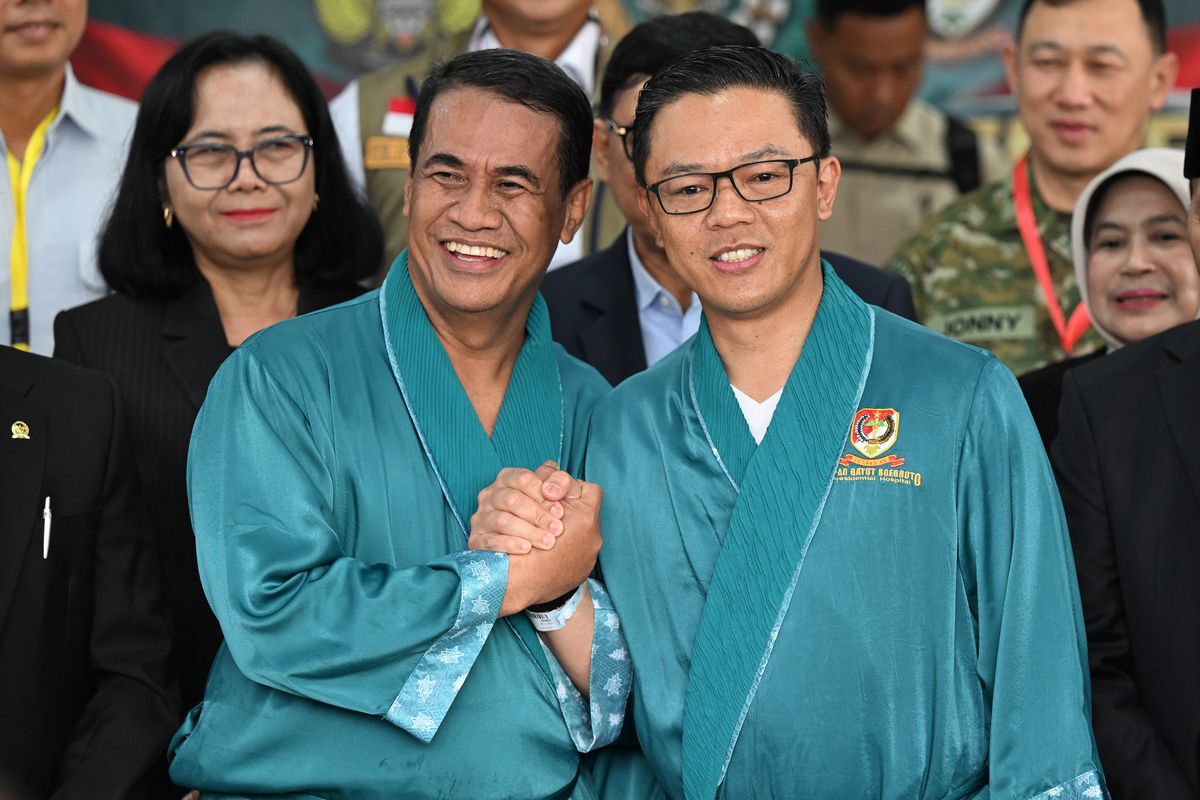
Indeed, it turned out to be the case. The name of Minister of Agriculture Amran Sulaiman, hailing from Bone, South Sulawesi, and not affiliated with the Gerindra Party, emerged as the first candidate. This name surprised many political observers.
Meanwhile, Sufmi Dasco Ahmad, the Daily Chairman of Gerindra, who was once expected to be a contender, was notably absent from the President's letter.
Conversely, the name Sugiono, Gerindra's Secretary General and a close associate and ideological successor of Prabowo, made it onto the list, but he was placed in the second position.
The question now is: who will become the 15th Vice President of Indonesia? Amran Sulaiman or Sugiono?
Indonesia has a poor tradition regarding the filling of the vice president position for the remainder of a term. Our experience is limited, so each vacancy in the vice presidency always brings its own political and constitutional issues.
When Mohammad Hatta resigned as vice president in 1956, President Sukarno did not fill the vacancy. The vice presidential seat remained empty until Sukarno was dismissed by the MPRS in 1967.
For a decade, Indonesia ran its government without a vice president. At that time, the constitution did not require the president to immediately fill such vacancies.
A contrasting experience occurred when President Abdurrahman Wahid (Gus Dur) resigned in July 2001. Vice President Megawati Soekarnoputri ascended to the presidency, thus leaving the vice presidency vacant.
This filling of the position was the only democratic experience we had in electing a Vice President for the remainder of the term.
The political contest in the MPR was intense. Five names from various political forces emerged as candidates: Susilo Bambang Yudhoyono (SBY), Agum Gumelar, Hamzah Haz, Akbar Tanjung, and Siswono Yudo Husodo.
After three rounds of voting, Hamzah Haz from the United Development Party (PPP) emerged as the winner.
The atmosphere of democracy was palpable. Many candidates, open competition, and each member of the MPR had one vote (one person, one vote).
A consensus approach was not chosen. Democracy functioned through electoral competition rather than merely elite agreement in closed rooms.
Interestingly, the results of that contest did not hinder the formation of a harmonious relationship between President Megawati and Vice President Hamzah Haz.
Hamzah was not only a spare tire for the president; he also took on responsibilities assisting the government, including in matters of public welfare and managing the state budget.
The experience in 2001 illustrates that political competition in selecting a vice president need not end with a rupture in relations at the top of the government. Political differences can be managed into productive government cooperation.
Now, the situation is different. The amended 1945 Constitution limits the number of replacement vice presidential candidates to just two names proposed by the President. This means that the political space for competition in the MPR is not as wide as it was in 2001.
However, does the limitation on the number of candidates automatically ensure a smooth election process? Not necessarily.
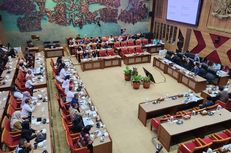
The MPR's rules allow for elections to be conducted by voting if consensus cannot be achieved.
Thus, the political battle between Amran and Sugiono remains open. Lobbying between factions and negotiations among parties could prove decisive.
From a political calculation standpoint, Amran has the upper hand. He possesses the advantage of popularity as Minister of Agriculture, a significant political and social network, and is not overly bound to internal Gerindra Party interests.
This position could attract MPR members from various political powers.
On the other hand, Sugiono benefits from his closeness to President Prabowo and his strategic position within Gerindra. He represents the continuity of political lines and the President's trust.
However, proximity to the president does not automatically guarantee victory in the MPR vote. Here lies the true political test for Prabowo.
As president and a central figure of the governing coalition, Prabowo wields significant influence over his supporting parties.
If he desires Sugiono to be vice president, it is likely that coalition party chairmen will be asked to direct their factions to support him. Given the existing coalition strength, this scenario should be considered.
Yet, there is also a simpler path. Amran might voluntarily withdraw as a candidate.
If this occurs, the MPR would then appoint Sugiono as the sole remaining candidate through the existing mechanisms.
Nevertheless, Amran's resignation would not be a simple matter. There are political honors, self-esteem, and aspirations from political forces that may have supported him.
Whatever the outcome, this process of filling the vice president position should not be reduced to mere power-sharing among coalition elites.
The MPR is not an institution merely meant to endorse the President's political decisions. The constitution mandates the MPR to elect, not just to stamp the choices of the ruling powers.
The two names proposed by the President must be assessed objectively. Leadership capacity, integrity, government experience, political communication skills, and competence in assisting the President in governance must be primary considerations.
The vice presidency is not a mere supplementary position, let alone a political symbol. In a country as large as Indonesia, with vast territory, a large population, and complex development issues, the Vice President must be capable of being a strategic partner to the president. He must possess the capacity for work, not just political loyalty.
Therefore, this vice presidential election is, in fact, a test of the maturity of our democracy and constitutional life.
Will the MPR dare to execute its mandate independently, or will it succumb to political calculations and the directives of the ruling powers?
We await further developments. President Prabowo's meeting with the coalition party chairmen may provide important clues on the direction of political support.
Will Amran compete for and win the RI-2 seat? Or will Sugiono glide in, bolstered by the solidarity of the President's supporting coalition?
In politics, that which is visible on the surface may not align with decisions made behind the scenes. President Prabowo's martial arts moves may have indeed befuddled observers. However, the political moves toward the vice presidential seat are not necessarily easy to predict.
We shall see. Wait and see.