

Kompolnas Responds to General Listyo Sigit's Refusal to Attend Ethics Hearing
-
News
-
6 minutes ago
This article was translated by AI. Read the original article on Kompas.com. See Original

MEMBER of Commission II of the House of Representatives, Azis Subekti, has proposed that cognitive resilience be made one of the graduation requirements for the State Civil Apparatus (ASN).
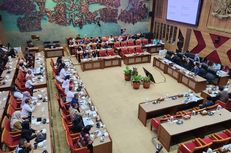
This proposal was made during a meeting with the Ministry of State Apparatus Utilization and Bureaucratic Reform on November 23, 2026.
He highlighted civil servants (PNS) who are seen to directly attack government programs without first understanding the policies.
He also mentioned recipients of scholarships from the Educational Fund Management Institute (LPDP) who are perceived to be criticizing their own country. (Kompas.com, November 23, 2026).
At first glance, that idea sounds reasonable, right?
State apparatus indeed needs clear thinking skills, the ability to process information, and to make rational decisions.
However, problems arise when scientific terms are seemingly used to explain political behavior and then proposed as a bureaucratic selection instrument.
So, what exactly is meant by cognitive resilience? Who determines if someone possesses it?
And, most importantly, will someone’s thinking ability be assessed based on the quality of their reasoning or the alignment of their views with the government?
Joshi and Galvin (2022), in their article "Cognitive Resilience in Brain Health and Dementia Research" published in Journal of Alzheimer's Disease, define it as the brain's ability to withstand pathological impacts while maintaining cognitive function.
This concept has evolved in brain health research, especially to explain why some people can maintain cognitive function despite experiencing pathological changes associated with Alzheimer’s disease and dementia.
From another perspective, cognitive resilience is also discussed by Staal et al. in Cognitive Performance and Resilience to Stress (2008), for instance, linking it to the ability to cope with the negative impact of stress on cognitive function and performance.
This means that someone remains able to maintain attention, process information, and work in high-pressure situations.
These two definitions may differ in context, but they converge on one point: cognitive resilience relates to the ability to maintain thinking functions, not a willingness to agree with certain opinions!
There is no basis from either definition to equate criticism of the government with low cognitive resilience, is there?